Thought for Today: Climate Change Policies at Risk

Tags

, , , , , , , , ,

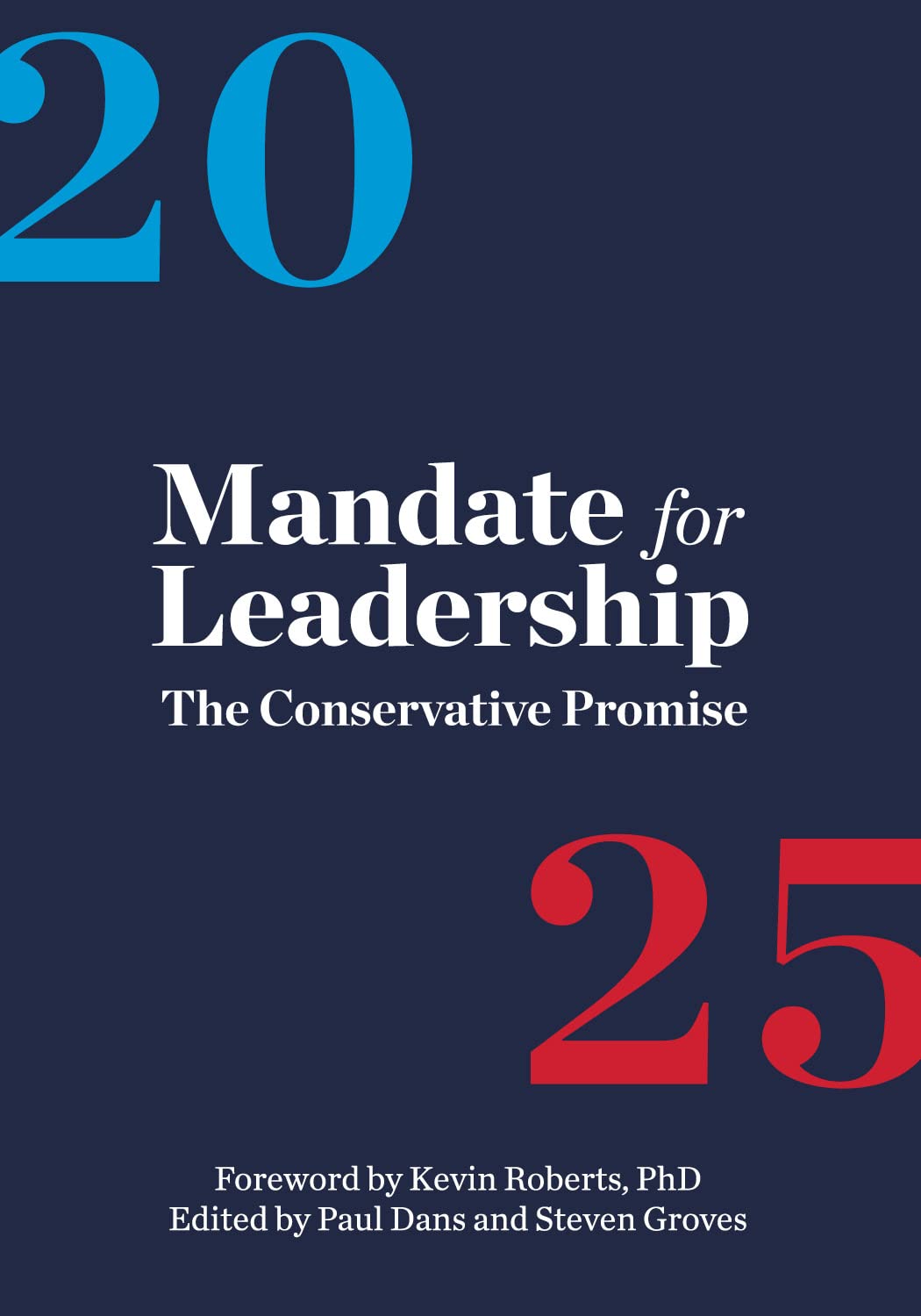
Front Cover: Mandate for Leadership 2025: The Conservative Promise by the Heritage Foundation
Photo Credit: The Heritage Foundation

The new energy crisis is caused not by a lack of resources, but by extreme “green” policies. Under the rubrics of “combating climate change” and “ESG” (environmen­tal, social, and governance), the Biden Administration, Congress, and various states, as well as Wall Street investors, international corporations, and progressive spe­cial-interest groups, are changing America’s energy landscape. These ideologically driven policies are also directing huge amounts of money to favored interests and making America dependent on adversaries like China for energy. In the name of combating climate change, policies have been used to create an artificial energy scarcity that will require trillions of dollars in new investment, supported with taxpayer subsidies, to address a “problem” that government and special interests themselves created.

Excerpt from “Chapter 12: Department of Energy and Related Commissions” by Bernard L. McNamee from Mandate for Leadership: The Conservative Promise, Project 2025 Presidential Transition Project by The Heritage Foundation, Washington DC, USA, 2023 (pp. 363-364).

Highlighted below are the major proposals presented in Chapter 12 that place our current climate change policies at risk:

  • Eliminate the Office of Energy Efficiency and Renewable Energy (EERE) which focuses on climate change and green subsidies and sets energy efficiency standards for appliances. If EERE cannot be eliminated, its budget should be reduced (pp 378-379). [Learn more about EERE at http://www.energy.gov/eere/office-energy-efficiency-renewable-energy%5D
  • End the role of the Grid Development Office (GDO) in grid planning for the benefit of renewable energy developers and defund most of its programs (pp 380-381). [Learn more about GDO at http://www.energy.gov/gdo/grid-deployment-office%5D
  • Eliminate the Office of Clean Energy Demonstrations (OCED) established in December 2021 “[to] deliver clean energy demonstration projects at scale in partnership with the private sector to accelerate deployment, market adoption, and the equi­table transition to a decarbonized energy system” (pp 381-382). [Learn more about OCED at http://www.energy.gov/oced/office-clean-energy-demonstrations%5D
  • Eliminate the Clean Energy Corps, charged with delivering a more equitable clean energy future for the American people, by revoking funding and eliminating all positions and personnel hired under the program (p 386). [Learn more about the Clean Energy Corps at http://www.energy.gov/CleanEnergyCorps%5D

Bernard L. McNamee is an energy and regulatory attorney with a major law firm and was formerly a member of the Federal Energy Regulatory Commission. He is also the Street Distinguished Visiting Professor of Law at the Appalachian School of Law. In addition to serving as a Federal Energy Regulatory Commissioner, McNamee has served in various senior policy and legal positions throughout his career, including at the U.S. Department of Energy, for U.S. Senator Ted Cruz, and for Virginia Governor George Allen. McNamee also served four attorneys general in two states (Virginia and Texas).
The Writer’s Life: The Men of God

Tags

, , , , ,

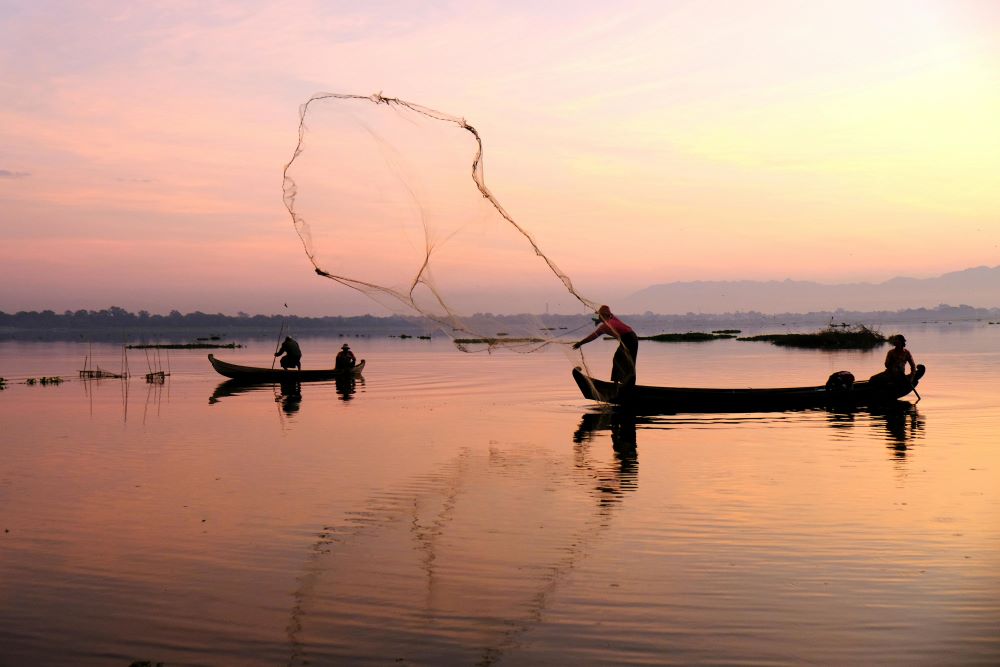
Fishermen – Photo by Sirikul R – Pexels

In Chapter Fourteen of my work in progress, I share my encounters with a few priests who did not live up to their role as spiritual leaders of their flock. Due to the sensitive nature of the topic, I’ve adapted a prosaic narrative style. Do let me know if this style works. Inspired by the Biblical quote heading the chapter, I’ve given them the fictitious names of fish.

While not all priests are predators, their fellow priests, bishops, and archbishops are complicit by their silence and cover-ups.

Continue reading

“Work” – Poem by Jamaican Poet Laureate Kwame Dawes

Tags

, , , , , , ,

Jamaican Poet Laureate Kwame Dawes (2024-2027)
Photo Credit: Chris Abani / Poet’s Official Website

My Poetry Corner August 2024 features the poem “Work” from the poetry collection Sturge Town by Jamaica’s Poet Laureate Kwame Dawes, published by Peepal Tree Press (UK, 2023). A writer of poetry, fiction, nonfiction, and plays, Dawes was born in Ghana in 1962. When he was nine years old, he moved with his family to his father’s ancestral home of Jamaica. He became a naturalized citizen, having spent most of his childhood and early adult life in the Caribbean Island nation. Since then, he has lived most of his adult life in the United States.

In his poetry collection Sturge Town, the then sixty-year-old poet reflects on his journey from his childhood in Ghana, through Jamaica, and on to South Carolina and Nebraska in the United States. The eighty-six poems offer a compassionate insight into history and identity, triumph and loss, joy and grief, love and relationships.

I connected with his loss and own mortality expressed in the poem “Condolence” (p. 66): Thrice this week, I send condolences to acquaintances / whose intimacy has grown the more by empathy – we are of an age / of sudden deaths, or the prolonged and painful passing of loved ones. / It is fall, and I know that we are all, in our small boxes, / dreading the dusk, knowing that trees turning orange and crimson, / will be, for years to come, the way we see our losses, / our complicated loves…

Continue reading

Thought for Today: Abortion and Euthanasia are not Health Care

Tags

, , , , , ,

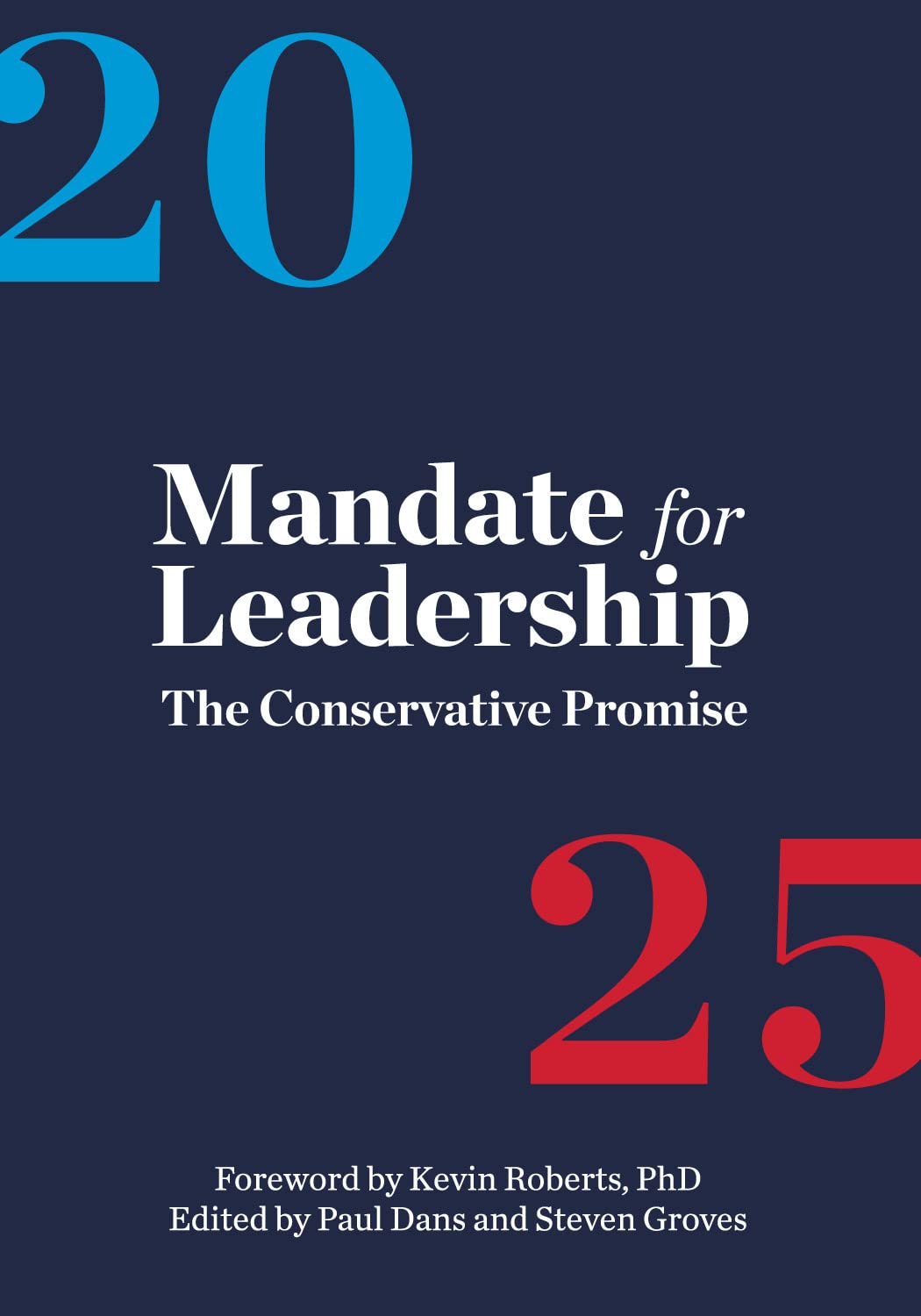
Front Cover: Mandate for Leadership 2025: The Conservative Promise by the Heritage Foundation
Photo Credit: The Heritage Foundation

Goal #1: The Secretary [of the Department of Health & Human Services] should pursue a robust agenda to protect the fundamental right to life, protect con­science rights, and uphold bodily integrity rooted in biological realities, not ideology.

From the moment of conception, every human being possesses inherent dignity and worth, and our humanity does not depend on our age, stage of development, race, or abilities. The Secretary must ensure that all HHS programs and activities are rooted in a deep respect for innocent human life from day one until natural death: Abortion and euthanasia are not health care.

A robust respect for the sacred rights of conscience, both at HHS and among gov­ernments and institutions funded by it, increases choices for patients and program beneficiaries and furthers pluralism and tolerance. The Secretary must protect Americans’ civil rights by ensuring that HHS programs and activities follow the letter and spirit of religious freedom and conscience-protection laws….

Excerpt from “Chapter 14: Department of Health and Human Services” by Roger Severino from Mandate for Leadership: The Conservative Promise, Project 2025 Presidential Transition Project by The Heritage Foundation, Washington DC, USA, 2023 (p. 450)

Roger Severino is Vice President of Domestic Policy at The Heritage Founda­tion. As director of the Office for Civil Rights at the U.S. Department of Health and Human Services (HHS) from 2017 to 2021, he led a team of more than 250 staff enforcing civil rights, conscience, and health information privacy laws. Roger sub­sequently founded the HHS Accountability Project at the Ethics & Public Policy Center. He holds a JD from Harvard Law School, an MA in public policy from Carnegie Mellon University, and a BA from the University of Southern California.


LEARN MORE:

The Writer’s Life: Choosing Childlessness as a Young Nun in a Patriarchal Church

Tags

, , , , , ,

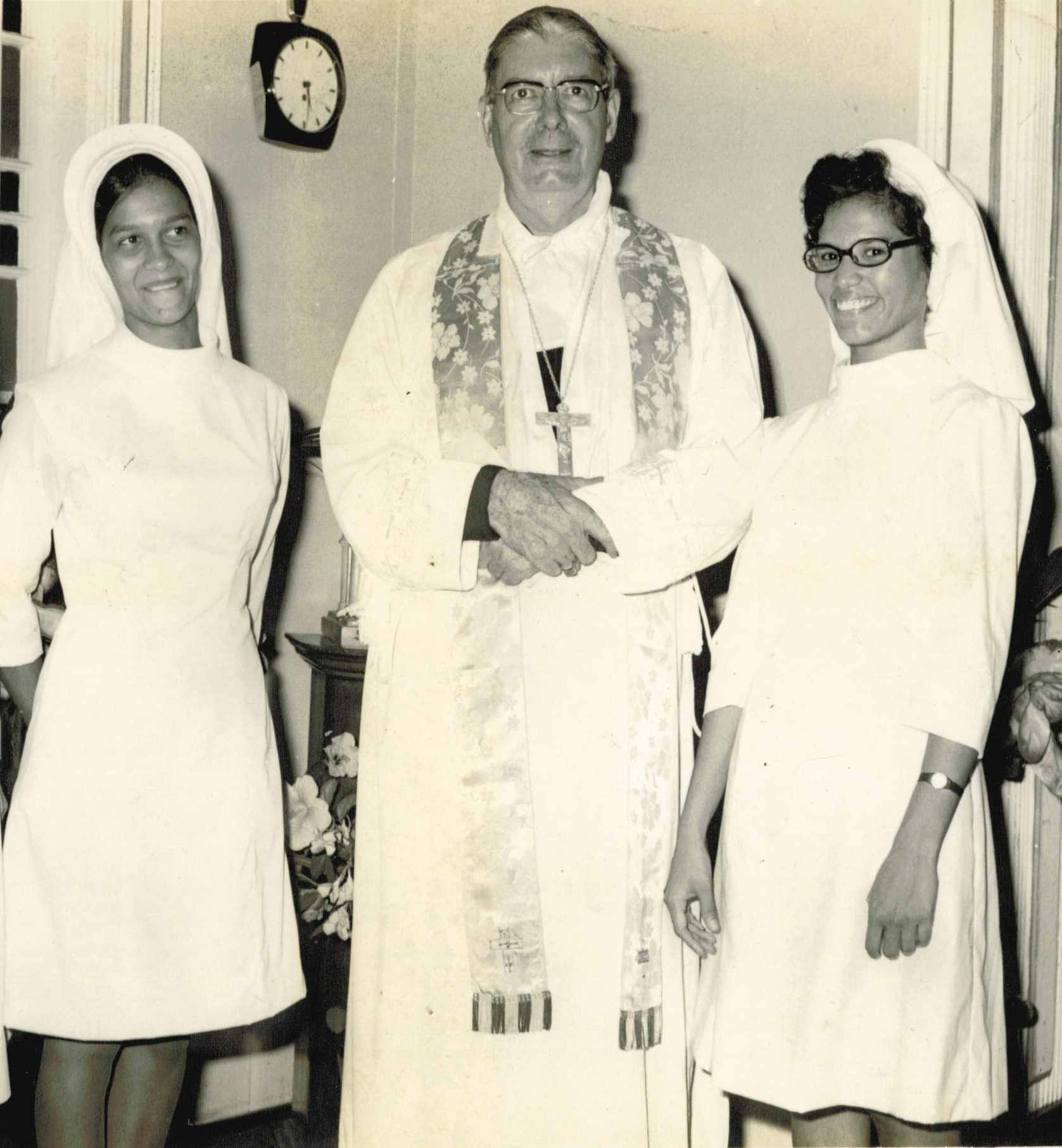
Rosaliene (right) and Celeste (fictitious name) with Bishop Guilly SJ – First Vows and Receipt of Religious Habit – Georgetown – Guyana
Photo taken by Father Bernard Darke SJ for the Catholic Standard Newspapers

In Chapter Thirteen of my work in progress, I share my failure in living the religious vows as a celibate and childless woman in a patriarchal church. In retrospect, I have come to realize that the Guyana Mission, established during the British colonial period and headquartered in the United States, was not prepared for dealing with young women who challenged the lingering colonial mindset within the community.

The 1970s was a decade of great social-political-economic upheavals in our fledgling nation. The 1976 government takeover of all schools owned and run by the Catholic Church and other Christian denominations struck a decisive blow for the religious community accustomed to its autonomy. By abandoning my teaching post in Guyana’s hinterlands, I unwittingly became the first casualty for the religious community, as discussed in more detail in Chapter 16.

While the sisters struggled to adapt to the country’s new ways of thinking and being, three of the youngest professed local nuns, all trained in the United States, left the community. Of the seven of us, trained at the newly established novitiate in Guyana, only three stayed to make final or perpetual vows.

Nowadays, here in the USA, the patriarchal religious right would like to turn back time to the “Golden 1950s.” Make America Great(er) Again, they implore, bowing down before their Anointed One. A faithful disciple, now sharing the pulpit, believes that “childless cat ladies” shouldn’t have the same civic rights as women with children. What an upside-down world for women who are childless by choice or for biological reasons!

Continue reading

“Nevertheless” – Poem by Nigerian American Poet Olatunde Osinaike

Tags

, , , ,

Nigerian American Poet Olatunde Osinaike
Photo Credit: Poet’s Official Website


My Poetry Corner July 2024 features the poem “Nevertheless” from the debut poetry collection Tender Headed (USA, 2023) by Olatunde Osinaike, a poet, essayist, and software developer. The following excerpts of poems are all sourced from this collection, winner of the 2022 National Poetry Series.

Osinaike earned his BS in Engineering from Vanderbilt University (Tennessee) and his MS in Information Systems from Johns Hopkins University (Maryland). Originally from the West Side of Chicago (Illinois), he currently lives with his wife in Atlanta, the capital of Georgia.

How did a data scientist for the consulting firm Booz Allen Hamilton also become a poet? In an October 2023 interview for his alma mater, Vanderbilt University, Osinaike said: “I don’t think of the data science and the writing as different. You definitely use a lot of creativity in how you code. The best observations I ever got were in a technology forecasting class with Andy Van Schaack [associate professor of the practice of engineering management] my junior year at Vanderbilt. We talked about scenario analysis, convergent opinions. So, even if I’m looking at something under a microscope, I’m also thinking about the world around what I’m observing.”

Continue reading

California: Resilient Rosebushes

Tags

, , ,

Fragrant Red Rosebush – Spring 2024 – Los Angeles – Southern California

With an ongoing global climate crisis, due to humanity’s addiction to fossil fuels, our weather swings from one extreme to the next. Heat domes. Prolonged drought. Rain bombs. Epic floods. We’re not the only ones impacted. So are the trees and plants. Unlike those of us who can find shelter, they must face the elements head-on. Some are resilient and adaptive. Others are not so fortunate.

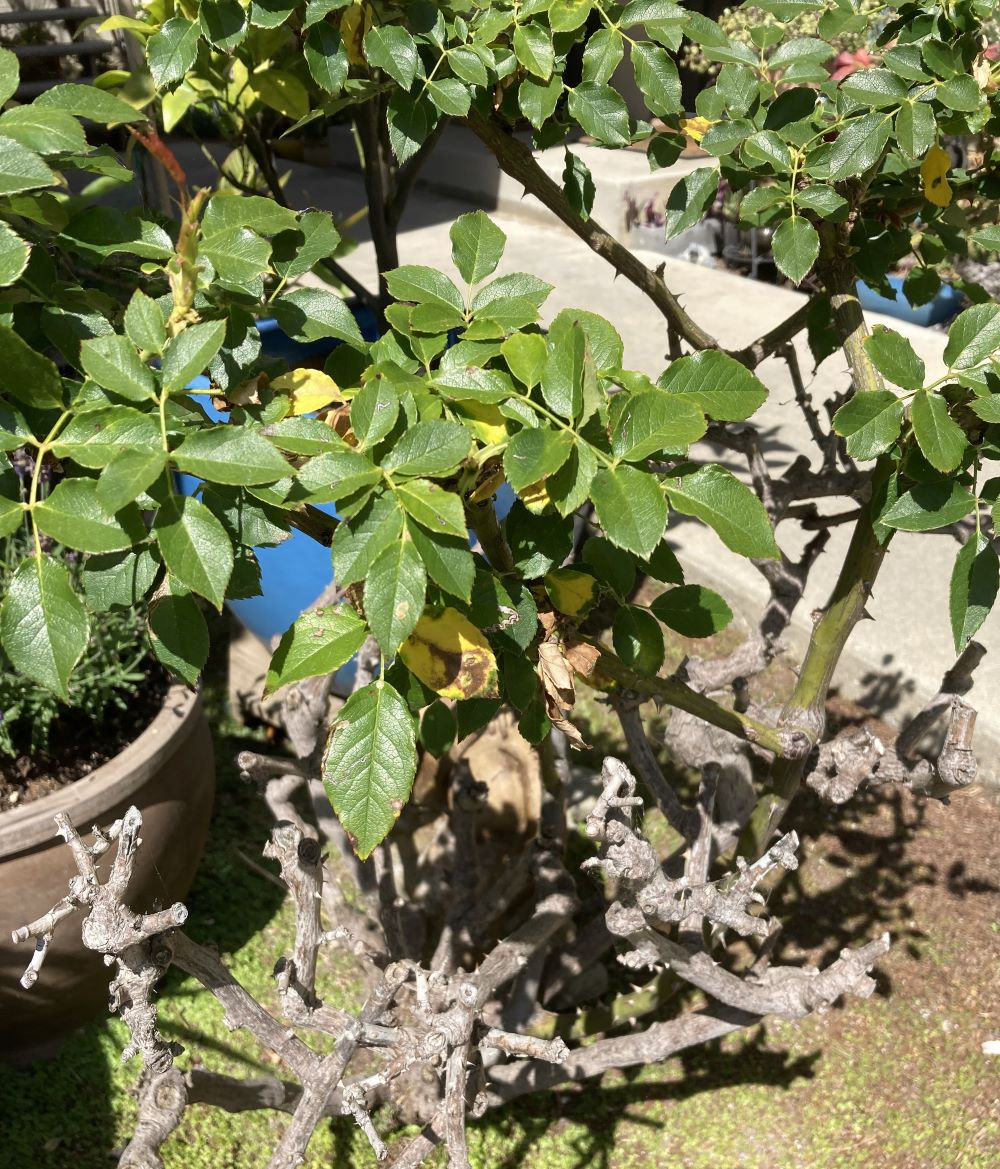
I’ve observed that the rosebushes in our communal garden are more sensitive to these extremes than my succulent plants. Over the years, we have lost 50 percent of our rosebushes, leaving only eight survivors. The two most recent losses, of the white Hedgerow variety, occurred after the Winter 2022-2023 heavy rains. Grown in an area fully exposed to the elements, their roots sat for three months underwater.

The photo on the left below shows one of them. I haven’t asked the gardener to uproot it in the hope that there may still be some lingering life. The photo on the right is also a white Hedgerow rosebush that stands at the other end of the same exposed plot. After standing for three months in the Winter 2023-2024 floodwater, it’s not doing well. In spring, it’s usually filled with lots of sprawling leaf-laden branches and roses. During our “gray May,” it produced only one tiny rose. I fear that it will not survive another wet winter.

About seven years ago, I undertook to clean up the garden plot of a former neighbor and friend, a food stylist, who had moved back to her home state when her husband Benny took ill with lung cancer. He died months later in January 2016. In March the following year, my best friend and poet also died of lung cancer. Taking care of this plot became part of my grieving process.

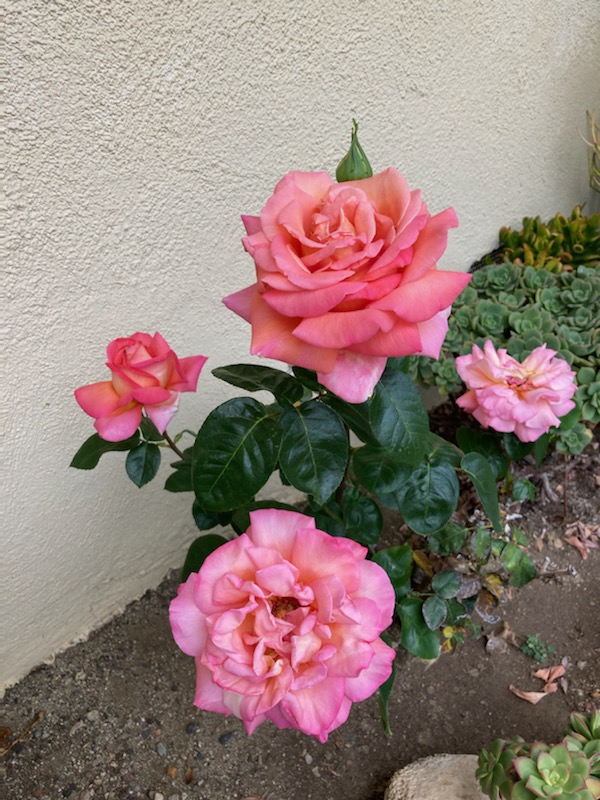
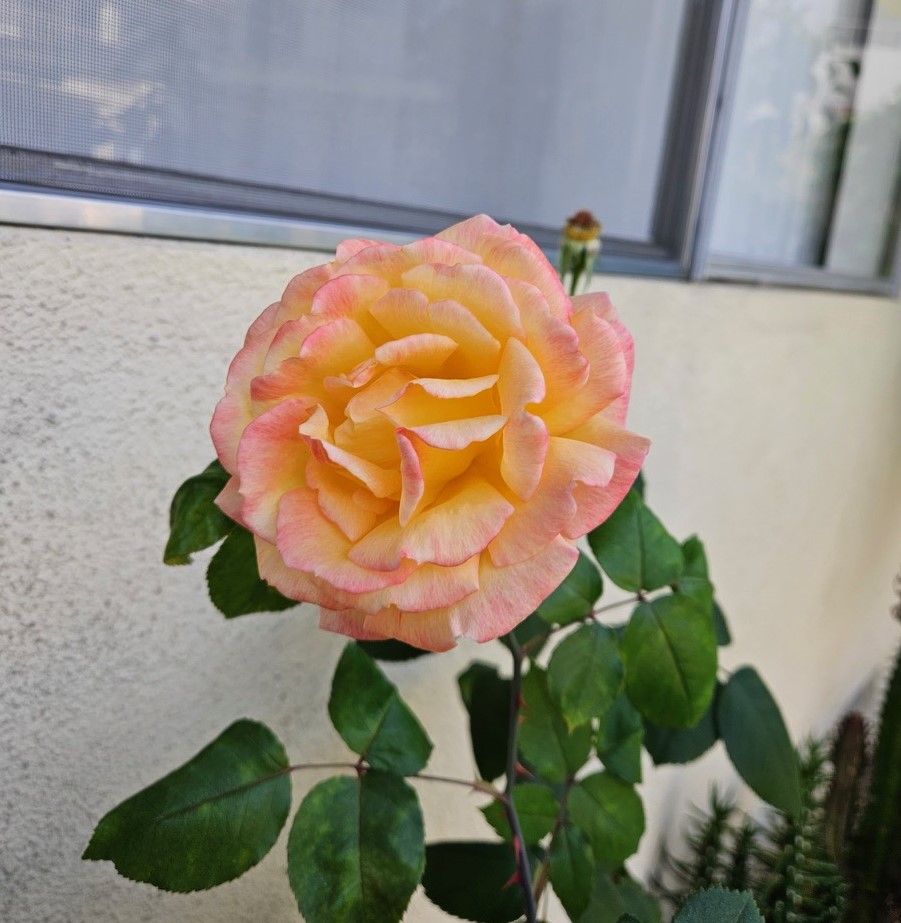
After clearing the dense overgrowth of cactus plants, I uncovered the stunted dead trunk and branches of what appeared to be a rosebush. The six-inch tall (15 cm) plant had been smothered by more aggressive plants. For two years I watered it without any sign of life. Then, wonders of wonders, a new branch appeared with tender baby leaves. My care and attention had paid off. The first and single stunning pink rose appeared a year later. Then in 2022, it thanked me with five roses (see photo on the left below). My Miracle Rosebush, as I call it, continued to produce up to six flowers each spring, but I’ve noticed a change in the color and shape, as shown in the photo on the right below. Resilience has its limits as we age.

My former food stylist neighbor planted the captioned fragrant red rosebush. Then just a small potted plant used in one of her photo shoots, it has grown into the hardiest and most luxurious of our rosebushes that keeps on giving. It reminds me of our neighbor Benny who is no longer with us. Healing after loss can come in unexpected ways.

Three other rosebushes also brighten my days with their unique beauty and vibrancy, as pictured below. The two remaining rosebushes are not yet in bloom. Hopefully, with the “gray May” and early “June gloom” now behind us, they will awaken to the summer heat.

The photos below were taken by a neighbor and dear friend who, sad to say, has recently moved out-of-state. In the early spring, I also lost my young gardening enthusiast and companion who moved to another neighborhood, trading her garden space for a dog park and ocean-view. Our lives, like the weather and climate, are continually in motion. I adapt as best as I can and, like the rosebushes, bloom in due season. 

Happy Independence Day!

Poem “porto alegre, 2016” by Brazilian Poet Angélica Freitas

Tags

, , , , , ,

Brazilian Poet Angélica Freitas
Photo Credit: Dirk Skiba / Companhia das Letras, Brazil

In my Poetry Corner June 2024, featuring a Brazilian poet, I would like to call attention to a climate change disaster that struck the people of Porto Alegre, capital of Brazil’s southernmost state of Rio Grande do Sul.

The contemporary poet and translator Angélica Freitas is no newcomer to my Poetry Corner. In May 2019, I featured her poem “the woman is a construction” from her poetry collection a uterus is the size of a fist / um útero é do tamanho de um punho (2012). This month’s featured poem “porto alegre, 2016” is from her third collection Songs of Torment / Canções de Atormentar (2020). In this collection, she takes a wider view of injustice, machismo, and her disillusion with the Brazilian dream that’s still out of reach for the majority.

Born in Pelotas, Rio Grande do Sul, in 1973, Angélica Freitas began writing poetry at the age of nine, but her journey to finding herself as a poet took a long and circuitous route. Her discovery, at fifteen years, that she was gay made it difficult to fit in with her peers. Bullies found her and easy target. Then, her father’s sudden death when she was eighteen upended her dream to study in Glasgow, where she spent six months with a Scottish girlfriend.

With her mother’s insistence that she earn a university degree, she opted to pursue a career in journalism at the Federal University of Rio Grande do Sul in Porto Alegre. She remained in the capital after graduation, where she could be invisible. In 2000, an unexpected acceptance as a trainee with O Estado de São Paulo, one of Brazil’s largest newspapers, led her to the metropolis of São Paulo.

Freitas confessed that she wasn’t a good reporter, but that the experience exposed her to the other realities of life. During a period of depression in 2005, she attended a poetry workshop conducted by Carlito Azevedo, a poet from Rio de Janeiro, that changed the course of her life. At 31 years old, she realized she was on the wrong path. During an interview for the Public Library of Paraná, she said:

“Okay, I want to write, but it’s not journalism, it’s poetry. You see, that was in my face the whole time. It was what I had been doing since I was little. So that’s it. Best to quit my job and dedicate myself to literature. I called my mother and said I was thinking about spending time in Pelotas. She supported me. Six months later, I resigned, handed over my apartment. Then I returned to Pelotas to organize and finish writing what became my first book, which was called Rilke shake.”

Continue reading