Poem “Wildebeests Migrate Across the Serengeti” by Brazilian Poet Micheliny Verunschk

Tags

, , , ,

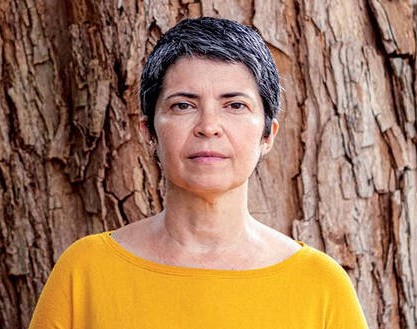
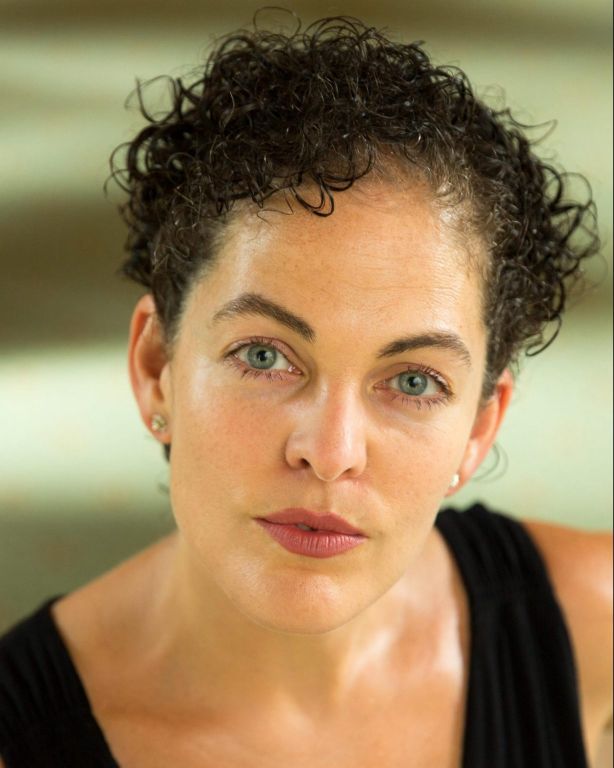
Brazilian Poet Micheliny Verunschk
Photo by Renato Parada (2023)

My Poetry Corner June 2025 features the poem “Wildebeests Migrate Across the Serengeti / Gnus Migram Através do Serengeti” from the poetry collection The Movement of Birds / O Movimento dos Pássaros (2020) by Micheliny Verunschk, an award-winning Brazilian poet, romance novelist, literary critic, and historian. All the excerpts cited in this article are from this collection.

Verunschk was born in Recife, capital of the Northeast State of Pernambuco, in 1972 during the period of Brazil’s military dictatorship (1964-1985). Her father was in the military; her mother was a teacher. She holds a master’s degree in Literature and Literary Criticism, as well as a doctorate in Communication and Semiotics from the Pontifical Catholic University of São Paulo (PUC). She has lived in São Paulo since 2004.

The young Micheliny spent most of her childhood in Arcoverde, a violent city in the semi-arid interior of Pernambuco. Exposed to violence at an early age, she was curious about what her father was doing in the military. She also lived in Tupanatinga, yet another violent city in the interior. It’s no surprise then, with her father’s encouragement, that she found release in writing poetry and stories as early as nine years old.

Continue reading

Oh, what joy!

Tags

, , ,

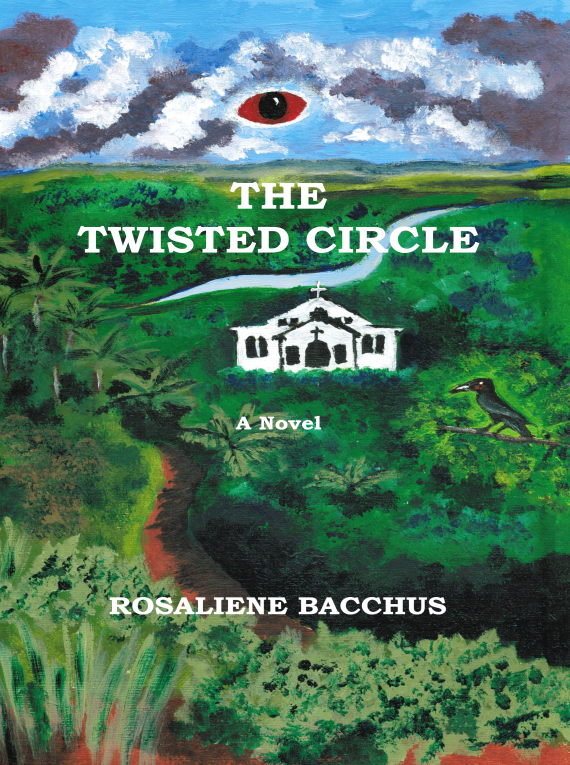
Front Cover – The Twisted Circle: A Novel by Rosaliene Bacchus
Cover Art and Design by Rosaliene Bacchus

Amid the crazy going on in Downtown Los Angeles since Friday, June 6, 2025, and subsequent federal deployment of National Guard troops and active-duty marines, I received good news from Dawn Fanshawe, a blogging friend in the United Kingdom, on Tuesday, June 10th. She sent me the link to her review of my novel, The Twisted Circle, on Goodreads.

A Five Star review! Oh, what joy! It’s such a blessing when a reader not only enjoys my storytelling but also takes the time to recommend it to others. Thank you, Dawn, for brightening my day during these uncertain times in an alternate reality not of my making.

Continue reading

Resilience against Tornadoes on a Changing Planet

Tags

, , , , ,

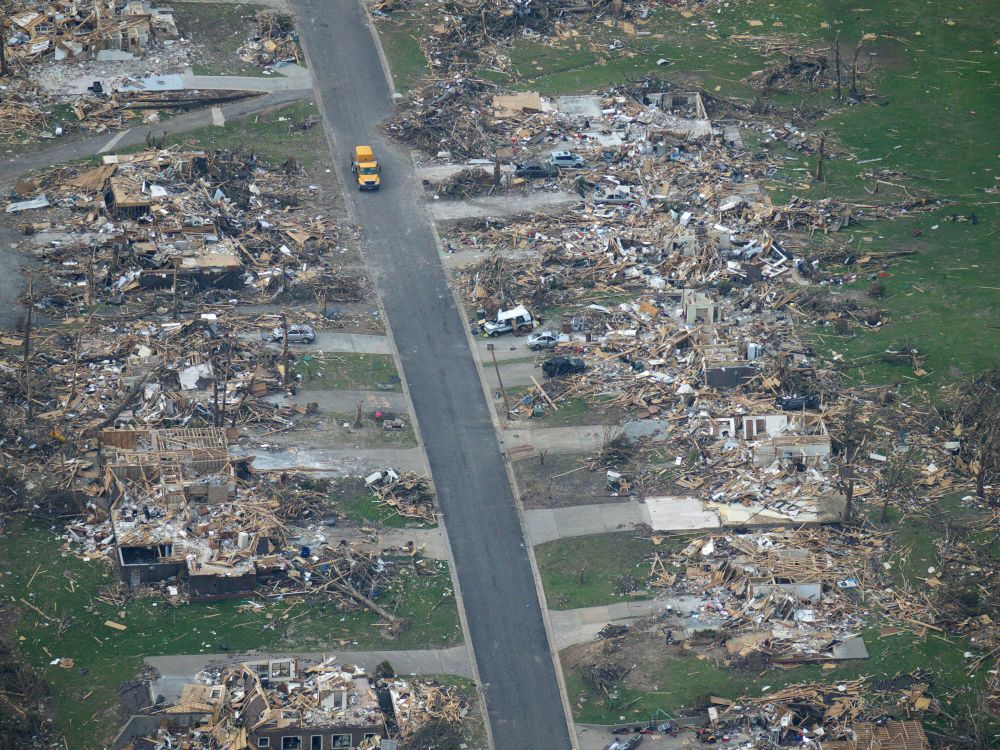
Tornado Damage Joplin – Missouri – June 1, 2011
Photo Credit: Bob Webster, Pryor/USA

As a resident of Southern California, I’ve yet to come face-to-face with one of those terrifying tornadoes I’ve seen in movies. Tornadoes don’t occur often in our state. Whenever they do occur, they are weak, ranked EF-0 in the Enhanced Fujita Scale, causing little damage. The reality of being pummeled by a violent tornado is a devastating, life-changing, traumatic experience. Such was the case for people living in Joplin, Missouri, on May 22, 2011, featured in the Netflix Documentary The Twister: Caught in the Storm, released on March 19, 2025.

The tornado that struck Joplin in 2011 was rated EF-5 on the Enhanced Fujita Scale, with maximum winds over 200 mph (320 kph). Ranked seventh among the top ten deadliest tornadoes in United States history, it is the deadliest so far in the 21st century.

With a population of more than 50,000 and a population density near 1,500 people per square mile, Joplin suffered extensive damage amounting to US$2.8 billion. According to the account recorded in President Obama White House Archives, the tornado first touched down in the southern part of the city at 5:41 p.m. local time. During the following 32 minutes, it headed eastward across the city, demolishing everything in its path for 13 miles (21 kilometers) and extending as much as a mile (1.6 kilometers) wide at its widest extent.

Continue reading

The Writer’s Life: Censored

Tags

, , , ,

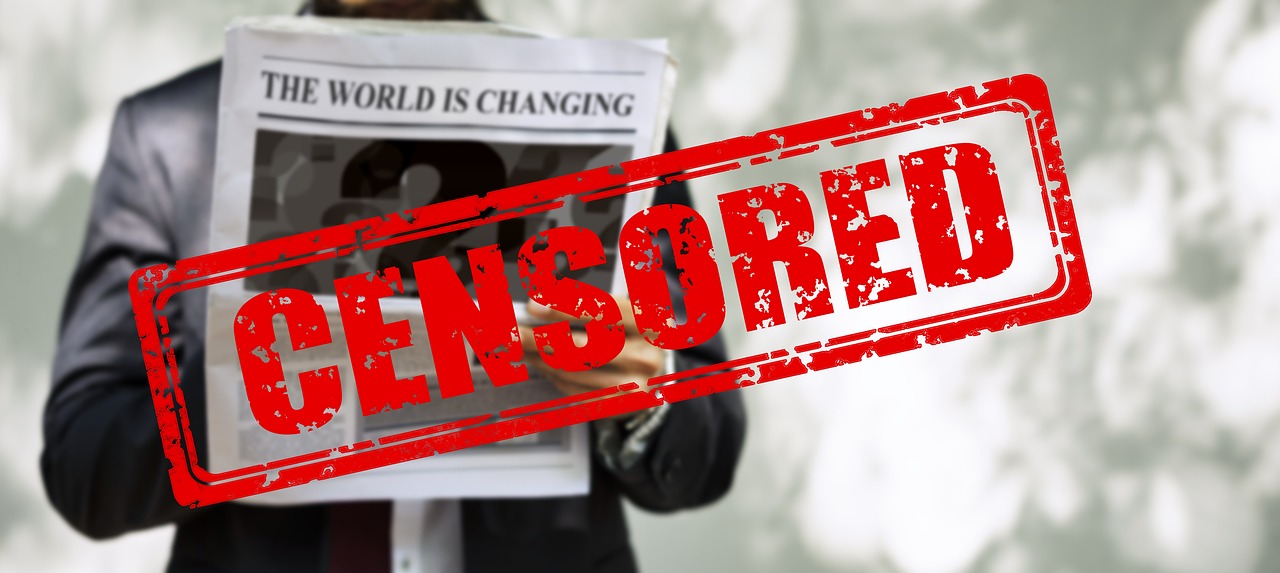
Photo Credit: Censored – Geralt/Pixabay

It’s no longer safe for writers like me to express my truth and give voice to the dispossessed, marginalized, and oppressed among us. Our speech is now censored. Here in my adopted homeland, to protest and write about the horrors being inflicted on the Palestinian people has been criminalized. Likewise, for criticisms about our Dear Leader and his policies.

For people like me, such crimes are punishable with incarceration, deportation, or both. Without due legal process. The First Amendment of our Constitution, regarding Freedom of religion, speech, and the press; rights of assembly and petition, has become invalidated or applicable only to political loyalists.

Such is the nature of life for writers under authoritarian regimes. To ensure my safety and that of my sons, I must self-censor what I write. I must be careful, too, with whom I associate, lest I’m accused of being an enemy of the state. If you believe I’m overreacting, you have not been paying attention.

Continue reading

Poem “Why Madwoman Shouldn’t Read the News” by Caribbean Poet Shara McCallum

Tags

, , , , ,

Caribbean American Poet Shara McCallum
Photo Credit: Author’s Official Website

My Poetry Corner May 2025 features the poem “Why Madwoman Shouldn’t Read the News” from the poetry collection, Madwoman, by the award-winning Caribbean American poet and writer Shara McCallum. Born in Kingston, Jamaica, in 1972, to an Afro-Jamaican father and a Venezuelan mother, she was nine years old when she migrated to Miami, Florida, with her mother and sisters. Her father, a singer and songwriter, stayed behind in Jamaica.

McCallum graduated with a bachelor’s degree from the University of Miami. She earned her MFA from the University of Maryland and a PhD in African and Caribbean Literature from Binghamton University in New York. Her poetry collection Madwoman, published in the UK and USA in 2017, won the 2018 OCM Bocas Prize for Caribbean Literature in Poetry and the Sheila Margaret Motton Book Prize (New England Poetry Club).

In Madwoman, McCallum explores themes of race, female identity, and womanhood. During a 2018 interview with Arianna Miller for the Gandy Dancer Literary Magazine, the poet explained: “Madwoman was a voice she heard in her head…. [She] eventually became a voice that McCallum could not ignore, which was actually troubling for her considering her father was a schizophrenic.”

Continue reading

Decapitated: Travails of Motherhood

Tags

, ,

Decapitated
Life cycle interrupted
Obstructing the path

I shouldn’t be surprised. After all, it was just a matter of time that a neighbor would complain to Management about a plant obstructing our sidewalk. It’s not the first time. On separate occasions, I’ve had two neighbors complain about a rosebush and potted palm getting in their way. Since then, I’m usually diligent in trimming excessive growth. This time, I couldn’t bring myself to cut back the glorious bloom of the Aeonium Mint invading our space.

With motherhood comes great responsibility
to raise a child in the world
without guarantees for their safety and growth

Decapitated for being different
for obstructing the path of others
by the bullies, the haters, the abductors

the destroyers of lives
In a natural world abounding with diversity

Rosaliene’s Garden: Bee visiting flowers of Aeonium Mint 04/27/25

The children of humankind
nurse at the breasts of Mother Earth
She gives freely to all
for we are all worthy of her grace
Such is the miracle of being

May your Mother’s Day be blessed.

Thought for Today: The Lifehouse for Mutual Care

Tags

, , , ,

Front Cover: Lifehouse: Taking Care of Ourselves in a World on Fire by Adam Greenfield
Photo Credit: Verso Books (UK/USA, 2024)

The fundamental idea of the Lifehouse [in a disaster zone] is that there should be a place in every three- or four-city block radius where you can charge your phone when the power’s down everywhere else, draw drinking water when the supply from the mains is for whatever reason untrustworthy, gather with your neighbors to discuss matters of common concern, organize reliable childcare, borrow tools it doesn’t make sense for any one household to own individually and so on—and that these can and should be one and the same place. As a foundation for collective resourcefulness, the Lifehouse is a practical implementation of the values we’ve spent this book exploring.

Excerpt from Lifehouse: Taking Care of Ourselves in a World on Fire by Adam Greenfield, Verso Books, UK/USA, 2024 (p. 167).

Lifehouse: Taking Care of Ourselves in a World on Fire is an urgent and practical guide to community resilience in the face of climate catastrophe and the collapse of late-stage capitalism. Greenfield recovers lessons from the Black Panther survival programs (USA), the astonishingly effective Occupy Sandy disaster-relief effort (NYC/USA), the solidarity networks of crisis-era Greece, as well as municipalist Spain and autonomous Rojava (Syria), to show how practices of mutual care and local power can help shelter us from a future that often feels like it has no place for us or the values we cherish.


Adam Greenfield is an American best-selling author, urbanist, and critical futurist, based in London since 2013. He has spent the past quarter-century thinking and working at the intersection of technology, design and politics with everyday life. Selected in 2013 as Senior Urban Fellow at the LSE Cities center of the London School of Economics, he previously taught in New York University’s Interactive Telecommunications Program and the Urban Design program at the Bartlett School of Architecture, University College London. His books include Everyware: The Dawning Age of Ubiquitous Computing, Urban Computing and Its Discontents, and the bestsellers Against the Smart City and Radical Technologies: The Design of Everyday Life.

Born in Philadelphia, Pennsylvania, in 1968, he graduated with a degree in cultural studies at New York University in 1989. Between 1995 and 2000, he served as a Psychological Operations Specialist in the U.S. Army Special Operations Command.

“Ricantations” – Poem by Puerto Rican Poet Loretta Collins Klobah

Tags

, , , , ,

Puerto Rican Poet Loretta Collins Klobah / Oil Painting on Front Cover: Ángel Plenero by Samuel Lind
Photo Credit: Peepal Tree Press (UK, 2018)

My Poetry Corner April 2025 features the title poem from the poetry collection Ricantations (Peepal Tree Press, 2018) by Puerto Rican poet Loretta Collins Klobah. Born in Merced, California, she earned an M.F.A. in poetry writing from the Writers’ Workshop at the University of Iowa, where she also completed a doctoral degree in English, with an emphasis on Caribbean literary and cultural studies. She spent four of the nine years of her doctoral study in Jamaica (Caribbean) and West Indian neighborhoods of Toronto (Canada) and London (UK). Since the late 1990s, she lives in San Juan, Puerto Rico, where she is a professor of Caribbean literature and creative writing at the University of Puerto Rico.

Growing up in an English and Spanish working-class household has influenced Klobah’s style of blending Spanish and English in her work. Her mother had Spanish and Scottish heritage, her father Cherokee and Irish. Her Mexican American godparents taught her Spanish, widely spoken in Merced where she grew up. The title of her collection Ricantations appears to be a blend of these two languages.

Klobah began writing poetry in primary school as a way of processing life and engaging with the world. At eighteen years, on becoming part of the active poetry community in Fresno, California, she began receiving serious mentoring from former US Poet Laureate Philip Levine and other award-winning poets.

“I don’t write love poetry, and I don’t rhyme,” Klobah told Trinidadian poet Andre Bagoo during a 2012 interview for the Caribbean Beat magazine, following the release of her award-winning debut poetry collection. “I write because I want to communicate with readers in a way that matters, makes an impact, or makes some kind of beneficial difference in the reader’s thoughts and in the society.”

Continue reading

The Writer’s Life: An Easter Story

Tags

, ,

Downtown Fortaleza – Northeast State of Ceará – Brazil

Today marks the beginning of Holy Week in the Christian Church calendar. During these seven days, the church commemorates Jesus’ triumphal arrival in Jerusalem (Palm Sunday), His betrayal (Wednesday), the Last Supper with his disciples (Maundy Thursday), crucifixion (Good Friday), and ends with His resurrection on Easter Sunday. When we dare to speak truth to power, retribution can be swift. It’s not easy to follow in His footsteps: To love one’s neighbor can come with risks to one’s safety and life. Sometimes, we may also lose what we hold dear.

In my short story “Rescued: An Easter Story,” the protagonist Dwayne Higgins, an innocent man caught up in a crime not of his making, is forced to examine the direction of his life. The story is inspired by a scary incident that occurred during the period we lived in Fortaleza, capital of the Northeastern State of Ceará in Brazil.

The year was 1990. At the time, I was working at a small family-owned international trade consultancy firm. On July 16th, sometime after 2:00 p.m., my estranged husband (hereafter called Husband) called me at the office. He had been robbed at gunpoint at the office of a local cambista (a black market foreign-exchange broker) with whom he worked in downtown Fortaleza buying and selling foreign currency. The bandits seized US dollars and Brazilian cruzeiros, amounting to over forty-one federal minimum salaries. My monthly salary as an import-export assistant was only two minimum salaries.

Several attempts to reach Husband failed. The cambista he worked with claimed that he knew nothing about Husband’s whereabouts. After leaving the office at 6:00 p.m., I picked up our five- and seven-year-old sons at school and told them what had happened to their father. We went to the apartment where Husband lived with his Brazilian amante (mistress). Also distraught, she had not heard from him since his call earlier that afternoon.

Fears of him being locked up in a Brazilian prison or, worse yet, “disappeared” by the police muddied my thoughts. The gravity of their father’s disappearance subdued the boys.

Our shared ordeal ended after nine o’clock that evening. Husband arrived in the company of two burly plainclothes police officers in search of the stolen money. Surprised to see me and the boys, one officer headed into the bedroom with Husband and his amante. The other officer remained with me and the kids in the living room.

In a polite manner, he questioned me about my name, where I lived, where I worked, our country of origin, how long we had been living in Fortaleza, our residential status, how long we were married, how long we were separated, and my relationship with my husband’s mistress. I assumed these questions were intended as verification of the information they had obtained from Husband—their major suspect of the theft. Our sons remained quiet and motionless, seated on the only sofa in the small space.

My sons and I did not get home until after ten o’clock that evening. We had missed a bullet. For now.

Continue reading

Solidarity: The People’s Power

Tags

, , , , , , , , , , , ,

Hands Off Nationwide Protest – Los Angeles – California – April 5, 2025
Photo Credit: Keith Birmingham/MediaNews Group/Pasadena Star-News via Getty Images

I know… I share your pain. I’m also scared. These are dangerous times for immigrants in America—scapegoats for the social and economic ills of our nation. Our trade partners, too, have come under attack. It’s now tit-for-tat for unfair trade practices. “Liberation Day” on April 2nd has unleashed import tariffs/taxes, ranging from 10 percent to 54 percent, for all countries that sell goods to the United States. What a high-risk economic strategy! But this is just the latest drastic change assaulting us daily since January 20, 2025.

Regardless of our political views or ideology, we the people will have to deal with the negative or unexpected consequences of dismantling our government agencies and picking a fight with our closest allies since the end of World War II. Judging from these developments, it seems that the globalized capitalist economic system is under stress. And so it should be. For how much longer can we sustain an economic model of continual growth and profits that is pushing our planetary life systems to their limits?

Non-human life faces extinction and more frequent, extreme weather events are disrupting and threatening human life. The minority billionaire ruling class (MBRC) believes that environmental and other deregulations are the answer to renewed economic growth. Their insatiable greed blinds them to all the warning signs of economic and societal collapse. Instead, they now grasp at AI, an energy guzzler, to preserve their way of life.

Continue reading