“Why Whales are Back in New York City” – Poem by Caribbean American Poet Rajiv Mohabir

Tags

, , , ,

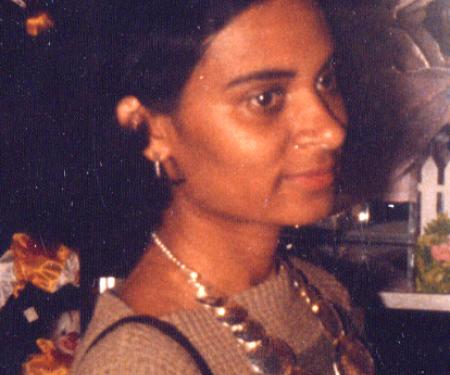
Caribbean American Poet Rajiv Mohabir
Photo Credit: University of Colorado Boulder

My Poetry Corner August 2025 features the poem “Why Whales are Back in New York City” from the poetry collection Whale Aria by Rajiv Mohabir, published by Four Way Books (USA, 2023). His fourth book of poetry received the Gold Medal for Poetry from the Forward Indies, Bronze Medal from the Northern California Publishers and Authors, and finalist/Honorable Mention from the Eric Hoffer Award. All following excerpts of his poems are from this collection.

A queer poet, memoirist, and translator, Mohabir was born in London, England, to Indo-Guyanese parents: descendants of East Indian Indentured laborers to then British Guiana. Migrating to the USA as a kid, he grew up in New York City and Florida’s Greater Orlando Area. He holds a BA from the University of Florida in Religious Studies, an MSEd in TESOL from Long Island University of Brooklyn, and an MFA in Creative Writing and Literary Translation from Queens College of the City University of New York. He received his PhD in English from the University of Hawai‘i. He is currently an assistant professor of poetry in the Department of English at the University of Colorado Boulder.

Whale Aria was conceived in Hawai‘i after the poet first heard humpback whales singing to each other. “I felt it in my pituitary gland first. Then in my throat. A tightening and a deep reverberation,” said Mohabir in his craft essay “On Humpback Whale Song and Poetic Constraint,” published in The American Poetry Review, July/August 2023 Issue.

“Submerged, I opened my eyes and felt the song move through me. What they communicated to one another was a mystery to me, as it is to scientists still, but felt familiar in that it was as if the vibrations stimulated the noise production mechanisms of my own body…. It felt holy, like the cetacean vibrations were sacralizing the space through sound. I wanted to hear the songs again and again and again.”

Continue reading

Coping with Extreme Heatwaves on a Changing Planet

Tags

, , , , , , ,

NOAA USA Seasonal Temperature Outlook Jul-Aug-Sep 2025 – Issued June 19, 2025
Source Credit: NOAA National Centers for Environmental Information

When you sell your soul to the highest bidders, your new masters will exact payment in diverse currencies. One such payment was made on July 29, 2025. Intent on turning back the tides of change, the said Master of Industry seeks to rescind the 2009 Endangerment Finding regarding greenhouse gases under section 202(a) of the EPA Clean Air Act

On that day in July at an auto dealership in Indiana, the Environmental Protection Agency (EPA) Administrator Lee Zeldin made the grand announcement. Also present were US Secretary of Energy Chris Wright, as well as several Indiana officials: the Governor, Attorney General, and Secretary of Energy and Natural Resources. If finalized, the proposal would repeal all greenhouse gas emissions regulations for motor vehicles and engines, and other sources.

“With this proposal, the Trump EPA is proposing to end sixteen years of uncertainty for automakers and American consumers,” said EPA Administrator Zeldin.“In our work so far, many stakeholders have told me that the Obama and Biden EPAs twisted the law, ignored precedent, and warped science to achieve their preferred ends and stick American families with hundreds of billions of dollars in hidden taxes every single year. We heard loud and clear the concern that EPA’s GHG [Greenhouse Gases] emissions standards themselves, not carbon dioxide which the Finding never assessed independently, was the real threat to Americans’ livelihoods. If finalized, rescinding the Endangerment Finding and resulting regulations would end $1 trillion or more in hidden taxes on American businesses and families.” [Emphasis is mine.]

[Note to readers: Carbon dioxide comprises over 79% of all greenhouse gas emissions.]

For their part, the auto industry promises to give us “more safe and affordable cars.” The American Trucking Association promises a decrease in “the cost of living on all products that trucks deliver.”  

Continue reading

Thought for Today: The Doctrine of Discovery and White Christian Nationalism

Tags

, , , , ,

Front Cover The Hidden Roots of White Supremacy and the Path to a Shared American Future by Robert P. Jones (USA, 2023)
Photo Credit: Simon & Schuster

Every US state contains similar legacies of white racial violence because every US state was built on the same foundation, anchored by the Doctrine of Discovery: the conviction that America was divinely ordained to be a new promised land for European Christians. In each of the thirteen original colonies and in eight additional slave states, this deep founding myth justified the enslavement and exploitation of Africans in pursuit of white flourishing. In all, it justified the killing and dispossession of Native Americans and the claiming of their lands by good white Christian people, who alone possessed the virtues necessary for sustaining “civilization.”

[…]

The Christian Doctrine of Discovery continues to cast a long shadow across America. After more than five centuries, we collectively continue to refuse to answer, once and for all, the fundamental question: Is America a divinely ordained promised land for European Christians, or is America a pluralistic democracy? The coexistence of these contradictory traditions has created fractures in our nation’s foundation that weaken the integrity of our laws, our culture, and our politics…

Excerpts from The Hidden Roots of White Supremacy and the Path to a Shared American Future by Robert P. Jones, published by Simon & Schuster, New York, USA, 2023, pp. 258 & 311.

The Doctrine of Discovery, 1493

The Papal Bull “Inter Caetera,” issued by Pope Alexander VI on May 4, 1493, played a central role in the Spanish conquest of the New World. The document supported Spain’s strategy to ensure its exclusive right to the lands discovered by Columbus the previous year. It established a demarcation line one hundred leagues west of the Azores and Cape Verde Islands and assigned Spain the exclusive right to acquire territorial possessions and to trade in all lands west of that line. All others were forbidden to approach the lands west of the line without special license from the rulers of Spain. This effectively gave Spain a monopoly on the lands in the New World.

The Bull stated that any land not inhabited by Christians was available to be “discovered,” claimed, and exploited by Christian rulers and declared that “the Catholic faith and the Christian religion be exalted and be everywhere increased and spread, that the health of souls be cared for and that barbarous nations be overthrown and brought to the faith itself.” This “Doctrine of Discovery” became the basis of all European claims in the Americas as well as the foundation for the United States’ western expansion. In the US Supreme Court in the 1823 case Johnson v. McIntosh, Chief Justice John Marshall’s opinion in the unanimous decision held “that the principle of discovery gave European nations an absolute right to New World lands.” In essence, American Indians had only a right of occupancy, which could be abolished.

Read an excerpt of the English translation of the 1493 Papal Bull at The Gilder Lehrman Institute of American History.


Robert P. Jones, PhD is the president and founder of the Public Religion Research Institute (PRRI) and a leading scholar and commentator on religion and politics. He is the author of the New York Times bestseller The Hidden Roots of White Supremacy and the Path to a Shared American Future (USA, 2023), as well as White Too Long: The Legacy of White Supremacy in American Christianity, which won a 2021 American Book Award. He is also the author of The End of White Christian America, which won the 2019 Grawemeyer Award in Religion.

Jones writes a column on politics, culture, and religion for The Atlantic, Time, Religion News Service, and other media outlets. He is frequently featured in major national media, such as CNN, MSNBC, NPR, The New York Times, The Washington Post, and others. He holds a PhD in religion from Emory University and an MDiv from Southwestern Baptist Theological Seminary.

The Writer’s Life: My Latest Woes & Joys as a Bookseller

Tags

, , , , ,

Ad for Novels by Rosaliene Bacchus designed by and published in Poets & Writers Magazine May-June 2024
Photo Credit: Poets & Writers Magazine

The creative process is the part of being a writer that I enjoy the most. Nothing beats when a character talks to me while I’m doing household chores. Alas, it’s another story when one’s creation is set free into the world. Getting my novels into the hands of readers is not easy. I’m a service-oriented person. Giving away stuff is much easier for me than selling stuff, even when it’s my own books. But, as I’m doing now, I do what I can to promote them. No pressure.

As depicted in the captioned ad, I also promote my books in the Poets & Writers Magazine. I set aside funds every year for advertising. Though I never recoup the cost through sales, it’s also my way of supporting my favorite poets/writers magazine. Our support has become even more critical with federal cuts in funding for the literary arts.

Judging from the length of time since I last received a royalty check from Lulu Press, my book printer and distributor, sales have been slow. Then again, it’s hard to say since Amazon and other major booksellers take their time in forwarding sales royalties to Lulu. My last “Unpaid Revenue Record” dated June 30, 2025, only covers receipts for sales January to November 2024. No sales since then?

Continue reading

“Inheritance” – Poem by Paraguayan American Poet Diego Báez

Tags

, , , , ,

Paraguayan American Poet Diego Báez with Front Cover of Yaguareté White: Poems
Photo Credit: The University of Arizona Press

My Poetry Corner July 2025 features the poem “Inheritance” from the debut poetry collection Yaguareté White (USA, 2024) by Paraguayan American poet Diego Báez. The collection was the finalist for The Georgia Poetry Prize and a semi-finalist for the Berkshire Prize for Poetry.

Son of a Paraguayan father and a white, Pennsylvanian mother, Báez grew up in Central Illinois in a community devoid of families that resembled his own. His brown skin betrayed his otherness to his classmates. On family visits to Paraguay, his broken Spanish marked him as a gringo. This reminder that he wasn’t quite Paraguayan or American infuses his poetry.

Báez lives in Chicago with his wife and daughter. He teaches poetry, English composition, and first-year seminars at the City Colleges, where he is an Assistant Professor of Multidisciplinary Studies.

Rigoberto González, an American poet, writer, and book critic, notes in his Foreword to Yaguareté White: “Diego Báez [is] the first Paraguayan American poet to publish a book originally in English in the United States.” He adds that Báez is transparent in his debut poetry collection about his struggles understanding his own dual identity. “[H]e didn’t grow up speaking Spanish; and the lack of connection to a Paraguayan community in the United States excludes him from the social and cultural foundations that other South American diasporas provide for their respective immigrant populations and subsequent generations.” His memories of his Paraguayan origin arise from visits to his abuelo’s farm outside the village of Villarrica.

Nevertheless, Paraguay is ever-present throughout the poetry collection in which Báez weaves its colonial history of violent militant whiteness together with its three languages: English, the language of US imperialists; Spanish, the language of the colonizers; and Guaraní, the dialect of the indigenous peoples. In combining the Guaraní word for jaguar, yaguareté, and white in the book’s title, the poet also hints at his dual identity.

Continue reading

BRICS SUMMIT BRAZIL 2025: Why They Matter

Tags

, , , , ,

Leaders’ Summit – BRICS Brazil 2025 – Rio de Janeiro – July 7, 2025
Photo Credit: Alexandre Brum / BRICS Brazil

I’ve been so focused on our climate-ecological crises and other pressing issues of our lives in the United States that it has been years since I’ve covered news of the BRICS group of countries. The 17th BRICS Summit 2025, held in Rio de Janeiro, Brazil, on July 6th to 7th, caught my attention. After all, the emerging and developing economies of the Global South* must be facing additional challenges with America’s disengagement from international cooperation on global issues as well as our government’s unilateral stance on trade tariffs worldwide. And much more.

Why should the BRICS group matter? It’s not a formal organization. There’s no constitutional treaty, budget, or a permanent secretariat. Rather, it serves only as a forum for economic and diplomatic coordination in diverse areas of mutual interest. The group also aims to offer an alternative to Western-dominated economic models. The presidency rotates annually with the incumbent responsible for organizing and sponsoring the group’s activities.

Continue reading

Thought for Today: Awareness is Transformative

Tags

, , ,

Front Cover: The Engaged Spiritual Life: A Buddhist Approach to Transforming Ourselves and the World by Donald Rothberg
Photo Credit: Beacon Press (USA, 2006)

For Taigen Dan Leighton, a Zen teacher, scholar of Mahayana Buddhism, and activist, mindful awareness is the meeting point of inner and outer transformation.

Awareness is transformative. It happens on the level of working out the conflicts in our own hearts and minds, as well as in the culture. In meditation, we become aware of our own inner processes and the primal separation of self and other. We come to see the interdependence of self and other, how our identity is dependent on so many things, including what’s going on in society. Once we have some sense of any particular problem in society, then we can also look at it in terms of our own involvement. No one is pure and not part of the problem; we are in a web of connections. Even though I worked to oppose the invasion of Iraq, I am still connected to the murder of Iraqi civilians.

Excerpt from The Engaged Spiritual Life: A Buddhist Approach to Transforming Ourselves and the World by Donald Rothberg, Beacon Press, USA, 2006 (p. 52).

Dr. Donald Rothberg is a leading teacher and writer on meditation, the intersection of psychology and spirituality and socially engaged Buddhism in the United States. He has practiced Buddhist meditation for over 25 years and has been significantly influenced by other spiritual traditions, particularly Jewish, Christian, and indigenous. His teaching and training have helped to pioneer new ways of connecting inner and outer transformation. He is on the Teachers’ Council of Spirit Rock in Northern California and has been an organizer, teacher, and board member of the Buddhist Peace Fellowship. Dr. Rothberg has also served as director of the interfaith Socially Engaged Spirituality program at the Saybrook Graduate School in San Francisco. His book, The Engaged Spiritual Life: A Buddhist Approach to Transforming Ourselves and the World, was named one of the best spiritual books of 2006 by Spirituality and Practice. Dr. Rothberg lives and teaches in Berkeley, California.

California: Spring Garden Delights 2025

Tags

, , , , , , , , ,

Rosaliene’s Garden – Spring 2025 – Sons’ Adjacent Apartment

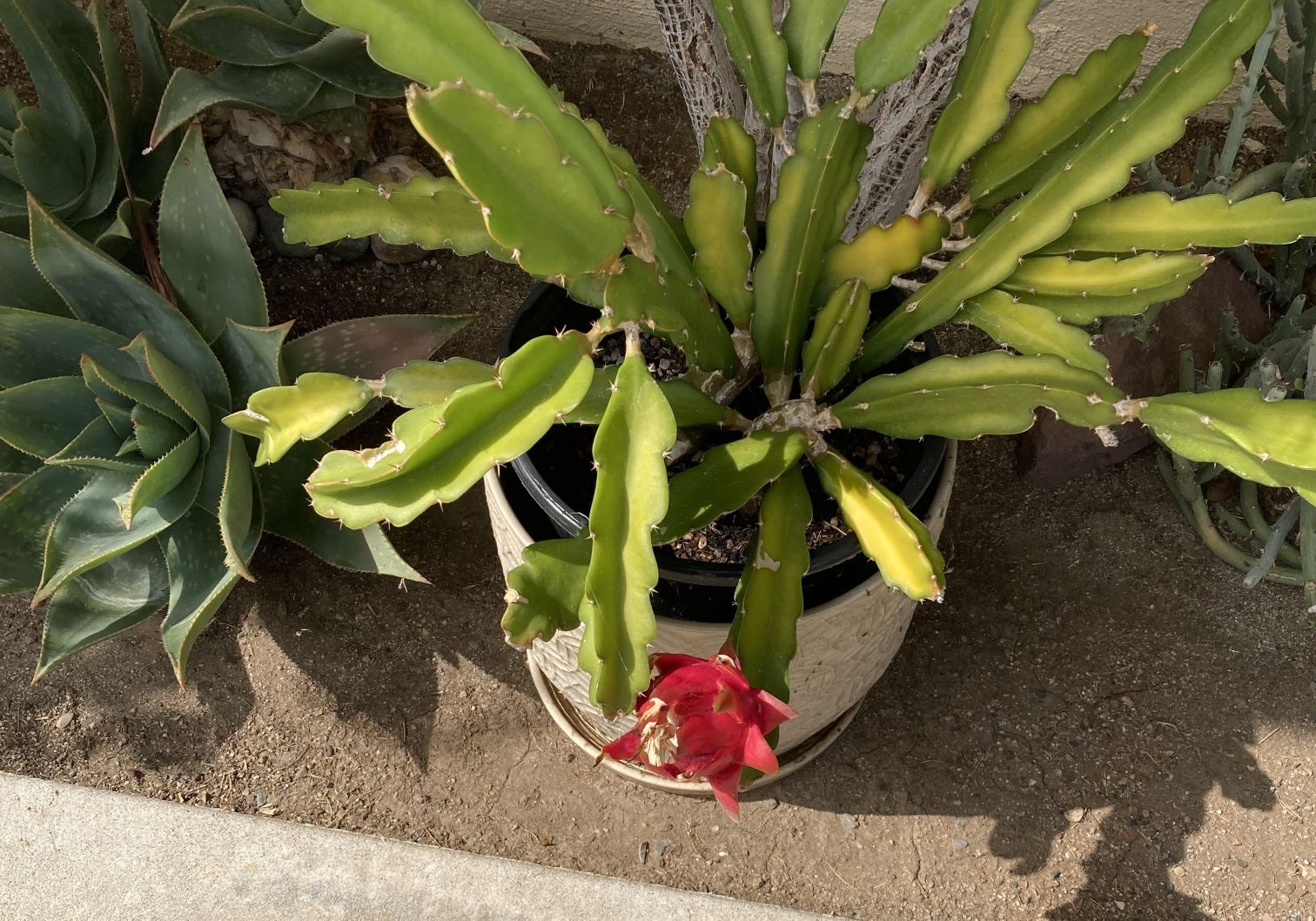
During the warmer and drier spring days, I was finally able to return to my weekend gardening activities. Our garden remains a source of joy and a refuge. With ongoing raids in our Latino communities across Los Angeles County and beyond, it has become clear that one’s legal status offers no protection from being randomly grabbed and disappeared. No criminal record; no problem. They fabricate one: resisting arrest, assaulting an officer. It’s a numbers game: a 3000-a-day quota. Now, I’m wary about going for my scheduled yearly blood and urine tests next month. You see, my medical clinic also serves our Latino and homeless communities.

During the time I spend with our plants, I forget this crazy world I now live in. They respond to my presence, my touch, and my voice. (Yes. I talk to the plants. 😊) They care not about the color of my skin or country of origin. My neighbor’s cat, Pumpkin, couldn’t care less, either. She loves to spend time with me while I’m gardening. At the request of blogger and cat lover, Rebecca Bud at Rebecca’s Reading Room, I’m sharing the photos below of Pumpkin.

Continue reading

Poem “Wildebeests Migrate Across the Serengeti” by Brazilian Poet Micheliny Verunschk

Tags

, , , ,

Brazilian Poet Micheliny Verunschk
Photo by Renato Parada (2023)

My Poetry Corner June 2025 features the poem “Wildebeests Migrate Across the Serengeti / Gnus Migram Através do Serengeti” from the poetry collection The Movement of Birds / O Movimento dos Pássaros (2020) by Micheliny Verunschk, an award-winning Brazilian poet, romance novelist, literary critic, and historian. All the excerpts cited in this article are from this collection.

Verunschk was born in Recife, capital of the Northeast State of Pernambuco, in 1972 during the period of Brazil’s military dictatorship (1964-1985). Her father was in the military; her mother was a teacher. She holds a master’s degree in Literature and Literary Criticism, as well as a doctorate in Communication and Semiotics from the Pontifical Catholic University of São Paulo (PUC). She has lived in São Paulo since 2004.

The young Micheliny spent most of her childhood in Arcoverde, a violent city in the semi-arid interior of Pernambuco. Exposed to violence at an early age, she was curious about what her father was doing in the military. She also lived in Tupanatinga, yet another violent city in the interior. It’s no surprise then, with her father’s encouragement, that she found release in writing poetry and stories as early as nine years old.

Continue reading

Oh, what joy!

Tags

, , ,

Front Cover – The Twisted Circle: A Novel by Rosaliene Bacchus
Cover Art and Design by Rosaliene Bacchus

Amid the crazy going on in Downtown Los Angeles since Friday, June 6, 2025, and subsequent federal deployment of National Guard troops and active-duty marines, I received good news from Dawn Fanshawe, a blogging friend in the United Kingdom, on Tuesday, June 10th. She sent me the link to her review of my novel, The Twisted Circle, on Goodreads.

A Five Star review! Oh, what joy! It’s such a blessing when a reader not only enjoys my storytelling but also takes the time to recommend it to others. Thank you, Dawn, for brightening my day during these uncertain times in an alternate reality not of my making.

Continue reading