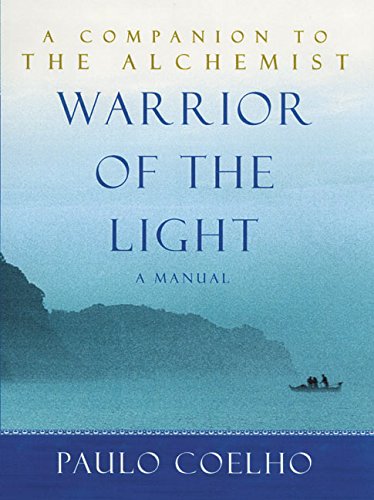
Front Cover – Warrior of the Light: A Manual by Paulo Coelho
“Hitler may have lost the war on the battlefield, but he ended up winning something too,” says Marek Halter, “because man in the twentieth century created the concentration camp and revived torture and taught his fellow men that it is possible to close their eyes to the misfortunes of others.”
Perhaps he is right: There are abandoned children, massacred civilians, innocent people imprisoned, lonely old people, drunks in the gutter, madmen in power.
But perhaps he isn’t right at all, for there are also Warriors of the Light.
And Warriors of the Light never accept what is unacceptable.
Excerpt from Warrior of the Light: A Manual by Paulo Coelho, Translated from the Portuguese by Margaret Jull Costa, HarperOne, New York, USA, 2003, p. 70.
PAULO COELHO, born in Rio de Janeiro in 1947, is a Brazilian lyricist and novelist, best known for his novel, The Alchemist (1988). His work has been published in more than 170 countries and translated into eighty languages. His books have had a life-enchanting impact on millions of people worldwide.
Barclays Bank DCO – Water Street Head Office – Georgetown – British Guiana – Circa 1950s
In Chapter Eleven of my work in progress, I share my experience of entering a male-dominated workforce at the age of eighteen years. It’s the period October 1969 to December 1970. The term “sexual harassment” was not yet in use to describe male sexual overtones and intimidation in the workplace. According to a Wikipedia article, the term was first used in May 1975.
In November 1969, while I entered a new phase in my life as a young woman, hundreds of thousands of protestors took to the streets across America to call for an end to the Vietnam War. In the United Kingdom, John Lennon of The Beatles rock band returned his MBE medal in protest to the British government’s support of the war. Richard Nixon’s inauguration as President of the United States in January 1970 eventually brought a withdrawal of all US troops in 1973.
On February 23, 1970, Guyana became the first Republic in the Commonwealth Caribbean. The country’s official name is the ‘Cooperative Republic of Guyana.’ Queen Elizabeth II, the Head of the British Commonwealth, entered her eighteenth year on the throne. Later in the year, Sir Edward Heath replaced Harold Wilson as Prime Minister of the United Kingdom.
On Guyana’s radio waves, Peter, Paul and Mary were “Leaving on a Jet Plane.” Simon & Garfunkel offered us a “Bridge Over Troubled Waters,” while The Beatles urged that we “Let It Be.” The Jamaican reggae artist Bob Marley & the Wailers released their first album “Soul Rebels.”
My Poetry Corner April 2024 features the poem “Earth Crisis” from the poetry collection We Are Poetry: Lessons I Didn’t Learn in a Textbook (USA, 2022) by Kym Gordon Moore, an African American poet and marketing communications professional. The following excerpts of poems are all sourced from this collection.
Moore earned a Bachelor’s Degree in Criminal Justice and a Master of Business Administration degree with a concentration in Marketing. Born and raised in South Carolina, she now lives in Charlotte, North Carolina.
With over four decades as a writer and public speaker in marketing communications, Moore has become an advocate of using poetry in the fight against illiteracy and aliteracy among children and adults. She also mentors young and aspiring poets by identifying commonalities in their personal stories while exposing them to diverse opportunities that transform their experiences into creative development.
Moore’s latest book is not your regular collection of poetry. As noted on the back cover: “This book contains several components that serve as an academic complement giving creative insight into the poetry revolutionary movement. It functions as a dialogue engineer, designed to build and employ the application of poetry in the fight against illiteracy, functional illiteracy, aliteracy, and disparity.”
Earth Day 2024: Earth vs. Plastics Official Earth Day 2024 Poster Photo Credit: Earth Day Official Website
April 22, 2024, is Earth Day. The theme this year, Planet vs. Plastics, “calls to advocate for widespread awareness on the health risk of plastics, rapidly phase out all single use plastics, urgently push for a strong UN Treaty on Plastic Pollution, and demand an end to fast fashion.”
In their unwavering commitment to end plastics for the sake of human and planetary health, the Earth Day Network (EDN) is demanding a 60 percent reduction in the production of ALL plastics by 2040. To achieve this goal, they are:
Raising public awareness about plastic’s harm to human and biodiversity health, pushing for research transparency.
Proposing to phase out single-use plastics by 2030 and embedding these commitments in the United Nations Global Plastic Treaty on Plastic Pollution in 2024.
Advocating for policies aimed at combating the environmental impact of fast fashion which relies on the use of synthetic materials made of plastics, such as polyester and nylon.
Calling for investment in innovative technologies aimed at finding sustainable alternatives to plastics because plastics are made from oil and toxic chemicals.
Become part of the solution. Together, we can create a future where our planet thrives without the burden of plastics.
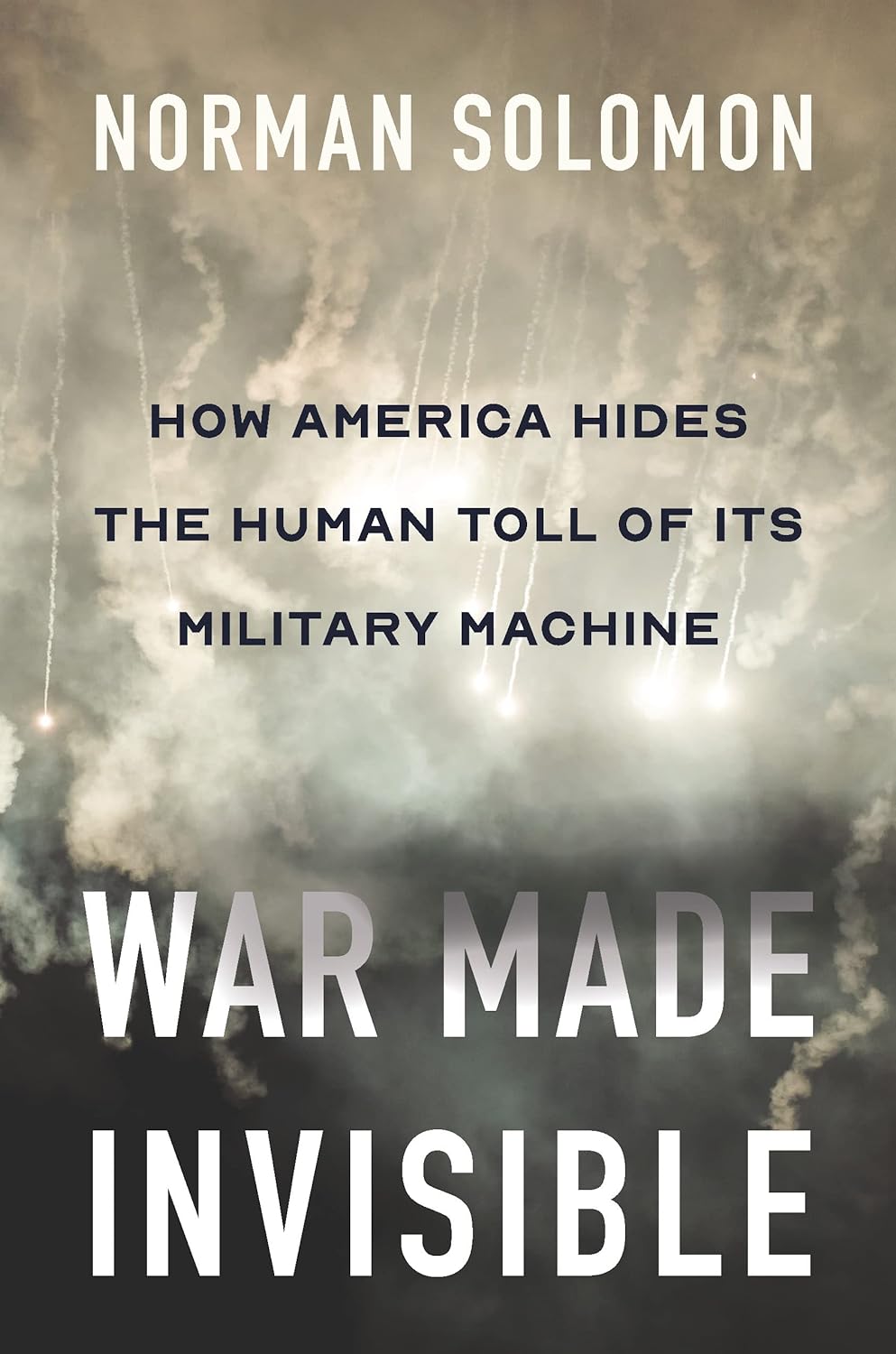
Front Cover: War Made Invisible: How America Hides the Human Toll of Its Military Machine by Norman Solomon
Frequent killing of civilians is inherent in the types of wars that the United States has waged in this century. Despite all the hype about precision weaponry, even its top-rated technologies are fallible. What’s more, they operate in flawed—and sometimes highly dysfunctional—contexts. Whether launching attacks from distant positions or directly deployed, American forces are far removed from the societies they seek to affect. Key dynamics include scant knowledge of language, ignorance of cultures, and unawareness of such matters as manipulation due to local rivalries.
When U.S. officials say that civilian deaths are merely accidental outcomes of the war effort, they don’t mention that such deaths are not only predictable—they’re also virtually inevitable as results of policy priorities. Presumptions of acceptability are hot-wired into the war machine. The lives taken, injuries inflicted, traumas caused, environmental devastation wrought, social decimation imposed—all scarcely rank as even secondary importance to the power centers in Washington.
Norman Solomon, War Made Invisible: How America Hides the Human Toll of Its Military Machine, The New Press, New York, USA, 2023, pp. 53-54.
NORMAN SOLOMON is an American journalist, media critic, author, and activist. He is the co-founder of the online organization RootsAction.org and executive director of the Institute for Public Accuracy, a consortium of policy researchers and analysts. His books include War Made Easy: How Presidents and Pundits Keep Spinning Us to Death (2006) and Made Love, Got War: Close Encounters with America’s Warfare State (2008). He lives in the San Francisco area in California.
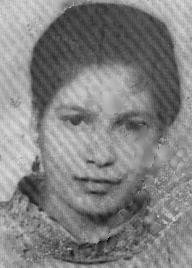
Kowsilla (1920-1964) – Leonora Village – British Guiana
Since I had already featured Kowsilla of Leonora on International Women’s Day in 2013, I had decided not to share her expanded portrait in Chapter Nine of my work in progress. I changed my mind the day that our former president and current presidential candidate called the black- and brown-skinned migrants/refugees at our southern border “animals.” “[They’re] poisoning the blood of our country,” he said on another occasion. His remarks hurt. It matters not that the blood of these people has fueled and continues to fuel our giant corporations worldwide. Kowsilla (1920-1964) was such a person.
Kowsilla’s abruptly shortened life was so inconsequential to the powerful British sugar producers that her ultimate sacrifice at Plantation Leonora only merited a brief description in our local newspapers. In recalling those early days of growing up in then British Guiana, I regard her as a worthy and memorable representative of the rural working-class women of her generation. With little information about her life, I took on the challenge of re-creating her story.
To tell her story, I turned to Kowsilla’s ancestral history as a descendant of Indian indentured laborers. I found Coolie Woman: The Odyssey of Indenture by Gaiutra Bahadur (The University of Chicago Press, 2014) an excellent resource. What strong and courageous women! I also considered the cultural norms of the rural East Indian population during Kowsilla’s early years.
I hope that I have done justice in re-creating her unrecorded life.
Brazilian Poet Mário Quintana (1966) Photo Credit: Correio da Manhã (Posted on Wikipedia)
My Poetry Corner March 2024 features the poem “Certainties / Certezas” by Brazilian poet, writer, and translator Mário Quintana (1906-1994). Known as the poet of “simple things,” Quintana shares his beliefs on love and friendship for making our lives worthwhile. Though unable to determine the publication date of this poem, I get the sense that it was written at a later stage in his life. In a change to my normal presentation, I intersperse excerpts of this poem with the poet’s lifelong journey to becoming a beloved and acclaimed poet in his state and across Brazil.
I don’t want someone who dies of love for me… I just need someone who lives for me, who wants to be with me, hugging me.
Born in the municipality of Alegrete in the southern state of Rio Grande do Sul, Quintana was the third child: a son of a pharmacist and grandson of doctors. At the age of seven, with the help of his parents, he learned to read using the local newspaper as a primer. His parents also initiated his studies in French and Spanish. After he completed elementary school in his hometown, his father enrolled him as a boarding student at the Military College in the state capital, Porto Alegre.
I don’t demand that someone loves me like I love them, I just want them to love me, no matter with what intensity. I don’t assume that everyone I like likes me…
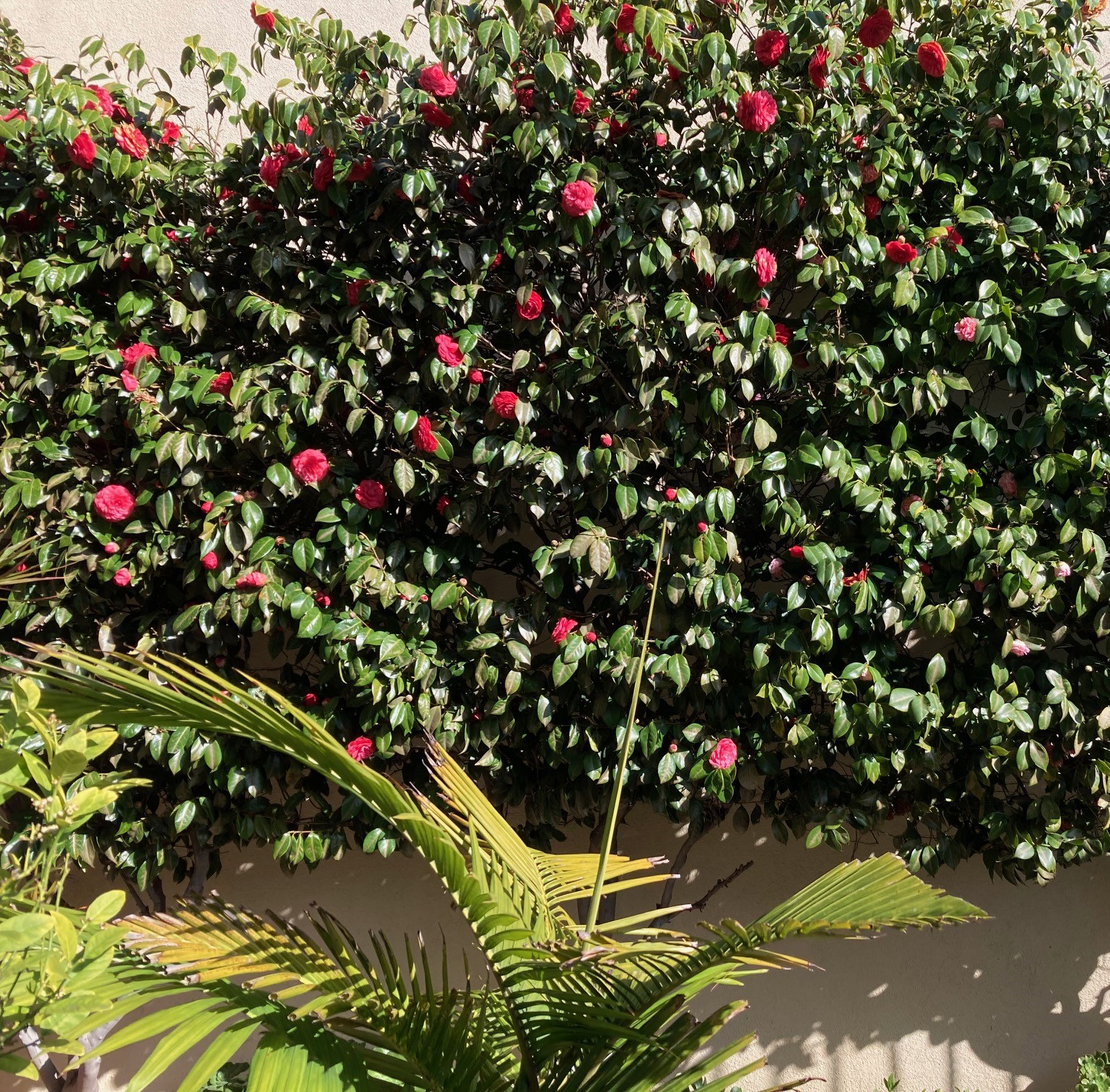
Camellia Trees – Winter 2024 – Los Angeles – Southern California
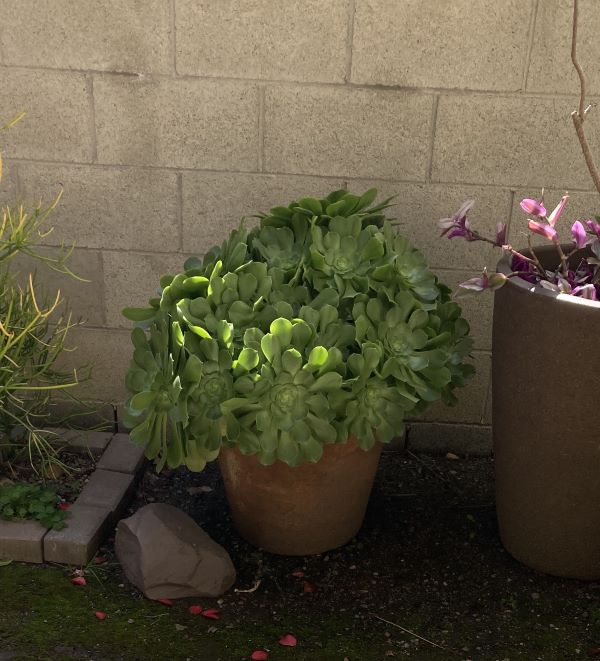
After the hottest year on record, we’ve had another unusually wet winter. Our garden turned a luxurious green with joy. Red camellias, in the captioned photo, blushed as we passed by on the way to and from the parking area. With a few exceptions, the succulent plants have also responded well to the soaking.
The growth of the potted Aeonium Mint, shown below, was impressive. Just two plants! Compare its growth since October 2023.
Aeonium Mint February 2024Aeonium Mint October 2023
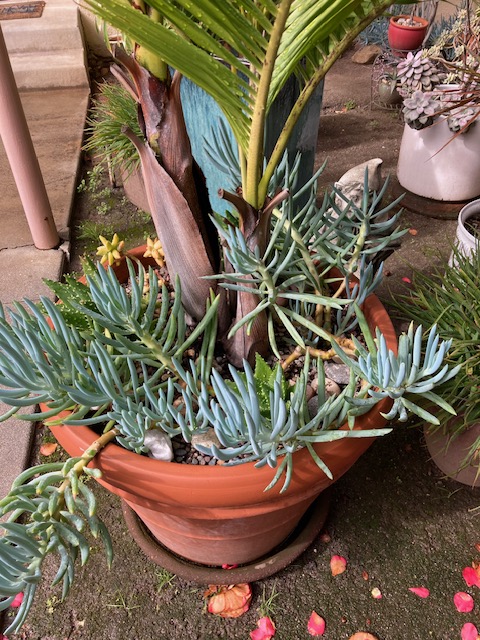
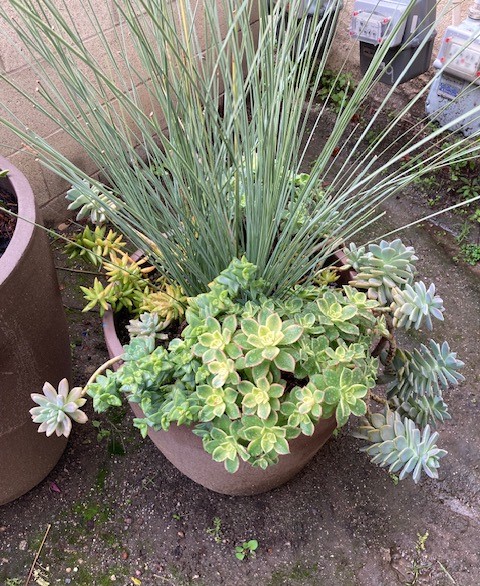
Other large potted plants in this open area, shown below, have also responded well to the drenching.
The Aeonium Kiwi, one of my favorite succulents, is also happy. Thankfully, the open area did not flood and drained well.
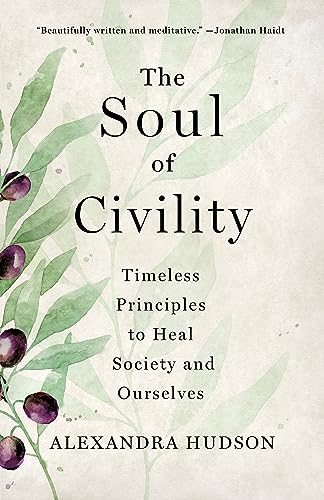
Front Cover: The Soul of Civility: Timeless Principles to Heal Society and Ourselves by Alexandra Hudson
Civility tempers and elevates the interactions between citizens, whether or not those citizens are public leaders. Civility begins with recognizing our shared humanity. It starts with seeing that we are more alike than unlike, and viewing our difference in light of our likeness. It starts in small ways, sowing seeds of the friendship and trust that ensure our civitas survives.
Deliberative democracy depends on the premise that people of goodwill can negotiate differences and work together in a productive way through rational—and civil—debate. Civility builds an active willingness to listen to others, to consider their point of view alongside our own, and to evaluate varying conceptions of “the good.” The civil citizen accepts that others have genuinely held moral positions, and that reasonable minds can disagree. These traits are equally essential for all positions along the political spectrum, and for our democracy, public leaders, and citizens alike.
~ Alexandra Hudson, The Soul of Civility: Timeless Principles to Heal Society and Ourselves, St. Martin’s Publishing Group, New York, USA, 2023, p. 257.
ALEXANDRA HUDSON is a writer, storyteller, and the founder of Civic Renaissance, a publication and intellectual community dedicated to reviving the wisdom of the past to help us lead richer lives in the present. She was named a 2019 Novak Journalism Fellow, and she contributes to Fox News, CBS News, The Wall Street Journal, USA Today, Time magazine, Politico magazine, and Newsweek. Her TV series, Storytelling and the Human Condition, was produced with The Great Courses and is available for streaming on Wondrium and Audible. Hudson earned a master’s degree in public policy at the London School of Economics as a Rotary Scholar. An adjunct professor at the Indiana University Lilly Family School of Philanthropy, she lives in Indianapolis with her husband and children.
Janet Jagan nee Rosenberg – President of Guyana (1997-1999)
Since I’ve already posted Chapter Eight of my work in progress, featuring “Winifred Gaskin: A Political Woman,” I’m moving on to Chapter Nine that portrays another political woman and the first female president of Guyana (1997-1999): Janet Jagan nee Rosenberg. The white American-born wife of Cheddi Jagan—co-founder of the left-leaning People’s Progressive Party (PPP), Guyana’s first political party to garner massive support—was regarded as an “outsider” among the ruling British and local elite at the time.
When I started this book project, I did not plan on including Janet Jagan among the influential women in the formation of my social and political consciousness. As a young devout Christian, I viewed her not only as an outsider but also as a threat to religious education in our parochial schools. Though I did not share her communist ideology, I would be remiss in not acknowledging her influence in empowering Guyanese women to speak out against oppression and injustice by those holding power or authority within the home, workplace, and public spaces. In retrospect, she may well be the driving force for my rebellious attitude towards those in authority: A criticism I received from my religious superiors as a young Catholic nun.
As Cheddi’s wife and political partner, Janet’s remarkable journey is also an interesting case of what can be achieved when the male and female work together as equal partners. Here in the United States, we are still plagued by the patriarchal dominator model of organizing our society. As the world’s greatest democratic nation, we lag behind other countries, advanced and developing, in electing a woman for the top position as president. Since the 1872 elections, several American women have tried and failed. Isn’t it ironic that the first American woman to hold the position did so in a foreign country? Hillary Clinton came close in the 2016 elections. Does Nikki Haley stand a chance in 2024? We have no shortage of remarkable American-born women capable of leading our nation.
We left Guyana for Brazil in 1987 before the PPP returned to power in 1992, after spending 28 years in Parliament as the major opposition party. With her husband as Executive President, the 72-year-old Janet became First Lady of the Republic of Guyana. She was 77 years old when she was elected as Executive President, following Cheddi’s death.