Map of North America and Greenland Source Credit: World Atlas
The [United Nations] Organization and its Members, in pursuit of the Purposes stated in Article 1, shall act in accordance with the following Principles.
1. The Organization is based on the principle of the sovereign equality of all its Members.
2. All Members, in order to ensure to all of them the rights and benefits resulting from membership, shall fulfil in good faith the obligations assumed by them in accordance with the present Charter.
3. All Members shall settle their international disputes by peaceful means in such a manner that international peace and security, and justice, are not endangered.
4. All Members shall refrain in their international relations from the threat or use of force against the territorial integrity or political independence of any state, or in any other manner inconsistent with the Purposes of the United Nations.
During 2024, thousands of our American brothers and sisters lost loved ones, property, and jobs to various weather/climate-related disasters that struck their state. Many of them are still recovering from their losses. Without resources, others will never recover. Tragedy does not impact us all in the same way.
On January 10, 2025, the National Oceanic and Atmospheric Administration (NOAA) released the data and analysis quantifying the economic costs of the disasters that reached or exceeded US$1 billion. They confirmed 27 weather/climate disaster events, amounting to a total ofUS$182.7 billion. This places 2024 as the fourth costliest on record, trailing behind 2017 (US$395.9 billion), 2025 (US$268.5 billion), and 2022 (US$183.6 billion).
Front Cover: Losing Our Religion: An Altar Call for Evangelical America by Russell Moore Photo Credit: Penguin Random House (USA, 2023)
Increasingly, in this sort of American culture, it is not just that we are divided about what we value about the way things should be, but what we are allowed to say about the way things actually are. Now, notice, what I wrote here is not what we see about the way things are, but what we are allowed to say. This is because we live in a time in which “truth” is seen as a means to tribal belonging, rather than a reality that exists outside of us…. Our passions and experiences and intuitions often warp the way we see things, especially the most important things, which is why we need grace. People are going to have—from now till the Apocalypse—arguments about what is true and what is false, what is real and what is fake. Our problem now, though, is that, increasingly, we are called not just to argue about what is true, but to say things that we know to be false, just to prove that we are part of the tribe to which we belong.
Excerpt from Losing Our Religion: An Altar Call for Evangelical America by Russell Moore, Penguin Random House LLC, USA, 2023 (p. 69).
Note: This excerpt is taken from “Chapter Two: Losing Our Authority” in which Russell Moore addresses the radicalization of many evangelicals, following the controversies regarding the global COVID-19 pandemic and the January 6, 2021, insurrection.
Russell Mooreis an evangelical Christian theologian and ordained minister. He is Editor in Chief of Christianity Today and previously served as President of the Southern Baptist Convention’s Ethics and Religious Liberty Commission (2013-2021). Prior to that role, Moore served as provost and dean of the Southern Baptist Theological Seminary in Louisville, Kentucky, where he also taught theology and ethics.
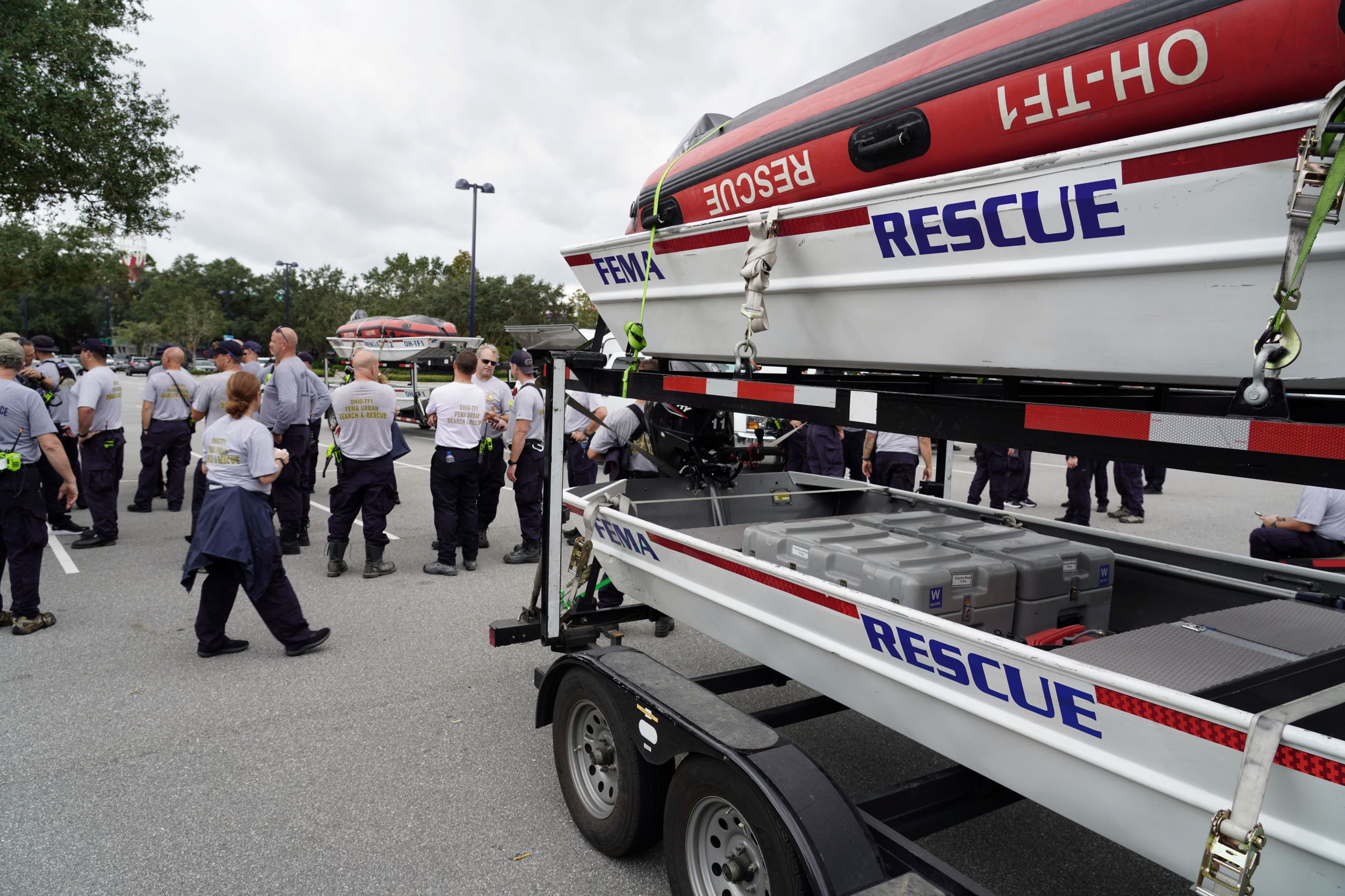
My heart goes out to all the folks whose lives have been upended by Hurricanes Helene and Milton. As the warming of Earth’s oceans and atmosphere continues unabated—due to humanity’s inability to reduce our dependency on fossil fuels—tropical storms have become supercharged and more destructive over a much wider area.
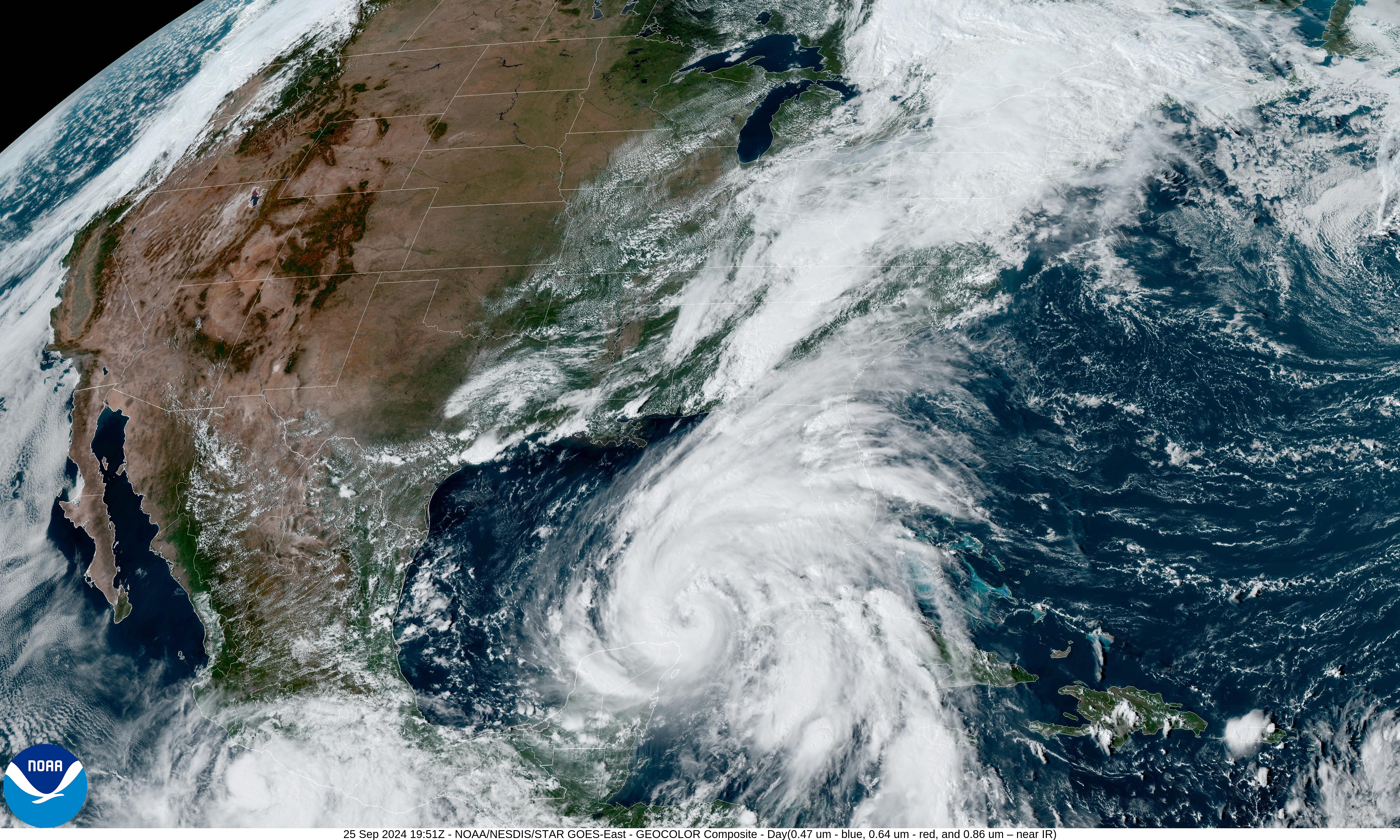
Such was the case recently when America’s southeastern states were hit by Hurricanes Helene (September 26-28) and Milton (October 9-10). It’s not just their wind speeds that make these storms deadly. Their size, speed, and capacity to hold more moisture can wreak havoc over more extensive areas. What’s more, their rapid intensification has alarmed our meteorologists. Within just two days, the unusually warm water of the Gulf of Mexico transformed Hurricane Helene from a relatively weak tropical storm into a historic Category 4 hurricane for this time of the year. Not to be outdone, Hurricane Milton took just over 48 hours to intensify from a tropical depression to a Category 5 Hurricane, according to NOAA Climate.gov. This is bad news. Millions of people in their projected path may not have sufficient time in which to evacuate to safety.
NATIONAL OCEANIC AND ATMOSPHERIC ADMINISTRATION (NOAA)
Break Up NOAA. The single biggest Department of Commerce agency outside of decennial census years is the National Oceanic and Atmospheric Administration, which houses the National Weather Service, National Marine Fisheries Service, and other components. NOAA garners $6.5 billion of the department’s $12 billion annual operational budget and accounts for more than half of the department’s personnel in non-decadal Census years (2021 figures).
NOAA consists of six main offices: The National Weather Service (NWS); The National Ocean Service (NOS); The Oceanic and Atmospheric Research (OAR); The National Environmental Satellite, Data and Information Service (NESDIS); The National Marine Fisheries Service (NMFS); and The Office of Marine and Aviation Operations and NOAA Corps.
Together, these form a colossal operation that has become one of the main drivers of the climate change alarm industry and, as such, is harmful to future U.S. prosperity.This industry’s mission emphasis on prediction and management seems designed around the fatal conceit of planning for the unplannable. That is not to say NOAA is useless, but its current organization corrupts its useful functions. It should be broken up and downsized.[Emphasis mine.]
[…]
Focus the NWS on Commercial Operations. Each day, Americans rely on weather forecasts and warnings provided by local radio stations and colleges that are produced not by the NWS, but by private companies such as AccuWeather. Studies have found that the forecasts and warnings provided by the private companies are more reliable than those provided by the NWS.
The NWS provides data the private companies use and should focus on its data-gathering services. Because private companies rely on these data, the NWS should fully commercialize its forecasting operations.
Thomas F. Gilmanserved as Assistant Secretary of Commerce for Administration and Chief Financial Officer of the U.S. Department of Commerce in the Trump Administration. Currently, he is a Director of ACLJ Action and Chairman of Torngat Metals. Gilman is the former CEO of Chrysler Financial and has had a 40-plus year career as a senior executive and entrepreneur in the global automotive industry, including roles at Chrysler Corporation, Cerberus Capital Management, Asbury Automotive Group, TD Auto Finance, and Automotive Capital Services. He holds a BS in finance from Villanova University.
The National Oceanic and Atmospheric Administration (NOAA) is one of six agencies falling under the umbrella of the U.S. Department of Commerce. The agency’s mission is “to provide daily weather forecasts, severe storm warnings, climate monitoring to fisheries management, coastal restoration, and the supporting of marine commerce. NOAA’s products and services support economic vitality and affect more than one-third of America’s gross domestic product. NOAA’s dedicated scientists use cutting-edge research and high-tech instrumentation to provide citizens, planners, emergency managers and other decision makers with reliable information they need when they need it.”
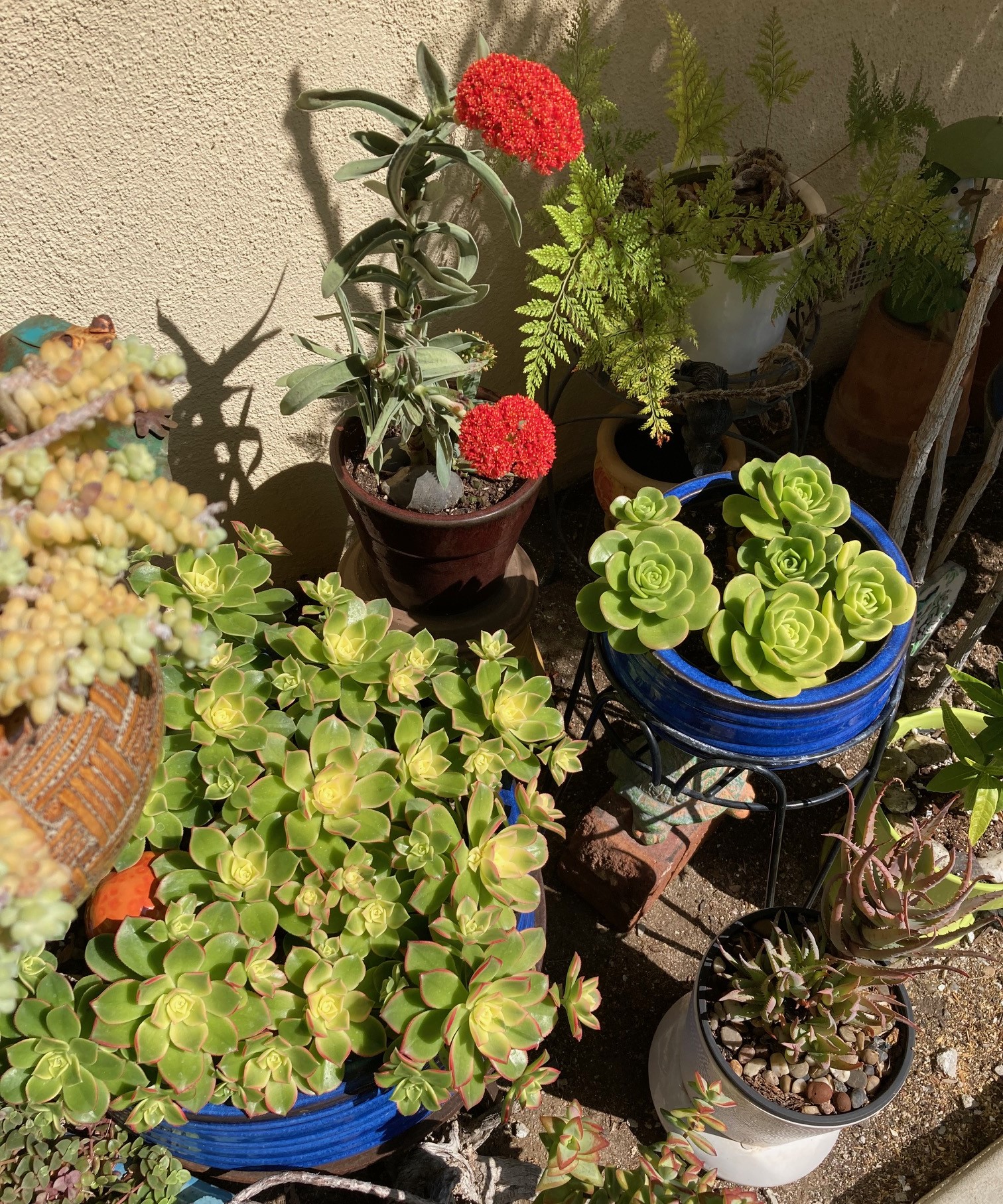
Rosaliene’s Succulent Garden – Summer 2024 – Los Angeles – Southern California
This summer, June through August 2024, the average temperature for the contiguous American states was 73.8° F (23.2°C) – 2.5 degrees Fahrenheit above average – ranking as our nation’s fourth-hottest summer on record. So says NOAA’s National Centers for Environmental Information. California – together with Arizona, Florida, Maine, and New Hampshire – “sizzled through their warmest summer on record.” Heatwaves are growing more frequent, more extreme, and longer lasting in the U.S. West and across the world as the climate crisis drives increasingly severe and dangerous weather conditions.
To end this summer with a bang, an excessive heatwave arrived on Thursday, September 5th, bringing a record-breaking temperature of 112°F (44.4°C) in downtown Los Angeles on Friday, September 6th, says the National Weather Service. With temperatures in the nineties in our neighborhood in West Los Angeles for five days straight, I was forced to stay indoors – no weekend gardening – until relief came on Tuesday, September 10th.
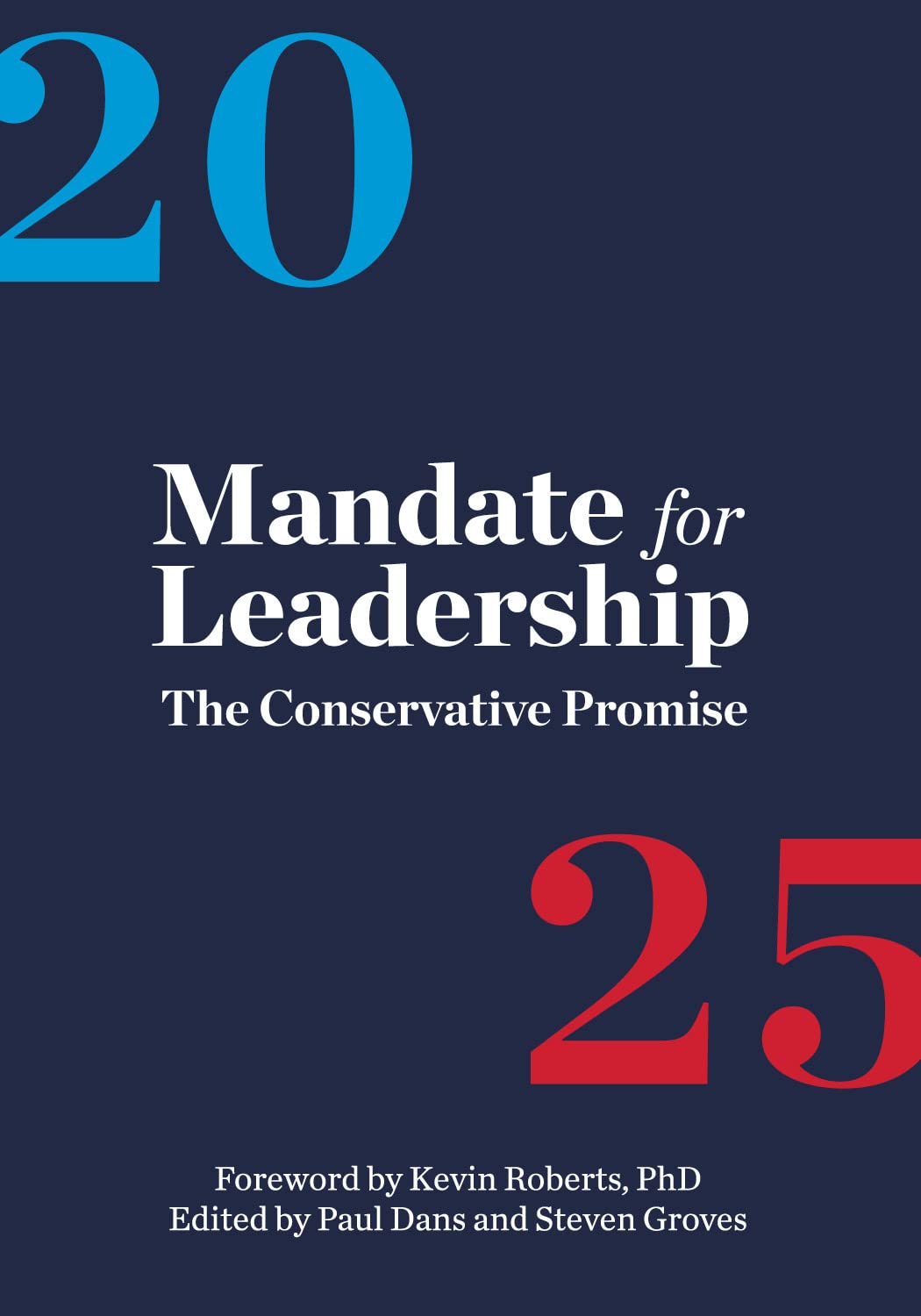
Front Cover: Mandate for Leadership 2025: The Conservative Promise by the Heritage Foundation Photo Credit: The Heritage Foundation
Goal #1: The Secretary [of the Department of Health & Human Services]should pursue a robust agenda to protect the fundamental right to life, protect conscience rights, and uphold bodily integrity rooted in biological realities, not ideology.
From the moment of conception, every human being possesses inherent dignity and worth, and our humanity does not depend on our age, stage of development, race, or abilities. The Secretary must ensure that all HHS programs and activities are rooted in a deep respect for innocent human life from day one until natural death: Abortion and euthanasia are not health care.
A robust respect for the sacred rights of conscience, both at HHS and among governments and institutions funded by it, increases choices for patients and program beneficiaries and furthers pluralism and tolerance. The Secretary must protect Americans’ civil rights by ensuring that HHS programs and activities follow the letter and spirit of religious freedom and conscience-protection laws….
Roger Severinois Vice President of Domestic Policy at The Heritage Foundation. As director of the Office for Civil Rights at the U.S. Department of Health and Human Services (HHS) from 2017 to 2021, he led a team of more than 250 staff enforcing civil rights, conscience, and health information privacy laws. Roger subsequently founded the HHS Accountability Project at the Ethics & Public Policy Center. He holds a JD from Harvard Law School, an MA in public policy from Carnegie Mellon University, and a BA from the University of Southern California.
Fragrant Red Rosebush – Spring 2024 – Los Angeles – Southern California
With an ongoing global climate crisis, due to humanity’s addiction to fossil fuels, our weather swings from one extreme to the next. Heat domes. Prolonged drought. Rain bombs. Epic floods. We’re not the only ones impacted. So are the trees and plants. Unlike those of us who can find shelter, they must face the elements head-on. Some are resilient and adaptive. Others are not so fortunate.
I’ve observed that the rosebushes in our communal garden are more sensitive to these extremes than my succulent plants. Over the years, we have lost 50 percent of our rosebushes, leaving only eight survivors. The two most recent losses, of the white Hedgerow variety, occurred after the Winter 2022-2023 heavy rains. Grown in an area fully exposed to the elements, their roots sat for three months underwater.
The photo on the left below shows one of them. I haven’t asked the gardener to uproot it in the hope that there may still be some lingering life. The photo on the right is also a white Hedgerow rosebush that stands at the other end of the same exposed plot. After standing for three months in the Winter 2023-2024 floodwater, it’s not doing well. In spring, it’s usually filled with lots of sprawling leaf-laden branches and roses. During our “gray May,” it produced only one tiny rose. I fear that it will not survive another wet winter.
Dead White Rosebush – Winter 2022-2023White Rosebush – Spring 2024
About seven years ago, I undertook to clean up the garden plot of a former neighbor and friend, a food stylist, who had moved back to her home state when her husband Benny took ill with lung cancer. He died months later in January 2016. In March the following year, my best friend and poet also died of lung cancer. Taking care of this plot became part of my grieving process.
After clearing the dense overgrowth of cactus plants, I uncovered the stunted dead trunk and branches of what appeared to be a rosebush. The six-inch tall (15 cm) plant had been smothered by more aggressive plants. For two years I watered it without any sign of life. Then, wonders of wonders, a new branch appeared with tender baby leaves. My care and attention had paid off. The first and single stunning pink rose appeared a year later. Then in 2022, it thanked me with five roses (see photo on the left below). My Miracle Rosebush, as I call it, continued to produce up to six flowers each spring, but I’ve noticed a change in the color and shape, as shown in the photo on the right below. Resilience has its limits as we age.
Stunted Miracle Rosebush – Spring 2022Stunted Miracle Rosebush – Spring 2024
My former food stylist neighbor planted the captioned fragrant red rosebush. Then just a small potted plant used in one of her photo shoots, it has grown into the hardiest and most luxurious of our rosebushes that keeps on giving. It reminds me of our neighbor Benny who is no longer with us. Healing after loss can come in unexpected ways.
Three other rosebushes also brighten my days with their unique beauty and vibrancy, as pictured below. The two remaining rosebushes are not yet in bloom. Hopefully, with the “gray May” and early “June gloom” now behind us, they will awaken to the summer heat.
The photos below were taken by a neighbor and dear friend who, sad to say, has recently moved out-of-state. In the early spring, I also lost my young gardening enthusiast and companion who moved to another neighborhood, trading her garden space for a dog park and ocean-view. Our lives, like the weather and climate, are continually in motion. I adapt as best as I can and, like the rosebushes, bloom in due season.
Earth Day 2024: Earth vs. Plastics Official Earth Day 2024 Poster Photo Credit: Earth Day Official Website
April 22, 2024, is Earth Day. The theme this year, Planet vs. Plastics, “calls to advocate for widespread awareness on the health risk of plastics, rapidly phase out all single use plastics, urgently push for a strong UN Treaty on Plastic Pollution, and demand an end to fast fashion.”
In their unwavering commitment to end plastics for the sake of human and planetary health, the Earth Day Network (EDN) is demanding a 60 percent reduction in the production of ALL plastics by 2040. To achieve this goal, they are:
Raising public awareness about plastic’s harm to human and biodiversity health, pushing for research transparency.
Proposing to phase out single-use plastics by 2030 and embedding these commitments in the United Nations Global Plastic Treaty on Plastic Pollution in 2024.
Advocating for policies aimed at combating the environmental impact of fast fashion which relies on the use of synthetic materials made of plastics, such as polyester and nylon.
Calling for investment in innovative technologies aimed at finding sustainable alternatives to plastics because plastics are made from oil and toxic chemicals.
Become part of the solution. Together, we can create a future where our planet thrives without the burden of plastics.
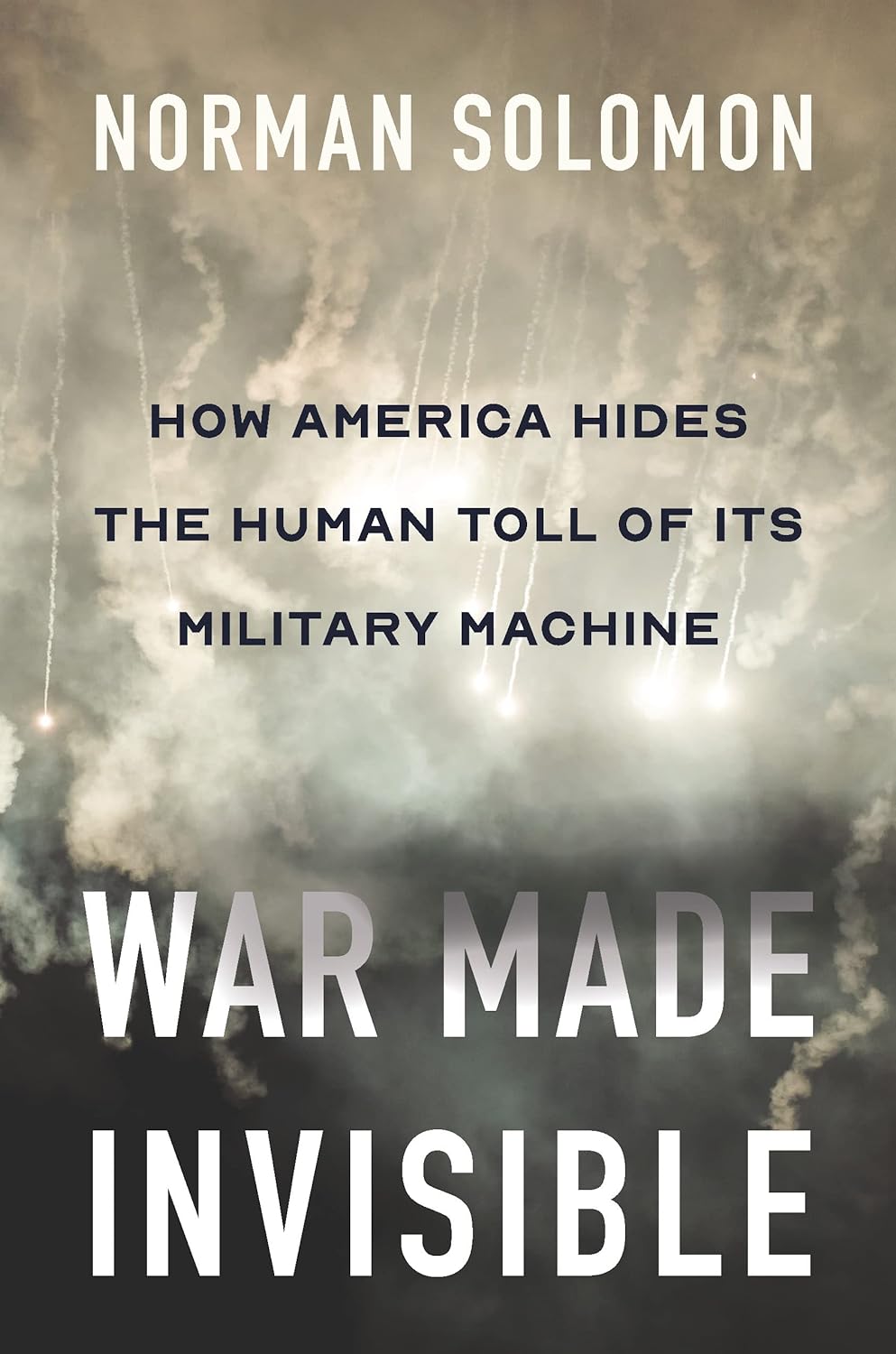
Front Cover: War Made Invisible: How America Hides the Human Toll of Its Military Machine by Norman Solomon
Frequent killing of civilians is inherent in the types of wars that the United States has waged in this century. Despite all the hype about precision weaponry, even its top-rated technologies are fallible. What’s more, they operate in flawed—and sometimes highly dysfunctional—contexts. Whether launching attacks from distant positions or directly deployed, American forces are far removed from the societies they seek to affect. Key dynamics include scant knowledge of language, ignorance of cultures, and unawareness of such matters as manipulation due to local rivalries.
When U.S. officials say that civilian deaths are merely accidental outcomes of the war effort, they don’t mention that such deaths are not only predictable—they’re also virtually inevitable as results of policy priorities. Presumptions of acceptability are hot-wired into the war machine. The lives taken, injuries inflicted, traumas caused, environmental devastation wrought, social decimation imposed—all scarcely rank as even secondary importance to the power centers in Washington.
Norman Solomon, War Made Invisible: How America Hides the Human Toll of Its Military Machine, The New Press, New York, USA, 2023, pp. 53-54.
NORMAN SOLOMON is an American journalist, media critic, author, and activist. He is the co-founder of the online organization RootsAction.org and executive director of the Institute for Public Accuracy, a consortium of policy researchers and analysts. His books include War Made Easy: How Presidents and Pundits Keep Spinning Us to Death (2006) and Made Love, Got War: Close Encounters with America’s Warfare State (2008). He lives in the San Francisco area in California.












 Three Worlds One Vision