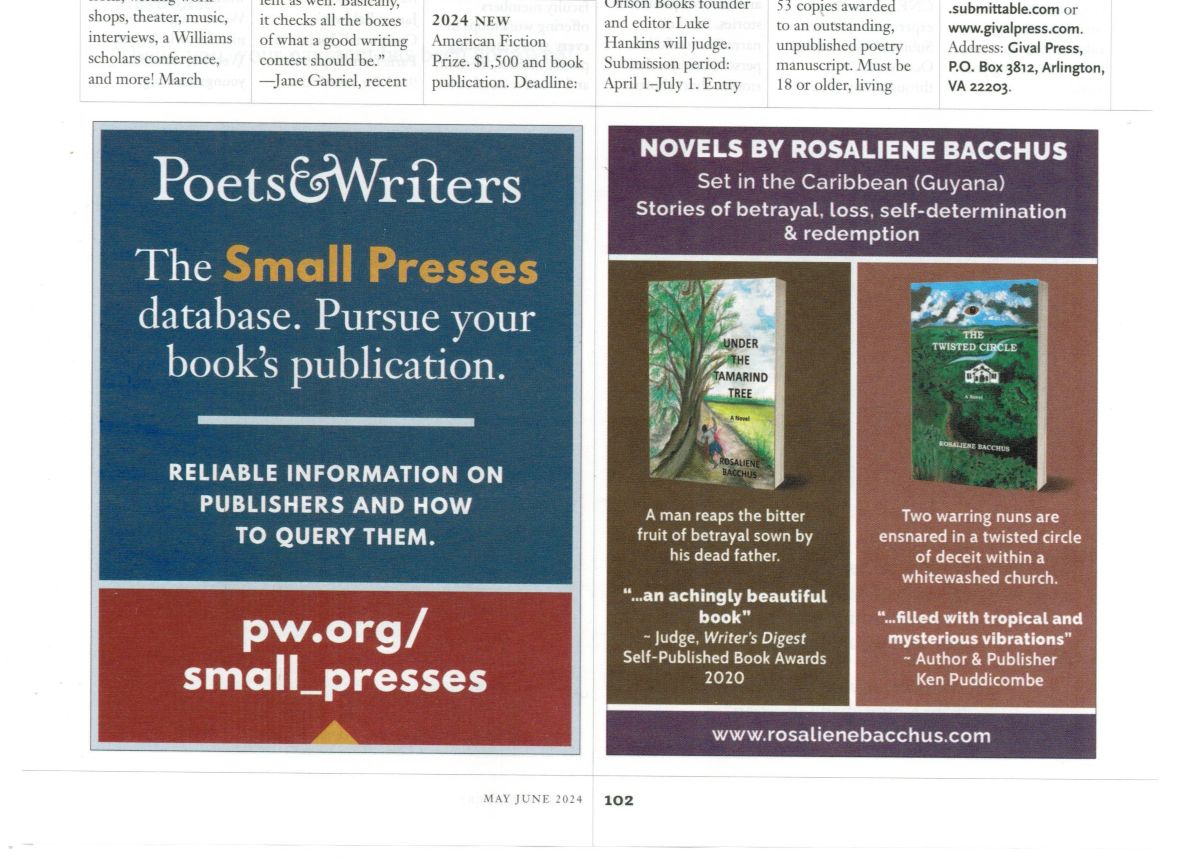
Ad for Novels by Rosaliene Bacchus designed by and published in Poets & Writers Magazine May-June 2024 Photo Credit: Poets & Writers Magazine
The creative process is the part of being a writer that I enjoy the most. Nothing beats when a character talks to me while I’m doing household chores. Alas, it’s another story when one’s creation is set free into the world. Getting my novels into the hands of readers is not easy. I’m a service-oriented person. Giving away stuff is much easier for me than selling stuff, even when it’s my own books. But, as I’m doing now, I do what I can to promote them. No pressure.
As depicted in the captioned ad, I also promote my books in the Poets & Writers Magazine. I set aside funds every year for advertising. Though I never recoup the cost through sales, it’s also my way of supporting my favorite poets/writers magazine. Our support has become even more critical with federal cuts in funding for the literary arts.
Judging from the length of time since I last received a royalty check from Lulu Press, my book printer and distributor, sales have been slow. Then again, it’s hard to say since Amazon and other major booksellers take their time in forwarding sales royalties to Lulu. My last “Unpaid Revenue Record” dated June 30, 2025, only covers receipts for sales January to November 2024. No sales since then?
It’s no longer safe for writers like me to express my truth and give voice to the dispossessed, marginalized, and oppressed among us. Our speech is now censored. Here in my adopted homeland, to protest and write about the horrors being inflicted on the Palestinian people has been criminalized. Likewise, for criticisms about our Dear Leader and his policies.
For people like me, such crimes are punishable with incarceration, deportation, or both. Without due legal process. The First Amendment of our Constitution, regarding Freedom of religion, speech, and the press; rights of assembly and petition, has become invalidated or applicable only to political loyalists.
Such is the nature of life for writers under authoritarian regimes. To ensure my safety and that of my sons, I must self-censor what I write. I must be careful, too, with whom I associate, lest I’m accused of being an enemy of the state. If you believe I’m overreacting, you have not been paying attention.
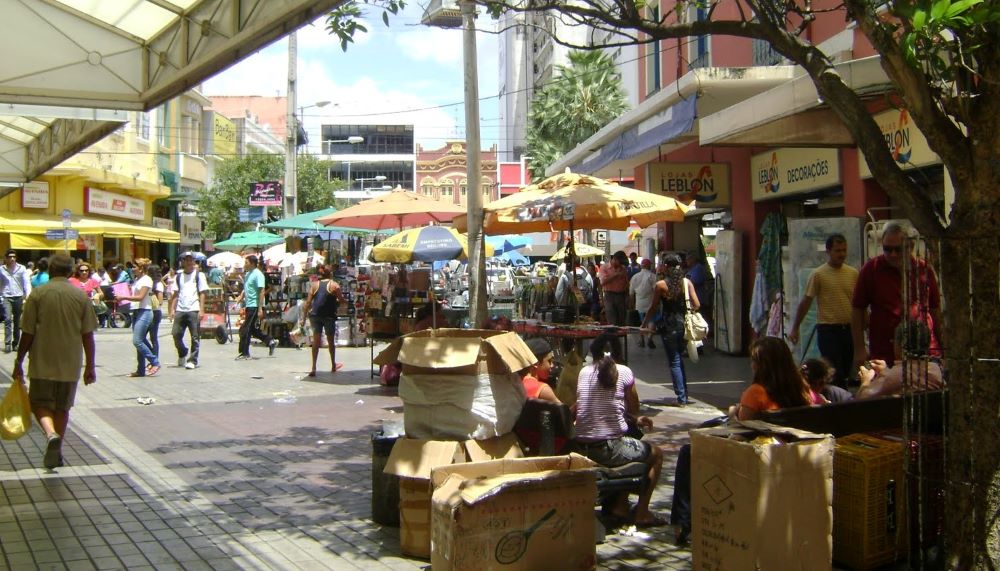
Downtown Fortaleza – Northeast State of Ceará – Brazil
Today marks the beginning of Holy Week in the Christian Church calendar. During these seven days, the church commemorates Jesus’ triumphal arrival in Jerusalem (Palm Sunday), His betrayal (Wednesday), the Last Supper with his disciples (Maundy Thursday), crucifixion (Good Friday), and ends with His resurrection on Easter Sunday. When we dare to speak truth to power, retribution can be swift. It’s not easy to follow in His footsteps: To love one’s neighbor can come with risks to one’s safety and life. Sometimes, we may also lose what we hold dear.
In my short story “Rescued: An Easter Story,” the protagonist Dwayne Higgins, an innocent man caught up in a crime not of his making, is forced to examine the direction of his life. The story is inspired by a scary incident that occurred during the period we lived in Fortaleza, capital of the Northeastern State of Ceará in Brazil.
The year was 1990. At the time, I was working at a small family-owned international trade consultancy firm. On July 16th, sometime after 2:00 p.m., my estranged husband (hereafter called Husband) called me at the office. He had been robbed at gunpoint at the office of a local cambista (a black market foreign-exchange broker) with whom he worked in downtown Fortaleza buying and selling foreign currency. The bandits seized US dollars and Brazilian cruzeiros, amounting to over forty-one federal minimum salaries. My monthly salary as an import-export assistant was only two minimum salaries.
Several attempts to reach Husband failed. The cambista he worked with claimed that he knew nothing about Husband’s whereabouts. After leaving the office at 6:00 p.m., I picked up our five- and seven-year-old sons at school and told them what had happened to their father. We went to the apartment where Husband lived with his Brazilian amante (mistress). Also distraught, she had not heard from him since his call earlier that afternoon.
Fears of him being locked up in a Brazilian prison or, worse yet, “disappeared” by the police muddied my thoughts. The gravity of their father’s disappearance subdued the boys.
Our shared ordeal ended after nine o’clock that evening. Husband arrived in the company of two burly plainclothes police officers in search of the stolen money. Surprised to see me and the boys, one officer headed into the bedroom with Husband and his amante. The other officer remained with me and the kids in the living room.
In a polite manner, he questioned me about my name, where I lived, where I worked, our country of origin, how long we had been living in Fortaleza, our residential status, how long we were married, how long we were separated, and my relationship with my husband’s mistress. I assumed these questions were intended as verification of the information they had obtained from Husband—their major suspect of the theft. Our sons remained quiet and motionless, seated on the only sofa in the small space.
My sons and I did not get home until after ten o’clock that evening. We had missed a bullet. For now.
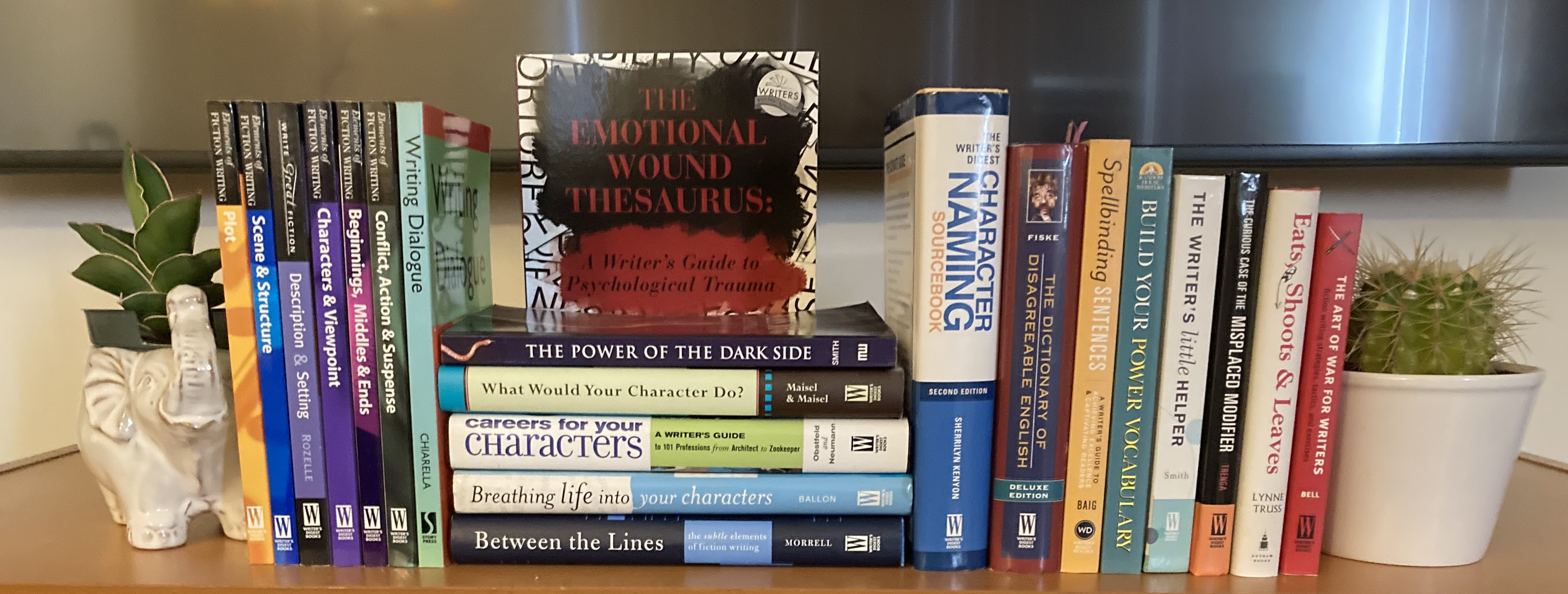
Rosaliene’s Collection of Books on the Craft of Writing
In 2004, when I decided to share my story of overcoming abandonment and loss, it became imperative to learn the craft of writing fiction. With limited funds and a crazy work schedule at a large department store in West Hollywood, I opted for a correspondence course. Through an ad in a magazine, I found the Stratford Career Institute (Vermont, USA). Their Creative Writing Course guided me from crafting my first scene of up to 500 words to finding my voice in a 3000-word short story. Working at my own pace, I completed their writing course within two years. On the left in the captioned photo, the five books on the “Elements of Fiction Writing,” all published by Writer’s Digest Books (Ohio, USA), comprised the reading materials for their course study.
After obtaining my Creative Writing Diploma from the Stratford Career Institute in February 2006, I spent four years writing short stories to develop my craft. At the same time, I began working on my writing project: research for the historical setting, the plot, and character development. I completed the first manuscript of Under the Tamarind Tree: A Novel in 2012. Several revisions followed over subsequent years. Believing in the value of my book, despite several rejections from literary agents and publishers, I finally self-published my novel with Lulu Press in 2019.
After years of developing and honing our writing craft, writers are now being ripped off by AI. Without consent from authors or publishers, generative artificial intelligence (GAI) companies have been illegally using copyrighted materials to develop and train their large language models (LLMs) that power chatbots like ChatGPT. Worse still, writers receive no compensation for the copycat books, mimicking or incorporating an author’s work, generated by these LLMs.
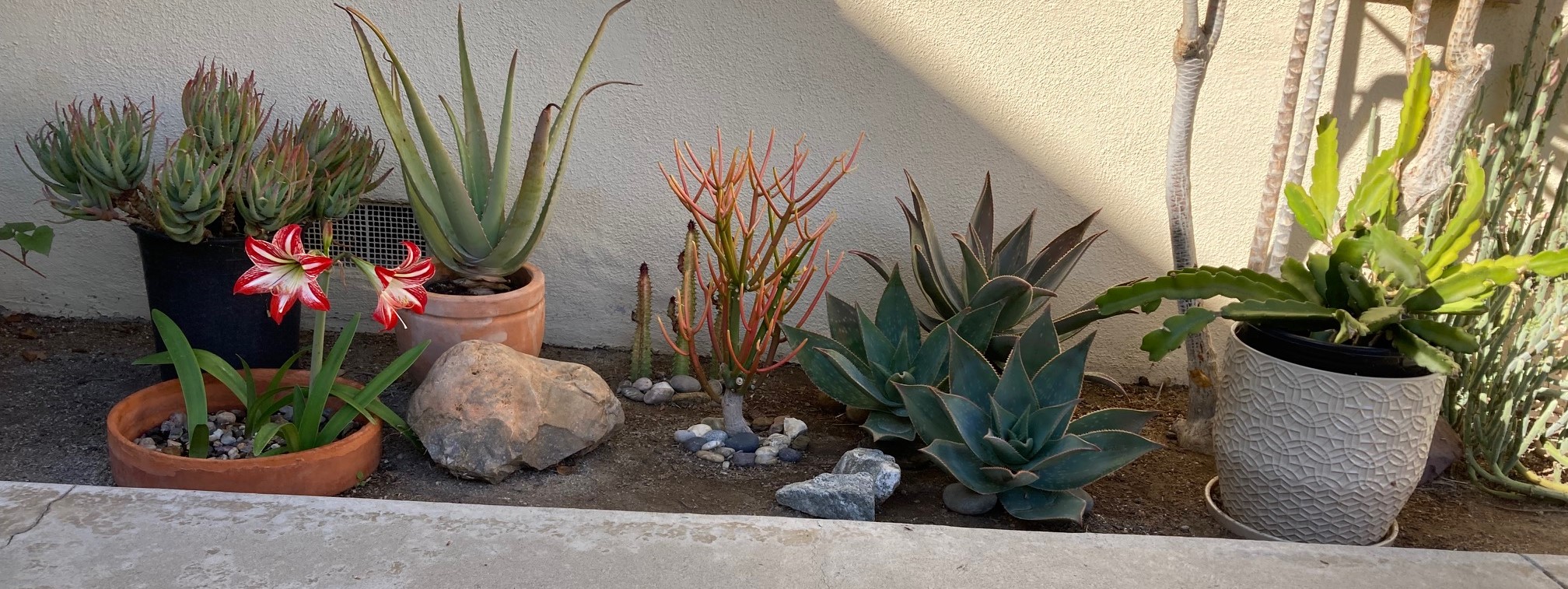
Neighbor’s Succulent Garden – Los Angeles – Southern California – December 1, 2024
To embark on writing a full-length novel (80,000 to 90,000 words) demands a long-term commitment that may take several years. Happy the writer who can complete such a project in one to two years! As with my first two novels, I estimated a four-year period for the completion of my creative nonfiction work-in-progress. Since writing the first draft in 2020, I had planned for revision and publication in 2024. Sad to say, things didn’t go according to my goal. Due to both personal and external forces, shared with readers over the past four years, my focus stalled (writer’s block), wavered, and changed.
The unrelenting violence against the Palestinians in Gaza, especially the children, continue to disturb my sleep. Only a god created in men’s image of oppression, conquest, and colonization would sanction such violence against humanity.
Even more consequential is humankind’s ongoing violence inflicted on the Web of Life together with the interconnected atmospheric and oceanic systems that sustain all lifeforms, including our own, on Mother Earth.
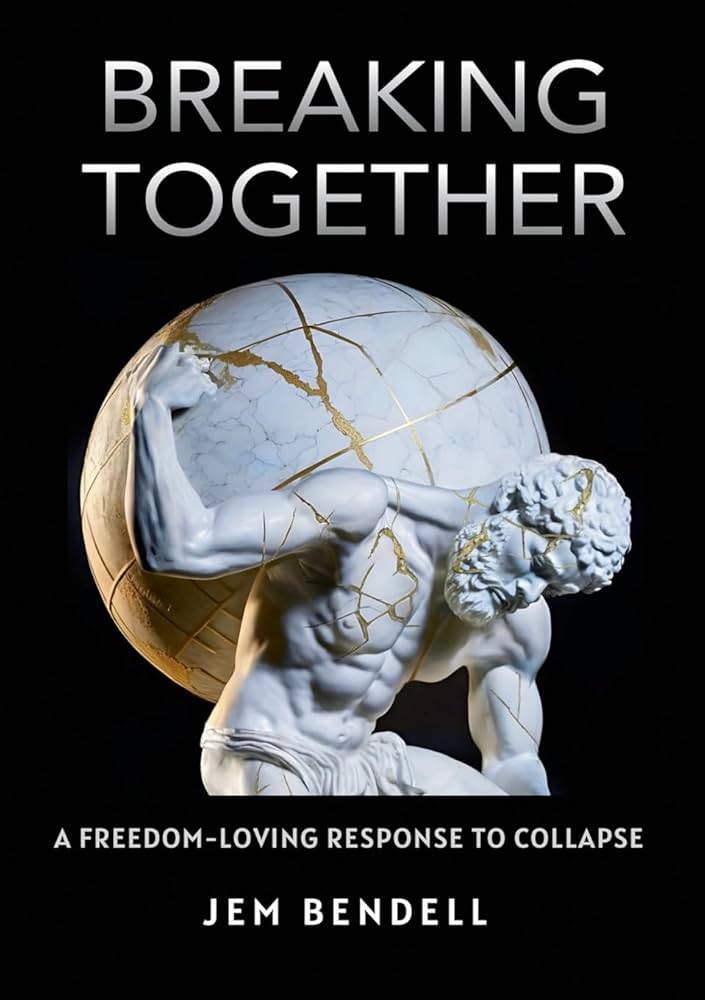
Front Cover: Breaking Together: A Freedom-Loving Response to Collapse by Jem Bendell (UK, 2023)
This month, I will not be sharing “Chapter Seventeen: Set Adrift in Shark-infested Waters” from my work-in-progress. To tell the truth, I’ve not yet completed this chapter. Like Chapter Sixteen, this period of my life has been difficult to revisit. After leaving the convent, I lost purpose and direction in my life. I was set adrift. I floundered. I’m still working on forgiving that younger self for losing her way.
Fifteen months have passed since I read Breaking Together: A Freedom-Loving Response to Collapse by Jem Bendell, released in June 2023. His findings shook my world. Our climate and ecological crises are far more critical than we’ve been led to believe. We’re now living on a planet where every year is hotter than the year before. My work-in-progress, though important in calling attention to women’s issues, became meaningless in the face of the collapse of industrial consumer societies. I lost focus.
How could I share Bendell’s findings? No one wants to hear bad news. Yet, to look away means we will not be prepared when our world as we know it begins to fall apart around us. The recent victory of the minority elite ruling class, under their chosen authoritarian leader, will only serve to accelerate societal collapse. The picks for his cabinet speak volumes of their plans to execute The Heritage Foundation’s Mandate/Project 2025.
In Chapter Sixteen of my work in Progress, I share my experience of sexual harassment as a public high school teacher by a government official. It was a period of my life that I had buried deep in my subconscious until my best friend insisted that my second novel should be about my life in the convent. Sadly, she passed away before I had completed the final revision of The Twisted Circle: A Novel, dedicated in her memory.
Although I had extensively explored my final year in the convent for the novel, I struggled over several months to complete this chapter. I even considered leaving it out altogether. To share the real-life experience of a dark period comes with its own challenges. To have failed and be rejected had left a deep emotional wound. To expose and uproot the shame requires self-forgiveness.
As I also share in Chapter Sixteen, harassment in the workplace is not limited to the male sexual pervert or predator. We can also suffer harassment from the female boss or colleague who, for a variety of reasons, perceive us as a threat. Sister Albertus, a fictitious name, was my female co-worker and tormentor.
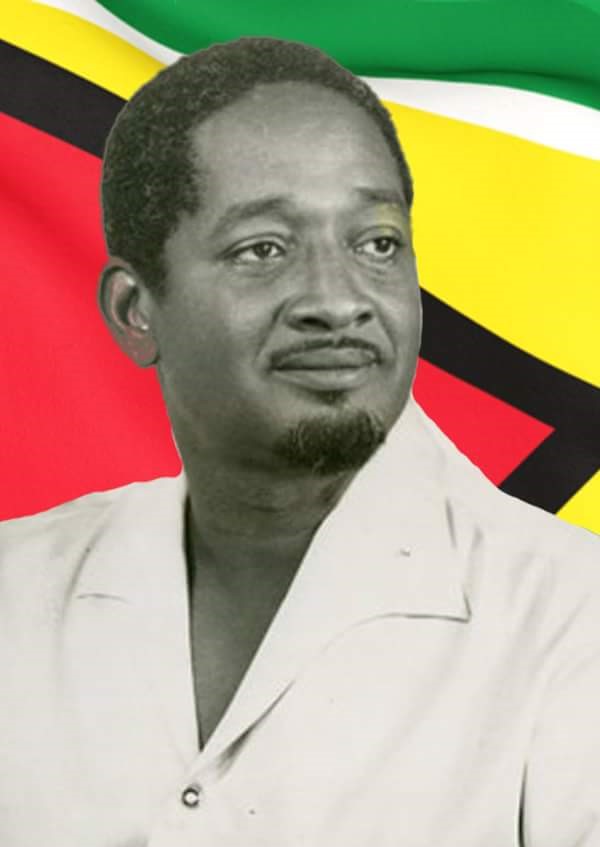
Prime Minister Forbes Burnham of Guyana (1964-1980) First Executive President of Guyana (1980-1985) Photo Credit: Forbes Burnham Foundation (Facebook)
In Chapter Fifteen of my work in progress, I speak about the rise of the autocratic government in Guyana in 1974. In my adopted country, we now face the possibility of re-electing a former President who promises to be a dictator only on Day One. He’s got lots of judicial protection in his favor. On July 1, 2024, the U.S. Supreme Court ruled that “the nature of Presidential power entitles a former President to absolute immunity from criminal prosecution for actions within his conclusive and preclusive constitutional authority. And he is entitled to at least presumptive immunity from prosecution for all his official acts. There is no immunity for unofficial acts.”
Without push-back from Britain and the United States, Guyana Prime Minister Forbes Burnham (1964-1980) consolidated his power through rigged general elections. For the American government, during the Cold War Era, the alternative leftist communist government was a definite no-no. Then, on December 14, 1974, as we the people prepared for the Christmas and year-end festivities, Comrade Leader Burnham declared his political party to be paramount above the State and all its institutions. That included the Courts and all pending cases against activists of the opposition parties. Burnham’s ruling political party and the State became interchangeable.
For those of us outside the corridors of power, our lives changed in unexpected ways. Churches that didn’t support the government’s agenda were viewed as enemies of the State. Any privileges the Catholic Church once held in the field of education were lost. Within three years following the declaration of the “paramountcy of the party,” my life was turned inside out.
Who knows what lies ahead for me and my sons should the framers of Mandate/Project 2025 have their way?
In Chapter Fourteen of my work in progress, I share my encounters with a few priests who did not live up to their role as spiritual leaders of their flock. Due to the sensitive nature of the topic, I’ve adapted a prosaic narrative style. Do let me know if this style works. Inspired by the Biblical quote heading the chapter, I’ve given them the fictitious names of fish.
While not all priests are predators, their fellow priests, bishops, and archbishops are complicit by their silence and cover-ups.
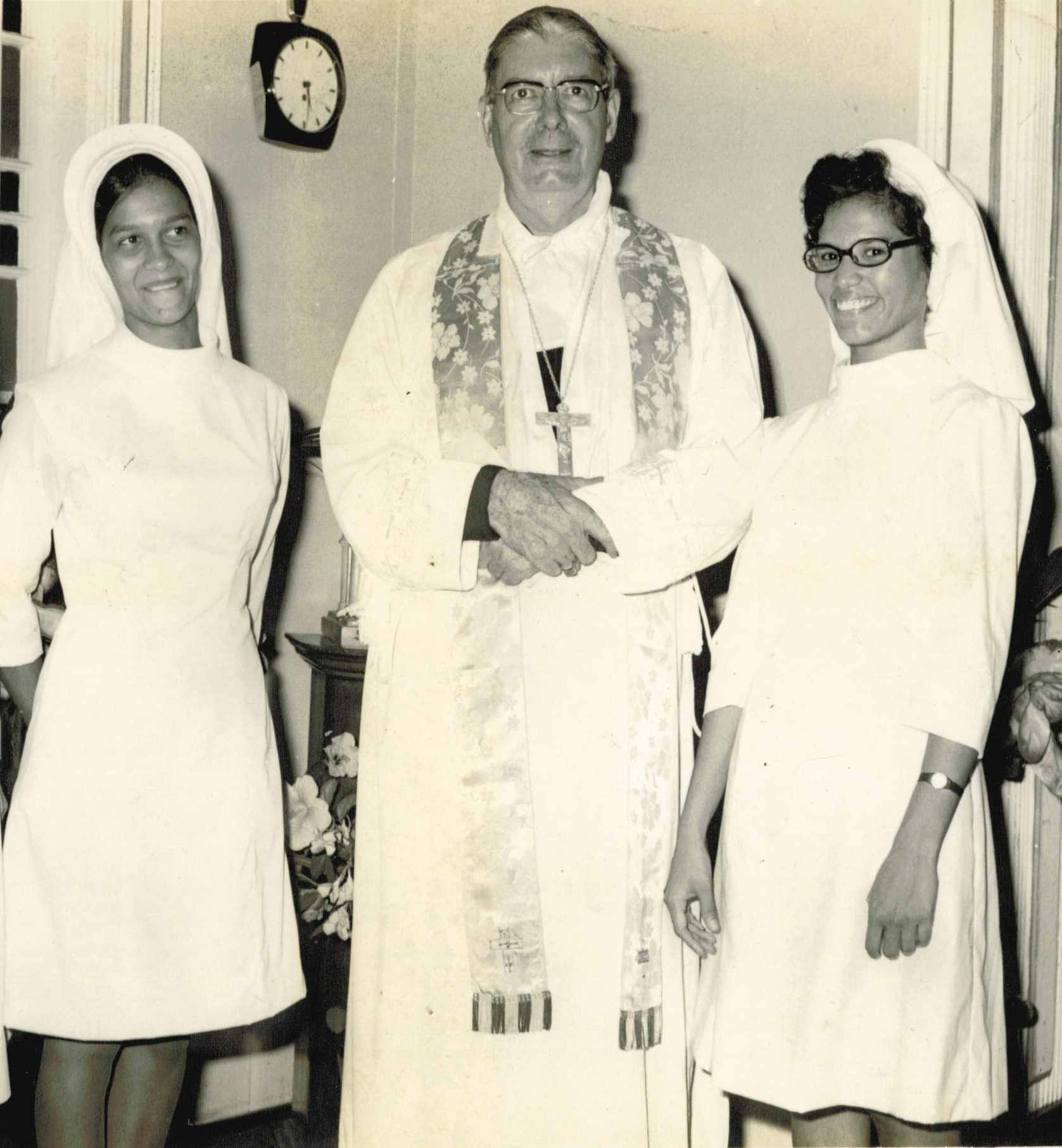
Rosaliene (right) and Celeste (fictitious name) with Bishop Guilly SJ – First Vows and Receipt of Religious Habit – Georgetown – Guyana Photo taken by Father Bernard Darke SJ for the Catholic Standard Newspapers
In Chapter Thirteen of my work in progress, I share my failure in living the religious vows as a celibate and childless woman in a patriarchal church. In retrospect, I have come to realize that the Guyana Mission, established during the British colonial period and headquartered in the United States, was not prepared for dealing with young women who challenged the lingering colonial mindset within the community.
The 1970s was a decade of great social-political-economic upheavals in our fledgling nation. The 1976 government takeover of all schools owned and run by the Catholic Church and other Christian denominations struck a decisive blow for the religious community accustomed to its autonomy. By abandoning my teaching post in Guyana’s hinterlands, I unwittingly became the first casualty for the religious community, as discussed in more detail in Chapter 16.
While the sisters struggled to adapt to the country’s new ways of thinking and being, three of the youngest professed local nuns, all trained in the United States, left the community. Of the seven of us, trained at the newly established novitiate in Guyana, only three stayed to make final or perpetual vows.
Nowadays, here in the USA, the patriarchal religious right would like to turn back time to the “Golden 1950s.” Make America Great(er) Again, they implore, bowing down before their Anointed One. A faithful disciple, now sharing the pulpit, believes that “childless cat ladies” shouldn’t have the same civic rights as women with children. What an upside-down world for women who are childless by choice or for biological reasons!