• About

Three Worlds One Vision

~ Guyana – Brazil – USA

Three Worlds One Vision

Category Archives: Recommended Reading

Articles or books Rosaliene have read and recommend.

Thought for Today: Have we all become “cloud serfs”?

25 Sunday Jan 2026

Posted by Rosaliene Bacchus in Economy and Finance, Recommended Reading

≈ 10 Comments

Tags

Cloud Serfs, Cloudalists, Greek Author and Economist Yanis Varoufakis, Technofeudalism

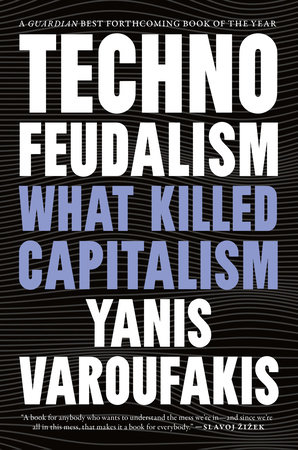
Front Cover Technofeudalism: What Killed Capitalism by Yanis Varoufakis (UK/USA, 2024)
Photo Credit: Melville House Publishing

The digital revolution may be turning waged workers into cloud proles, who live increasingly precarious, stressful lives under the invisible thumb of algorithmic bosses…. But that’s not the most significant fact about cloud capital…. The true revolution cloud capital has inflicted on humanity is the conversion of billions of us into willing cloud serfs volunteering to labour for nothing to reproduce cloud capital for the benefit of its owners.

[…]

Technofeudalism made things infinitely worse when it demolished the fence that used to provide the liberal individual with a refuge from the market. Cloud capital has shattered the individual into fragments of data, an identity comprised of choices as expressed by clicks, which its algorithms are able to manipulate. It has produced individuals who are not so much possessive as possessed, or rather persons incapable of being self-possessed.  

Excerpts from Technofeudalism: What Killed Capitalism by Yanis Varoufakis, published by Melville House Publishing, UK & USA, 2024, pp. 88 & 182.

Continue reading →

The Writer’s Life: New Monthly Series on the Changing Earth

11 Sunday Jan 2026

Posted by Rosaliene Bacchus in Nature and the Environment, Recommended Reading, The Writer's Life

≈ 50 Comments

Tags

Documentary Film From the Heart of the World: The Elder Brothers’ Warning (BBC 1990), Environmental Crisis, Hopi Elder Thomas Banyacya (1909-1999), Mohawk Chief Jake Swamp-Tekaronianeken (1940-2010), Mother Earth, Muskogee-Creek Elder Phillip Deere (1929-1985), North American Indigenous Voices

Front Cover: We Are the Middle of Forever: Indigenous Voices from Turtle Island on the Changing Earth – Edited by Dahr Jamail and Stan Rushworth
Published by The New Press, New York, USA, 2022

During the COVID-19 pandemic and lockdown, Dahr Jamail – an American award-winning journalist and environmental advocate – and Stan Rushworth – an elder and retired teacher of Cherokee descent living in Northern California – interviewed several people from different North American Indigenous cultures and communities, generations, and geographic. Their featured collection of interviews offers us a wide variety of perspectives on a much more integrated relationship to Earth and all human and non-human beings.

Turtle Island is a term used by some Indigenous peoples, primarily those in North America, to refer to the continent. This name stems from various Indigenous creation stories which describe the landmass as being formed on the back of a giant turtle. The concept of Turtle Island is deeply significant in many Native American cultures as it reflects their spiritual beliefs and relationship with Mother earth.

As inhabitants of these lands for thousands of generations before the arrival of European conquistadores and colonizers, Native Americans carry in their ancestral memories the rise and fall of great civilizations before ours. They have much to teach us about surviving collapse and healing our broken relationship with Mother Earth.

Continue reading →

Thought for Today: Tecno-dreams of Space Colonies

16 Sunday Nov 2025

Posted by Rosaliene Bacchus in Recommended Reading, Technology

≈ 45 Comments

Tags

Artificial General Intelligence (AGI), Author and Astrophysicist Adam Becker, Effective Altruism (EA), Longtermism, Singularity, Tech billionaires, Techno-dreams of Space Colonies

Front Cover More Everything Forever: AI Overlords, Space Empires, and Silicon Valley’s Crusade to Control the Fate of Humanity by Adam Becker (USA, 2025)
Photo Credit: Hachette Book Group

[Tech billionaires] will keep looking for ways to extend their control over the world unless they are curtailed. Their dreams are dreams of endless capitalism of the most brutal sort, because they know that such a system would allow them to win still more money and power. This is another reason it’s difficult to imagine a future other than the ones they promote: as the saying goes, it’s easier to imagine the end of the world than the end of capitalism….

This is why the tech billionaires tell us their futures are inevitable: to keep us from remembering that no human vision of tomorrow is truly unstoppable. They want to establish a permanent plutocracy, a tyranny of the lucky, through their machines. They are too credulous and short-sighted to see the flaws in their own plans, but they will keep trying to use the promise of their impossible futures to expand their power here and now….

Excerpt from More Everything Forever: AI Overlords, Space Empires, and Silicon Valley’s Crusade to Control the Fate of Humanity by Adam Becker, published by Hachette Book Group, New York, USA, 2025, pp. 288-289.

Continue reading →

Thought for Today: A Matter of Survival

07 Sunday Sep 2025

Posted by Rosaliene Bacchus in Recommended Reading, Social Injustice

≈ 38 Comments

Tags

A Matter of Survival: Organizing to Meet Unmet Needs and Build Power in Times of Crisis by Shailly Gupta Barnes & Jarvis Benson (March 2025), Community Building, Poor People’s Organizing, Survival Strategies, The Kairos Center for Religions Rights and Social Justice

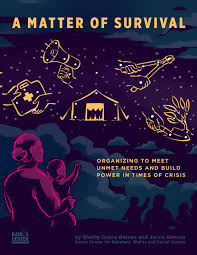
Cover of A Matter of Survival: Organizing to Meet Unmet Needs and Build Power in Times of Crisis by Shailly Gupta Barnes & Jarvis – PDF Publication March 5, 2025
Photo Credit: Kairos Center

Since the onset of the COVID-19 pandemic, survival organizing has continued en masse, in response to ongoing effects of the pandemic, as well as climate crisis, hunger, housing insecurity, the denial of health care, police violence, deportation defense, increasing militarism and other systemic failures of our society. As Vilchis from Union de Vecinos remarked, “Health crisis, housing crisis, all of these crises are still there. The material conditions have not changed, we just have less money and are more disorganized. The risk of losing your life to COVID is less, but your job doesn’t pay enough to cover rent or other costs of living. For many of us, life has gotten worse, but we’re not coughing as loud.”

This is particularly true for poor, low-income and marginalized communities. Cosecha will be “depending on projects of survival even more,” said Adorno, especially as it anticipates more intense attacks on undocumented people. Sycamore Collaborative is expecting hunger to continue to grow in its community. “We will hit the ‘million meal’ mark soon,” said Rev. Tañón-Santos, “and there has to be a way that we can foresee this happening and figure out how to prepare.” In Kansas City, the Bethel Neighborhood Center does not want to be “surprised…we need to be more prepared than ever,” said Sonna. Under a second Trump administration, these and other communities are also facing dramatic cuts to social welfare programs, precipitous climate breakdown, greater repression from militarized police and law enforcement and a regressive, anti-democratic political movement.

In this context, a vast network of projects of survival can play an increasingly essential role in keeping our communities safe, while politicizing and preparing grassroots communities to take coordinated action together as part of a broader social movement. Whether through mutual aid, ministry or community organizing, meeting material needs is an act of resistance in a society that punishes the poor for their poverty and misery — and prioritizes billionaires over the rest of us. If and when these efforts can be connected, scaled up and strategically organized, projects of survival can anchor the call for a society where all of our needs are met, today, tomorrow and for generations to come.

Excerpt from the Conclusion of A Matter of Survival: Organizing to Meet Unmet Needs and Build Power in Times of Crisis by Shailly Gupta Barnes & Jarvis Benson, PDF publication by The Kairos Center for Religions, Rights, and Social Justice, New York, USA, March 5, 2025, p. 73.

Continue reading →

Thought for Today: Awareness is Transformative

06 Sunday Jul 2025

Posted by Rosaliene Bacchus in Recommended Reading, Religion & Spirituality

≈ 51 Comments

Tags

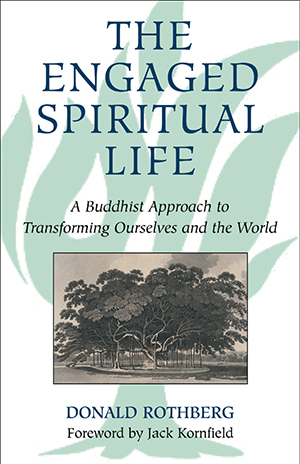
Inner and Outer Transformation, Social Change, Spiritual Wisdom and Social Action, The Engaged Spiritual Life: A Buddhist Approach to Transforming Ourselves and the World by Donald Rothberg (USA 2006)

Front Cover: The Engaged Spiritual Life: A Buddhist Approach to Transforming Ourselves and the World by Donald Rothberg
Photo Credit: Beacon Press (USA, 2006)

For Taigen Dan Leighton, a Zen teacher, scholar of Mahayana Buddhism, and activist, mindful awareness is the meeting point of inner and outer transformation.

Awareness is transformative. It happens on the level of working out the conflicts in our own hearts and minds, as well as in the culture. In meditation, we become aware of our own inner processes and the primal separation of self and other. We come to see the interdependence of self and other, how our identity is dependent on so many things, including what’s going on in society. Once we have some sense of any particular problem in society, then we can also look at it in terms of our own involvement. No one is pure and not part of the problem; we are in a web of connections. Even though I worked to oppose the invasion of Iraq, I am still connected to the murder of Iraqi civilians.

Excerpt from The Engaged Spiritual Life: A Buddhist Approach to Transforming Ourselves and the World by Donald Rothberg, Beacon Press, USA, 2006 (p. 52).

Dr. Donald Rothberg is a leading teacher and writer on meditation, the intersection of psychology and spirituality and socially engaged Buddhism in the United States. He has practiced Buddhist meditation for over 25 years and has been significantly influenced by other spiritual traditions, particularly Jewish, Christian, and indigenous. His teaching and training have helped to pioneer new ways of connecting inner and outer transformation. He is on the Teachers’ Council of Spirit Rock in Northern California and has been an organizer, teacher, and board member of the Buddhist Peace Fellowship. Dr. Rothberg has also served as director of the interfaith Socially Engaged Spirituality program at the Saybrook Graduate School in San Francisco. His book, The Engaged Spiritual Life: A Buddhist Approach to Transforming Ourselves and the World, was named one of the best spiritual books of 2006 by Spirituality and Practice. Dr. Rothberg lives and teaches in Berkeley, California.

Thought for Today: The Lifehouse for Mutual Care

04 Sunday May 2025

Posted by Rosaliene Bacchus in Recommended Reading, Uncategorized

≈ 55 Comments

Tags

Climate Crisis, Lifehouse: Taking Care of Ourselves in a World on Fire by Adam Greenfield (UK/USA 2024), Mutual Care, Practical Guide to Urban Community Resilience, Societal Collapse

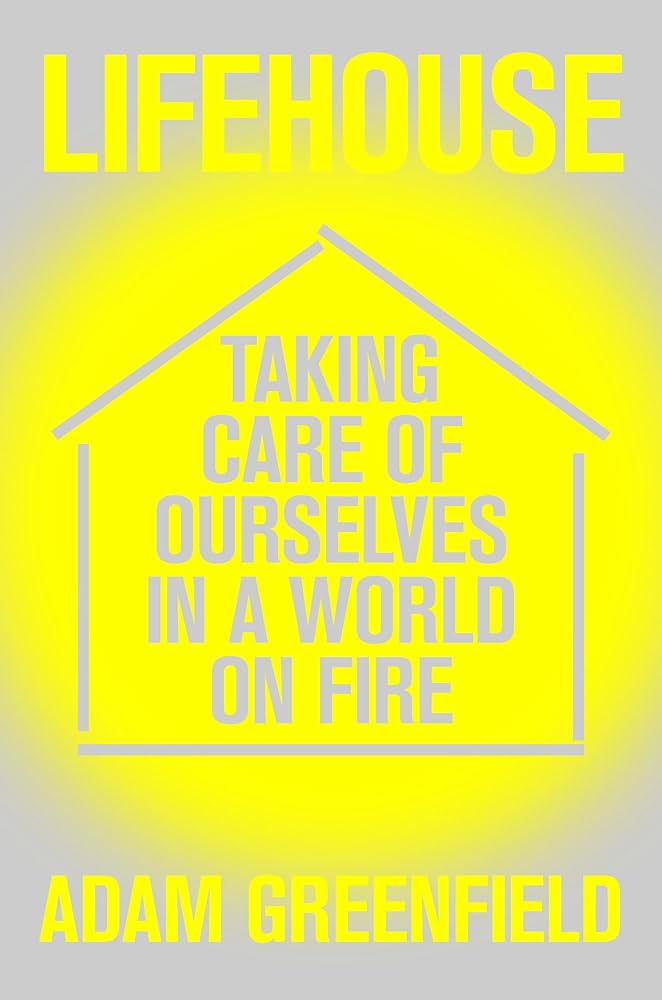
Front Cover: Lifehouse: Taking Care of Ourselves in a World on Fire by Adam Greenfield
Photo Credit: Verso Books (UK/USA, 2024)

The fundamental idea of the Lifehouse [in a disaster zone] is that there should be a place in every three- or four-city block radius where you can charge your phone when the power’s down everywhere else, draw drinking water when the supply from the mains is for whatever reason untrustworthy, gather with your neighbors to discuss matters of common concern, organize reliable childcare, borrow tools it doesn’t make sense for any one household to own individually and so on—and that these can and should be one and the same place. As a foundation for collective resourcefulness, the Lifehouse is a practical implementation of the values we’ve spent this book exploring.

Excerpt from Lifehouse: Taking Care of Ourselves in a World on Fire by Adam Greenfield, Verso Books, UK/USA, 2024 (p. 167).

Lifehouse: Taking Care of Ourselves in a World on Fire is an urgent and practical guide to community resilience in the face of climate catastrophe and the collapse of late-stage capitalism. Greenfield recovers lessons from the Black Panther survival programs (USA), the astonishingly effective Occupy Sandy disaster-relief effort (NYC/USA), the solidarity networks of crisis-era Greece, as well as municipalist Spain and autonomous Rojava (Syria), to show how practices of mutual care and local power can help shelter us from a future that often feels like it has no place for us or the values we cherish.


Adam Greenfield is an American best-selling author, urbanist, and critical futurist, based in London since 2013. He has spent the past quarter-century thinking and working at the intersection of technology, design and politics with everyday life. Selected in 2013 as Senior Urban Fellow at the LSE Cities center of the London School of Economics, he previously taught in New York University’s Interactive Telecommunications Program and the Urban Design program at the Bartlett School of Architecture, University College London. His books include Everyware: The Dawning Age of Ubiquitous Computing, Urban Computing and Its Discontents, and the bestsellers Against the Smart City and Radical Technologies: The Design of Everyday Life.

Born in Philadelphia, Pennsylvania, in 1968, he graduated with a degree in cultural studies at New York University in 1989. Between 1995 and 2000, he served as a Psychological Operations Specialist in the U.S. Army Special Operations Command.

Thought for Today: The Doorway in the Ruins

09 Sunday Jun 2024

Posted by Rosaliene Bacchus in Human Behavior, Recommended Reading

≈ 69 Comments

Tags

A Paradise Built in Hell: The Extraordinary Communities that Arise in Disaster by Rebecca Solnit (USA 2009), Disaster myths, Elite panic, History of Disaster, Human resilience in times of crisis, Natural disaster response

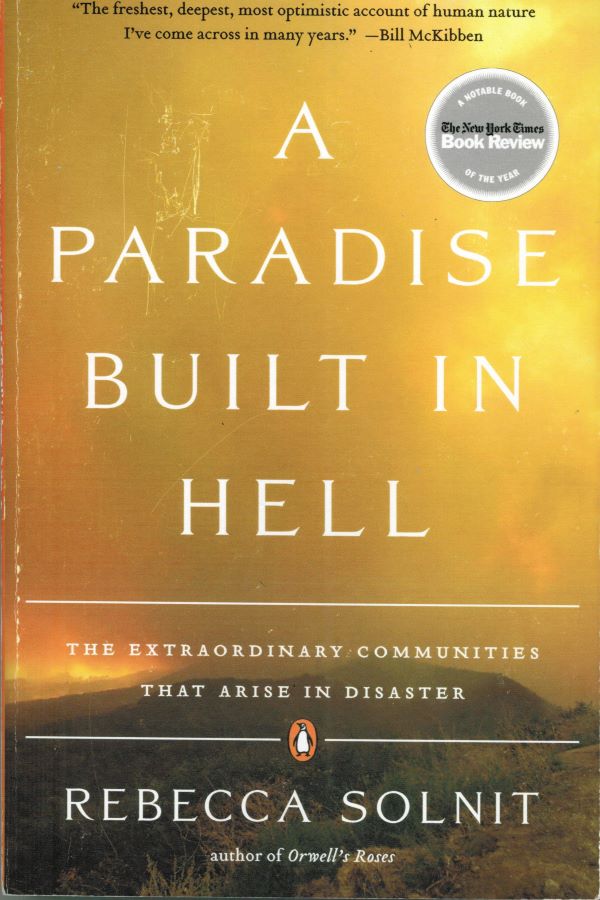
Front Cover: A Paradise Built in Hell: The Extraordinary Communities that Arise in Disaster by Rebecca Solnit
Photo Credit: Penguin Books (USA, 2009)

Who are you? Who are we? The history of disaster demonstrates that most of us are social animals, hungry for connection, as well as for purpose and meaning. It also suggests that if this is who we are, then everyday life in most places is a disaster that disruptions sometimes give us a chance to change. They are a crack in the walls that ordinarily hem us in, and what floods in can be enormously destructive—or creative. Hierarchies and institutions are inadequate to these circumstances; they are often what fails in such crises. Civil society is what succeeds, not only in an emotional demonstration of altruism and mutual aid but also in a practical mustering of creativity and resources to meet the challenges.

Excerpt from “Epilogue: The Doorway in the Ruins,” A Paradise Built in Hell: The Extraordinary Communities that Arise in Disaster by Rebecca Solnit, Penguin Books, New York, USA, 2009 (p. 305).

The disasters covered in this book include: Earthquake San Francisco/California/USA (1906), Explosion Halifax/Nova Scotia/Canada (1917), The Blitz/London/UK (1940), Earthquake Mexico City/Mexico (1985), Bombing World Trade Center/New York/USA (2001), and Hurricane Katrina New Orleans/USA (2005).


REBECCA SOLNIT, writer, historian, and activist, is the author of more than twenty books on feminism, western and urban history, popular power, social change and insurrection, hope and catastrophe. Her books include Orwell’s Roses; Recollections of My Nonexistence; Hope in the Dark; Men Explain Things to Me; and A Field Guide to Getting Lost. A product of the California public education system from kindergarten to graduate school, she writes regularly for the Guardian, serves on the board of the climate group Oil Change International, and recently launched the climate project Not Too Late (nottoolateclimate.com).

Thought for Today: Unintended Deaths

07 Sunday Apr 2024

Posted by Rosaliene Bacchus in Human Behavior, Recommended Reading, United States

≈ 65 Comments

Tags

Civilian Deaths of America’s Wars, USA Global War on Terror, War Made Invisible: How America Hides the Human Toll of Its Military Machine by Norman Solomon, Warfare

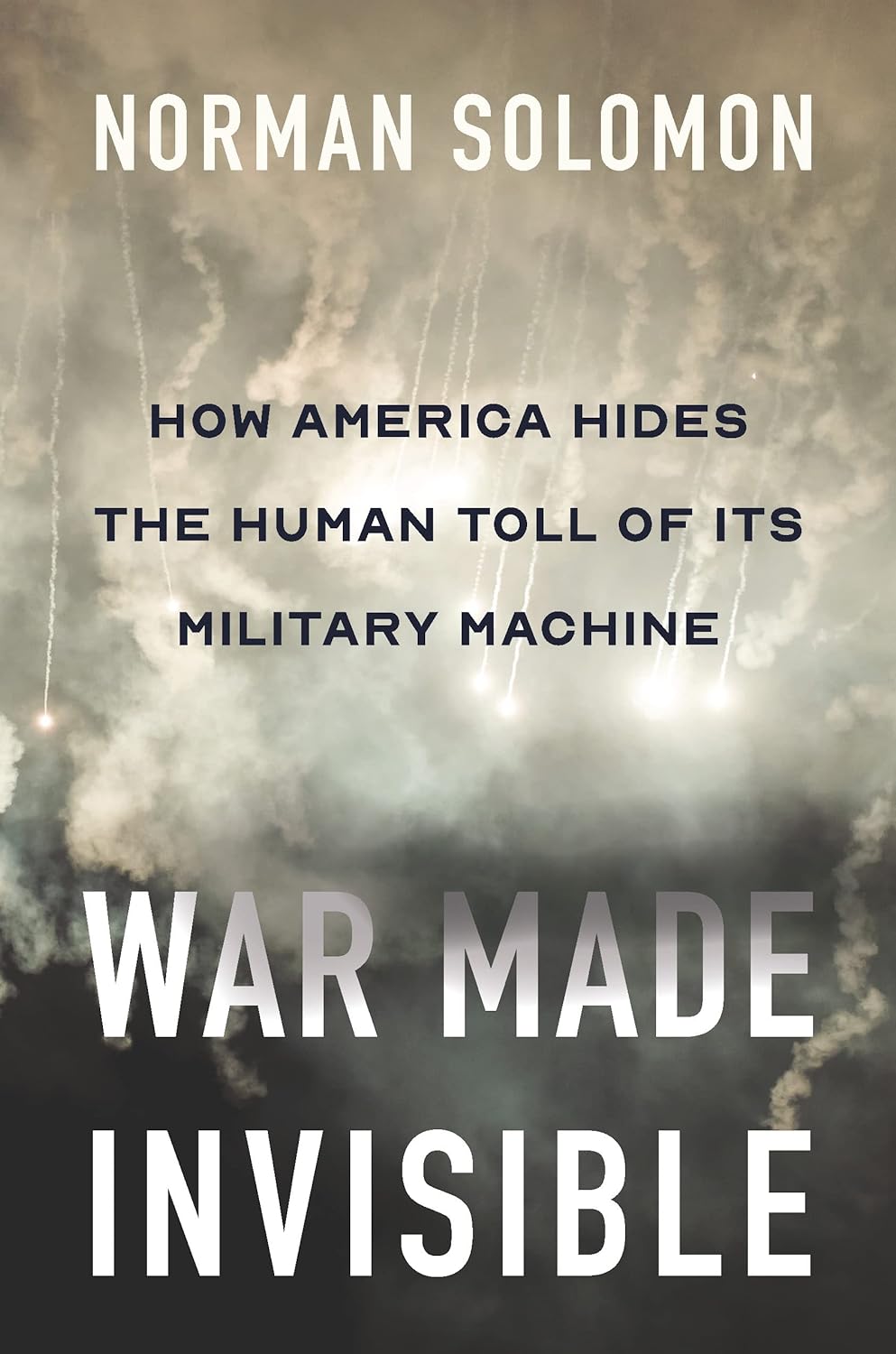
Front Cover: War Made Invisible: How America Hides the Human Toll of Its Military Machine by Norman Solomon

Frequent killing of civilians is inherent in the types of wars that the United States has waged in this century. Despite all the hype about precision weaponry, even its top-rated technologies are fallible. What’s more, they operate in flawed—and sometimes highly dysfunctional—contexts. Whether launching attacks from distant positions or directly deployed, American forces are far removed from the societies they seek to affect. Key dynamics include scant knowledge of language, ignorance of cultures, and unawareness of such matters as manipulation due to local rivalries.

When U.S. officials say that civilian deaths are merely accidental outcomes of the war effort, they don’t mention that such deaths are not only predictable—they’re also virtually inevitable as results of policy priorities. Presumptions of acceptability are hot-wired into the war machine. The lives taken, injuries inflicted, traumas caused, environmental devastation wrought, social decimation imposed—all scarcely rank as even secondary importance to the power centers in Washington.

Norman Solomon, War Made Invisible: How America Hides the Human Toll of Its Military Machine, The New Press, New York, USA, 2023, pp. 53-54.

NORMAN SOLOMON is an American journalist, media critic, author, and activist. He is the co-founder of the online organization RootsAction.org and executive director of the Institute for Public Accuracy, a consortium of policy researchers and analysts. His books include War Made Easy: How Presidents and Pundits Keep Spinning Us to Death (2006) and Made Love, Got War: Close Encounters with America’s Warfare State (2008). He lives in the San Francisco area in California.

Thought for Today: Climate Change Displacement in America

04 Sunday Jun 2023

Posted by Rosaliene Bacchus in Anthropogenic Climate Disruption, Recommended Reading

≈ 53 Comments

Tags

Climate impacts in America, Displaced Americans, The Great Displacement: Climate Change and The Next American Migration by Jake Bittle (USA 2023)

Front Cover: The Great Displacement: Climate Change and The Next American Migration by Jake Bittle
Photo Credit: Simon & Schuster (USA, 2023)

At the most fundamental level, displacement begins when climate change makes it either too risky or too expensive for people to stay somewhere. The disasters discussed in this book bear little resemblance to each other on the surface, but they all exert pressure on governments and private markets, whether through the financial costs of rebuilding or the strain of allocating scarce resources. As this pressure builds, it starts to push people around, changing where they can live or where they want to live. Sometimes this looks like the government paying residents of flood-prone areas to leave their homes; sometimes it looks like fire victims getting priced out of an unaffordable state; other times it looks like fishermen going broke as the wetlands around them erode. It may seem reductive to think about a planetary crisis in terms of financial risk rather than human lives, but that is how most people in this country will experience it—through the loss of their most valuable assets, or the elimination of their job, or a shift in where they can afford to live.

Excerpt from The Great Displacement: Climate Change and The Next American Migration by Jake Bittle, Simon & Schuster, New York, USA, 2023 (Introduction, p. xvii).

Note: The title of the book is an oblique reference to the Great Migration in American history (1920s to 1970s) when more than six million Black people left the South and moved to northern cities like New York and Chicago, fleeing an economic and humanitarian crisis.

JAKE BITTLE, a journalist based in Brooklyn, New York, is a staff writer at Grist, where he covers climate impacts and adaptation. His work has appeared in The New York Times, The Guardian, Harper’s Magazine, and a number of other publications.

Thought for Today: Communicating With Each Other

30 Sunday Apr 2023

Posted by Rosaliene Bacchus in Anthropogenic Climate Disruption, Human Behavior, Recommended Reading

≈ 53 Comments

Tags

Communication and Collaboration, Saving Planet Earth, Zen and the Art of Saving the Planet by Thich Nhat Hanh (USA 2021)

Front Cover: Zen and the Art of Saving the Planet by Thich Nhat Hanh
Photo Credit: HarperCollins Publishers (USA, 2021)

If you want to save the planet and transform society, you need brotherhood and sisterhood; you need togetherness. Whenever we speak about the environment, or peace and social justice, we usually speak of non-violent actions or technological solutions, and we forget that the element of collaboration is crucial. Without it, we cannot do anything; we cannot save our planet. Technical solutions have to be supported by togetherness, understanding, and compassion.

In order to collaborate, we need to know how to listen deeply and how to speak skillfully, how to restore communication, and how to make communication easier so we can communicate with ourselves and with each other…. Restoring communication is an urgent practice. With good communication, harmony, understanding, and compassion become possible between individuals, different groups, and even nations.

Excerpt from Zen and the Art of Saving the Planet by Thich Nhat Hanh, Edited and With Commentary by Sister True Dedication, HarperCollins Publishers, New York, USA, 2021 (pp. 187-188).

THICH NHAT HANH (1926-2022) was a world-renowned Buddhist Zen master, poet, author, scholar, and activist for social change. He was nominated for the Nobel Peace Prize in 1967 by Dr. Martin Luther King Jr. He remains a preeminent figure in contemporary Buddhism, offering teachings that are both deeply rooted in ancient wisdom and accessible to all.

SISTER TRUE DEDICATION is a former journalist and monastic Dharma Teacher ordained by Thich Nhat Hanh.

← Older posts

Subscribe

  • RSS - Posts
  • RSS - Comments

Archives

  • January 2026
  • November 2025
  • October 2025
  • September 2025
  • August 2025
  • July 2025
  • June 2025
  • May 2025
  • April 2025
  • March 2025
  • February 2025
  • January 2025
  • December 2024
  • November 2024
  • October 2024
  • September 2024
  • August 2024
  • July 2024
  • June 2024
  • May 2024
  • April 2024
  • March 2024
  • February 2024
  • January 2024
  • December 2023
  • November 2023
  • October 2023
  • September 2023
  • August 2023
  • July 2023
  • June 2023
  • May 2023
  • April 2023
  • March 2023
  • February 2023
  • January 2023
  • December 2022
  • November 2022
  • October 2022
  • September 2022
  • August 2022
  • July 2022
  • June 2022
  • May 2022
  • April 2022
  • March 2022
  • February 2022
  • January 2022
  • December 2021
  • November 2021
  • October 2021
  • September 2021
  • August 2021
  • July 2021
  • June 2021
  • May 2021
  • April 2021
  • March 2021
  • February 2021
  • January 2021
  • December 2020
  • November 2020
  • October 2020
  • September 2020
  • August 2020
  • July 2020
  • June 2020
  • May 2020
  • April 2020
  • March 2020
  • February 2020
  • January 2020
  • December 2019
  • November 2019
  • October 2019
  • September 2019
  • August 2019
  • July 2019
  • June 2019
  • May 2019
  • March 2019
  • February 2019
  • January 2019
  • December 2018
  • November 2018
  • October 2018
  • September 2018
  • August 2018
  • July 2018
  • June 2018
  • May 2018
  • April 2018
  • March 2018
  • February 2018
  • January 2018
  • December 2017
  • November 2017
  • October 2017
  • September 2017
  • August 2017
  • July 2017
  • June 2017
  • May 2017
  • April 2017
  • March 2017
  • February 2017
  • January 2017
  • December 2016
  • November 2016
  • October 2016
  • September 2016
  • August 2016
  • July 2016
  • June 2016
  • May 2016
  • April 2016
  • March 2016
  • January 2016

Categories

  • About Me
  • Anthropogenic Climate Disruption
  • Brazil
  • Economy and Finance
  • Family Life
  • Festivals
  • Guyana
  • Health Issues
  • Human Behavior
  • Immigrants
  • Nature and the Environment
  • People
  • Philosophy
  • Poetry
  • Poetry by Rosaliene Bacchus
  • Recommended Reading
  • Relationships
  • Religion
  • Religion & Spirituality
  • Reviews – The Twisted Circle: A Novel by Rosaliene Bacchus
  • Reviews – Under the Tamarind Tree: A Novel by Rosaliene Bacchus
  • Save Our Children
  • Social Injustice
  • Technology
  • The Twisted Circle: A Novel by Rosaliene Bacchus
  • The Writer's Life
  • Uncategorized
  • Under the Tamarind Tree: A Novel by Rosaliene Bacchus
  • United States
  • Urban Violence
  • Women Issues
  • Working Life

Blogroll

  • Angela Consolo Mankiewicz
  • Caribbean Book Blog
  • Dan McNay
  • Dr. Gerald Stein
  • Foreign Policy Association
  • Guyanese Online
  • Writer's Digest
  • WritersMarket: Where & How to Sell What You Write

Meta

  • Create account
  • Log in
  • Entries feed
  • Comments feed
  • WordPress.com

Enter your email address to subscribe to this blog and receive notifications of new posts by email.

Join 3,228 other subscribers

Create a free website or blog at WordPress.com.

Privacy & Cookies: This site uses cookies. By continuing to use this website, you agree to their use.
To find out more, including how to control cookies, see here: Cookie Policy
  • Subscribe Subscribed
    • Three Worlds One Vision
    • Join 3,228 other subscribers
    • Already have a WordPress.com account? Log in now.
    • Three Worlds One Vision
    • Subscribe Subscribed
    • Sign up
    • Log in
    • Report this content
    • View site in Reader
    • Manage subscriptions
    • Collapse this bar
 

Loading Comments...