• About

Three Worlds One Vision

~ Guyana – Brazil – USA

Three Worlds One Vision

Category Archives: Poetry

“The Day of Revolution” – Poem by Guyanese Poet Mahadai Das

23 Sunday Nov 2025

Posted by Rosaliene Bacchus in Guyana, Poetry

≈ 44 Comments

Tags

A Leaf in His Ears: Collected Poems by Mahadai Das (UK 2010), Guyana/Caribbean Poet, Guyana’s Authoritarian Regime (1974-1992), Guyanese Poet Mahadai Das (1954-2003), Poetry Collection My Finer Steel Will Grow by Mahadai Das (1982)

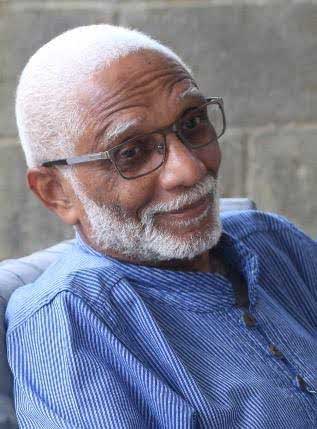
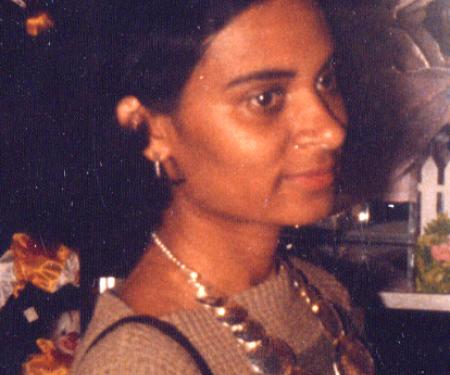
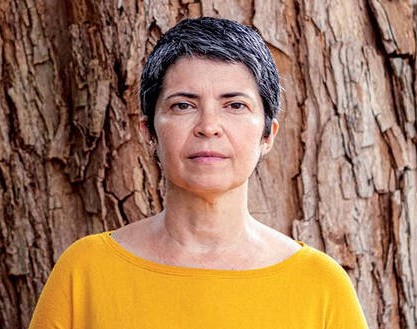
Guyanese Poet Mahadai Das (1954-2003)
Photo Credit: Peepal Tree Press (UK)

My Poetry Corner November 2025 features the poem “The Day of Revolution” from the poetry collection My Finer Steel Will Grow (1982) by Guyanese poet and teacher Mahadai Das; included in the posthumous publication of her work (1976-1994) A Leaf in His Ears: Collected Poems by Peepal Tree Press (UK, 2010). All excerpts of her poems are taken from the Peepal 2010 publication.

Born in 1954 in Eccles on the East Bank Demerara, Guyana, Mahadai’s father was a rice farmer. She attended the prestigious Bishops High School for girls in the capital, Georgetown, where she began writing poetry. Then in 1971, her mother died while giving birth to her tenth child, leaving Mahadai, then seventeen, with responsibility for her siblings. Later that year (November), she was crowned as the “Miss Diwali” beauty-queen. What a boost that must’ve been for the adolescent Mahadai!

In the early 1970s, while taking care of her siblings, Das earned her BA at the University of Guyana and became a volunteer member of the Guyana National Service.

Disillusioned with the corruption and authoritarianism of Burnham’s regime (1974-1985), she became involved with the Working People’s Alliance (WPA), co-founded by Walter Rodney (1942-1980), an African historian and political activist. In the poem “Militant” from her debut poetry collection I Want to be a Poetess of My People (1977), Das declares her commitment to joining the fight for change in Guyana (pp. 39-40):

Militant I am / Militantly I strive. / I want to march in my revolution, / I want to march with my brothers and sisters. / Revolution firing my song of freedom. / I want my blood to churn / Change! Change! Change!… // Child of the revolution! I want to grow… grow… grow! / I want to grow for my revolution. / I want to march for my country!

In her quest to grow professionally to better serve her country, Das left Guyana to obtain her MA at Columbia University, New York. After earning her MA, she began a doctoral program in Philosophy at the University of Chicago, Illinois. While there, she became critically ill and never completed the program.

Continue reading →

“How It Goes” – Poem by Native American Poet Abigail Chabitnoy

26 Sunday Oct 2025

Posted by Rosaliene Bacchus in Poetry

≈ 35 Comments

Tags

Native American poet, Poem “How It Goes” by Abigail Chabitnoy, Poetry Collection In the Current Where Drowning is Beautiful by Abigail Chabitnoy (USA 2022), Violence against women and nature

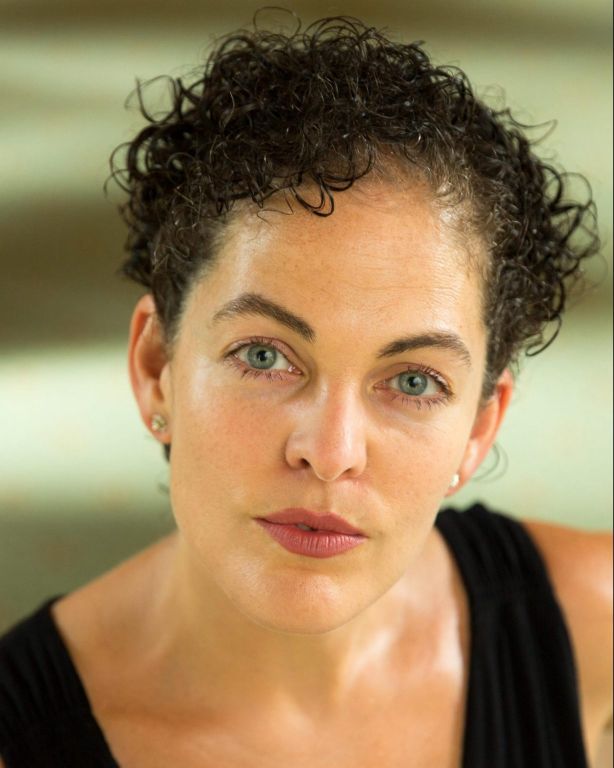
Native American Poet Abigail Chabitnoy
Photo by Kalana Amarasekara for Massachusetts Daily Collegian (2024)

My Poetry Corner October 2025 features an excerpt of the ten-part poem “How It Goes” from the poetry collection In the Current Where Drowning is Beautiful (USA, 2022) by Native American poet Abigail Chabitnoy. Of mixed race (Aleutian-German), she is a Koniag descendant and member of the Tangirnaq Native Village in Kodiak, Alaska. She grew up in Pennsylvania where she earned a BA in English and anthropology from Saint Vincent College. She later obtained an MFA in Creative Writing from Colorado State University where she was a Crow-Trembley Fellow, a 2016 Peripheral Poets Fellow, and received the John Clark Pratt Citizenship Award from the University.

In 1901, Chabitnoy’s great grandfather was separated from his family in Kodiak and sent to the Carlisle Indian Industrial School in Pennsylvania, the first federally funded boarding school established to assimilate Native American people into Euro-American culture. Their family’s Russian Chabitnoy surname is the legacy of Russian control of Alaska until the United States purchased the territory in 1867.

Chabitnoy describes her second poetry collection, In the Current Where Drowning is Beautiful, as “a poetic re-visioning of narratives of violence against women and nature.” In poems filled with imagery that moves in waves and use of Alutiiq language, she links the treatment of indigenous women in the United States with harm toward immigrant families and the environment.

Written during the first administration of our current president, “How It Goes” is the longest poem in the collection (pp. 51-56). In the book’s end notes (pp. 93-95), we learn that the title of the poem is taken from the words of a white teenage boy in a red hat during a protest on January 18, 2019, in the Capitol. Smirking in the face of a tribal elder, he reportedly shrugs and says: “Land gets stolen, that’s how it works.” To the poet’s dismay, the boy somehow becomes the victim in the media.

“While I am not convinced the boy meant no harm or disrespect,” Chabitnoy says in the end notes, “I can readily believe he didn’t know any better. After all, this country has fantastic powers of amnesia.”

Although the speaker in the featured poem questioned in earlier poems the wisdom of bringing children into this world, especially a girl child, we learn in the opening lines of Part I that she is open to the possibility: I’d want you to be a girl, even now. / Ashley-Olivia-Akelina-Nikifor—you would have / too many names to go missing. If only one’s name could work as a charm against evil!

Part II presents the numbers of the separated. / detained. / buried. / missing. murdered. prone / to be incorrectly labeled. / massacred  (p. 52). To achieve greater impact, the numbers stand on their own, with details provided in the footnotes. Numbered among them are Central American immigrant children forcibly separated from their families, many of whom are also indigenous.

John says he is listening to your concerns.

8-year-old Franklin of Guatemala was
reunited with his father and watching them
embrace right now it is possible to forget
the latest counts

250 or 559 or more than 400
at least 2,000¹				(maybe 14,000)²
186, or more than 10,000³
500 or 2,000			        as many as 15,000⁴
btw 200 or 300 and 500, or 2,000⁵

Jakelin-Albertha-Savanna-

colonies of birds are already in decline. cite predation.⁶

(alternatively, such facts vary—by the time you read this
we will have forgotten how many. the list grows. but who’s 
counting?)
_______________
¹ separated.
² detained.
³ buried.
⁴ missing. murdered. prone
⁵ to be incorrectly labeled.
⁶ massacred

After all, the speaker continues, this violence has been the American way since the European conquistadors’ first encounter with indigenous populations (p. 53):

This is America and it is (year-of-our-supposed-lord) ___.
This is America since 1492.
This is America, we were born taking children from their mothers and their fathers.
This is America and we’ve been taking babies from mothers with too many babies
(I.Y.O.) in your lifetime.
This is America and I want to tell you too it is beautiful
but
—vindictive or entombed—

Part IV quotes the smirking white teenager in a red hat, adding a footnote in tiny print (p. 53): “Yeah, well, [kids]* get stolen. That’s how it goes.”

*he might have said “land.” he might have said “women.” he might have been smiling respectfully to diffuse the situation.

Part VIII cites the ways in which indigenous women were killed (p. 55): “by fire, by water, by hanging in air, burying in earth, / by asphyxiation, penetration, striking, piercing, crushing / in a thousand / and one ways.” // You forgot exposure (which Patricia knows in Montana may include stabbing).

Part X gives voice to indigenous girls and women lost to violence:

Now you don’t see us
Now you don’t


I’m not going to play
your blackout games


but know:
my teeth still shine
in the dark.


a body buried still
speaks.


above or
below


don’t imagine there is nothing at the bottom.

Chabitnoy concludes in the end notes (p. 94): “The same narratives that facilitate violence against women facilitate violence against the landscape facilitate violence against indigenous people and other nonwhite populations. And the same hypocrisy, bureaucratic ineptitude, and cultural amnesia allow these violences to continue.”

Learn more about the “Missing and Murdered Indigenous People Crisis” at the official website of the U.S. Department of the Interior: Indian Affairs.

To read the complete excerpt (Parts II-III-IV) of the featured poem “How It Goes” and learn more about the work of Native American poet Abigail Chabitnoy, go to my Poetry Corner October 2025.

Poem “I Know You by Your Scent” by Brazilian Poet Ricardo Aleixo

21 Sunday Sep 2025

Posted by Rosaliene Bacchus in Brazil, Poetry

≈ Comments Off on Poem “I Know You by Your Scent” by Brazilian Poet Ricardo Aleixo

Tags

Afro-Brazilian Multimedia Poet, Belo Horizonte/Minas Gerais/Brazil, Brazilian Poet Ricardo Aleixo, For love of money, Poem “I Know You by Your Scent / Conheço Vocês pelo Cheiro” by Ricardo Aleixo, Poetry Collection Too Heavy for the Wind: Poetic Anthology / Pesada Demais para a Ventania: Antología Poética (2018) by Ricardo Aleixo

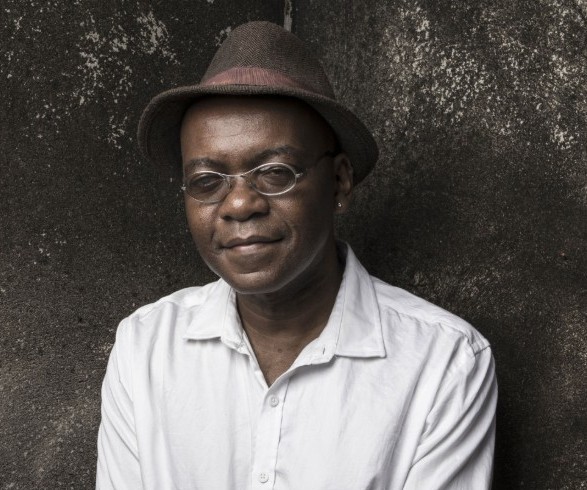
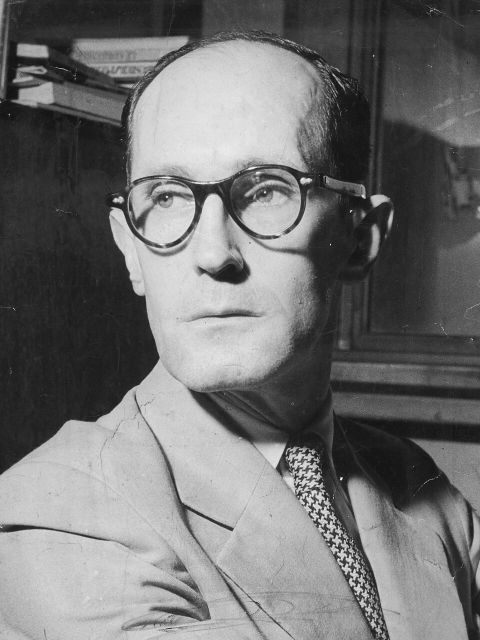
Brazilian Poet Ricardo Aleixo
Photo by Rafael Motta for Culturadoria (2022)

My Poetry Corner September 2025 features the poem “I Know You by Your Scent / Conheço Vocês pelo Cheiro” from the poetry collection Too Heavy for the Wind: Poetic Anthology / Pesada Demais para a Ventania: Antología Poética (2018) by Ricardo Aleixo, Brazilian poet, essayist, and multimedia artist-performer.

Born in 1960 in Belo Horizonte, capital of the southeastern State of Minas Gerais, he is considered one of the most innovative Brazilian contemporary poets. His work is found in national and international collections. As a multimedia performer, he has presented his work across Brazil and overseas. He lives in Belo Horizonte and is a member of the Academy of Letters of Minas Gerais.

In his 2024 interview with Matheus Lopes Quirino for the Social Service of Commerce (SESC) of São Paulo, Aleixo credited his family as instrumental in shaping the person he is today. He describes his parents as two incredibly intelligent people, born in the early 1900s, not many years after the end of slavery in May 1888. Although his poor, working-class parents both lacked opportunities for furthering their education, they instilled in Ricardo and his older sister the value of education. His father, a soft-spoken man, sought to refine himself intellectually through reading Brazil’s great literary writers.

As a boy, Aleixo’s first love was music and later the visual arts in high school. He began writing his first poems and songs when he turned 17 and 18 years. As a soccer player at eighteen years, he wanted to become a professional. That dream ended when a ball struck and blinded him in his right eye. Poetry became his only option.

At nineteen years, he decided not to pursue a bachelor’s degree, after witnessing his sister’s disappointment in not graduating as a writer on completion of her BA in literature. Instead, he embarked on a self-study program through building a home library with his sister’s help. Around the age of 24 or 25, he studied literature, semiotics, music, visual arts, history, and philosophy.

His life change when the Belo Horizonte Public Library asked him to catalog 600 volumes of a private collection of books, covering African Brazilian culture and its transatlantic ramifications. He read them all. To him, this meant much more than an academic degree.

Continue reading →

“Why Whales are Back in New York City” – Poem by Caribbean American Poet Rajiv Mohabir

17 Sunday Aug 2025

Posted by Rosaliene Bacchus in Poetry

≈ 72 Comments

Tags

Caribbean American Poet Rajiv Mohabir, Humpback Whale Songs, Indo-Caribbean Queer Poet, Poem “Why Whales are Back in New York City” by Rajiv Mohabir, Poetry Collection Whale Aria by Rajiv Mohabir (USA 2023)

Caribbean American Poet Rajiv Mohabir
Photo Credit: University of Colorado Boulder

My Poetry Corner August 2025 features the poem “Why Whales are Back in New York City” from the poetry collection Whale Aria by Rajiv Mohabir, published by Four Way Books (USA, 2023). His fourth book of poetry received the Gold Medal for Poetry from the Forward Indies, Bronze Medal from the Northern California Publishers and Authors, and finalist/Honorable Mention from the Eric Hoffer Award. All following excerpts of his poems are from this collection.

A queer poet, memoirist, and translator, Mohabir was born in London, England, to Indo-Guyanese parents: descendants of East Indian Indentured laborers to then British Guiana. Migrating to the USA as a kid, he grew up in New York City and Florida’s Greater Orlando Area. He holds a BA from the University of Florida in Religious Studies, an MSEd in TESOL from Long Island University of Brooklyn, and an MFA in Creative Writing and Literary Translation from Queens College of the City University of New York. He received his PhD in English from the University of Hawai‘i. He is currently an assistant professor of poetry in the Department of English at the University of Colorado Boulder.

Whale Aria was conceived in Hawai‘i after the poet first heard humpback whales singing to each other. “I felt it in my pituitary gland first. Then in my throat. A tightening and a deep reverberation,” said Mohabir in his craft essay “On Humpback Whale Song and Poetic Constraint,” published in The American Poetry Review, July/August 2023 Issue.

“Submerged, I opened my eyes and felt the song move through me. What they communicated to one another was a mystery to me, as it is to scientists still, but felt familiar in that it was as if the vibrations stimulated the noise production mechanisms of my own body…. It felt holy, like the cetacean vibrations were sacralizing the space through sound. I wanted to hear the songs again and again and again.”

Continue reading →

“Inheritance” – Poem by Paraguayan American Poet Diego Báez

20 Sunday Jul 2025

Posted by Rosaliene Bacchus in Poetry

≈ 53 Comments

Tags

Dual Identity, Fatherhood, Language and Identity, Paraguayan American Poet, Poem “Inheritance” by Diego Báez, Poetry Collection Yaguareté White by Diego Báez (USA 2024)

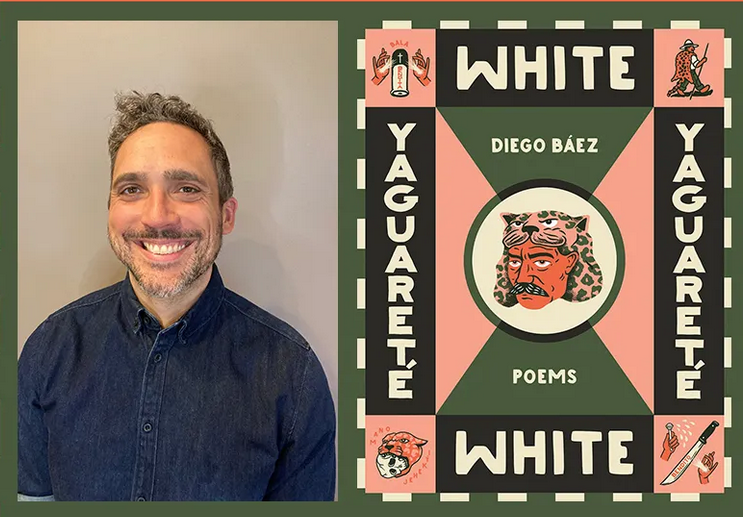
Paraguayan American Poet Diego Báez with Front Cover of Yaguareté White: Poems
Photo Credit: The University of Arizona Press

My Poetry Corner July 2025 features the poem “Inheritance” from the debut poetry collection Yaguareté White (USA, 2024) by Paraguayan American poet Diego Báez. The collection was the finalist for The Georgia Poetry Prize and a semi-finalist for the Berkshire Prize for Poetry.

Son of a Paraguayan father and a white, Pennsylvanian mother, Báez grew up in Central Illinois in a community devoid of families that resembled his own. His brown skin betrayed his otherness to his classmates. On family visits to Paraguay, his broken Spanish marked him as a gringo. This reminder that he wasn’t quite Paraguayan or American infuses his poetry.

Báez lives in Chicago with his wife and daughter. He teaches poetry, English composition, and first-year seminars at the City Colleges, where he is an Assistant Professor of Multidisciplinary Studies.

Rigoberto González, an American poet, writer, and book critic, notes in his Foreword to Yaguareté White: “Diego Báez [is] the first Paraguayan American poet to publish a book originally in English in the United States.” He adds that Báez is transparent in his debut poetry collection about his struggles understanding his own dual identity. “[H]e didn’t grow up speaking Spanish; and the lack of connection to a Paraguayan community in the United States excludes him from the social and cultural foundations that other South American diasporas provide for their respective immigrant populations and subsequent generations.” His memories of his Paraguayan origin arise from visits to his abuelo’s farm outside the village of Villarrica.

Nevertheless, Paraguay is ever-present throughout the poetry collection in which Báez weaves its colonial history of violent militant whiteness together with its three languages: English, the language of US imperialists; Spanish, the language of the colonizers; and Guaraní, the dialect of the indigenous peoples. In combining the Guaraní word for jaguar, yaguareté, and white in the book’s title, the poet also hints at his dual identity.

Continue reading →

Poem “Wildebeests Migrate Across the Serengeti” by Brazilian Poet Micheliny Verunschk

22 Sunday Jun 2025

Posted by Rosaliene Bacchus in Poetry

≈ 63 Comments

Tags

Brazilian Poet Micheliny Verunschk, Human and Non-human Migration, Poem “Wildebeests Migrate Across the Serengeti / Gnus Migram Através do Serengeti” by Micheliny Verunschk, Poetry Collection The Movement of Birds / O Movimento dos Pássaros (2020) by Micheliny Verunschk, Recife/Pernambuco/Brazil

Brazilian Poet Micheliny Verunschk
Photo by Renato Parada (2023)

My Poetry Corner June 2025 features the poem “Wildebeests Migrate Across the Serengeti / Gnus Migram Através do Serengeti” from the poetry collection The Movement of Birds / O Movimento dos Pássaros (2020) by Micheliny Verunschk, an award-winning Brazilian poet, romance novelist, literary critic, and historian. All the excerpts cited in this article are from this collection.

Verunschk was born in Recife, capital of the Northeast State of Pernambuco, in 1972 during the period of Brazil’s military dictatorship (1964-1985). Her father was in the military; her mother was a teacher. She holds a master’s degree in Literature and Literary Criticism, as well as a doctorate in Communication and Semiotics from the Pontifical Catholic University of São Paulo (PUC). She has lived in São Paulo since 2004.

The young Micheliny spent most of her childhood in Arcoverde, a violent city in the semi-arid interior of Pernambuco. Exposed to violence at an early age, she was curious about what her father was doing in the military. She also lived in Tupanatinga, yet another violent city in the interior. It’s no surprise then, with her father’s encouragement, that she found release in writing poetry and stories as early as nine years old.

Continue reading →

Poem “Why Madwoman Shouldn’t Read the News” by Caribbean Poet Shara McCallum

18 Sunday May 2025

Posted by Rosaliene Bacchus in Poetry

≈ 56 Comments

Tags

2017 Poetry Collection Madwoman by Shara McCallum, Female Identity, Jamaican American Poet Shara McCallum, Poem “Why Madwoman Shouldn’t Read the News” by Shara McCallum, Racial Identity, Womanhood

Caribbean American Poet Shara McCallum
Photo Credit: Author’s Official Website

My Poetry Corner May 2025 features the poem “Why Madwoman Shouldn’t Read the News” from the poetry collection, Madwoman, by the award-winning Caribbean American poet and writer Shara McCallum. Born in Kingston, Jamaica, in 1972, to an Afro-Jamaican father and a Venezuelan mother, she was nine years old when she migrated to Miami, Florida, with her mother and sisters. Her father, a singer and songwriter, stayed behind in Jamaica.

McCallum graduated with a bachelor’s degree from the University of Miami. She earned her MFA from the University of Maryland and a PhD in African and Caribbean Literature from Binghamton University in New York. Her poetry collection Madwoman, published in the UK and USA in 2017, won the 2018 OCM Bocas Prize for Caribbean Literature in Poetry and the Sheila Margaret Motton Book Prize (New England Poetry Club).

In Madwoman, McCallum explores themes of race, female identity, and womanhood. During a 2018 interview with Arianna Miller for the Gandy Dancer Literary Magazine, the poet explained: “Madwoman was a voice she heard in her head…. [She] eventually became a voice that McCallum could not ignore, which was actually troubling for her considering her father was a schizophrenic.”

Continue reading →

“Ricantations” – Poem by Puerto Rican Poet Loretta Collins Klobah

27 Sunday Apr 2025

Posted by Rosaliene Bacchus in Nature and the Environment, Poetry

≈ 38 Comments

Tags

Climate Crisis, Earth Day 2025: Our Power Our Planet, Hurricane Maria/Puerto Rico 2017, Poem “Ricantations” by Loretta Collins Klobah, Poetry Collection Ricantations by Loretta Collins Klobah, Puerto Rican Poet

Puerto Rican Poet Loretta Collins Klobah / Oil Painting on Front Cover: Ángel Plenero by Samuel Lind
Photo Credit: Peepal Tree Press (UK, 2018)

My Poetry Corner April 2025 features the title poem from the poetry collection Ricantations (Peepal Tree Press, 2018) by Puerto Rican poet Loretta Collins Klobah. Born in Merced, California, she earned an M.F.A. in poetry writing from the Writers’ Workshop at the University of Iowa, where she also completed a doctoral degree in English, with an emphasis on Caribbean literary and cultural studies. She spent four of the nine years of her doctoral study in Jamaica (Caribbean) and West Indian neighborhoods of Toronto (Canada) and London (UK). Since the late 1990s, she lives in San Juan, Puerto Rico, where she is a professor of Caribbean literature and creative writing at the University of Puerto Rico.

Growing up in an English and Spanish working-class household has influenced Klobah’s style of blending Spanish and English in her work. Her mother had Spanish and Scottish heritage, her father Cherokee and Irish. Her Mexican American godparents taught her Spanish, widely spoken in Merced where she grew up. The title of her collection Ricantations appears to be a blend of these two languages.

Klobah began writing poetry in primary school as a way of processing life and engaging with the world. At eighteen years, on becoming part of the active poetry community in Fresno, California, she began receiving serious mentoring from former US Poet Laureate Philip Levine and other award-winning poets.

“I don’t write love poetry, and I don’t rhyme,” Klobah told Trinidadian poet Andre Bagoo during a 2012 interview for the Caribbean Beat magazine, following the release of her award-winning debut poetry collection. “I write because I want to communicate with readers in a way that matters, makes an impact, or makes some kind of beneficial difference in the reader’s thoughts and in the society.”

Continue reading →

Poem “Expropriation” by Brazilian Poet Rubens Jardim

23 Sunday Mar 2025

Posted by Rosaliene Bacchus in Brazil, Poetry

≈ 76 Comments

Tags

Brazilian Poet Rubens Jardim, Poema “Expropriation / Expropriação” by Rubens Jardim, Poetic Catechesis / Catequese Poética Movement, Poetry Collection Outside of the Bookshelf / Fora da Estante (2012) by Rubens Jardim, São Paulo/Brazil

Brazilian Poet Rubens Jardim (1946-2024)
Photo Credit: Brazilian Editora Arribaçã

My Poetry Corner March 2025 features the poem “Expropriation / Expropriação” from the poetry collection Outside of the Bookshelf / Fora da Estante by Brazilian poet and journalist Rubens Jardim (1946-2024). Born in Vila Itambé in the interior of São Paulo, he was one of three siblings, with an older brother and younger sister. Poetry was always a part of his life. An aunt, passionate about poetry with a magnificent collection, would always recite Brazil’s renowned poets at family gatherings. He attributed his skill at public poetry readings to her.

In an interview with Revista Arte Brasileira, following the publication of his Anthology of Unpublished Poems / Antologia de Inéditos in 2018, he spoke a lot about poetry and its importance in his life.

“Poetry for me is alchemy. It is the transformation of the ignoble into the noble, of the invisible into the visible, of the unspeakable into utterance….

I believe that true poetry increases humanity in man. It shows that if there is a flower, there is also hunger…. Furthermore, poetry is a constant struggle against alienation. It’s nonconformity. Indignation…. What’s more, poetry does not bend to anything. Averse to classification and closed thinking to transformation, poetry does not tolerate dictatorship—not even dictatorship of the word…. It’s also a way of living. It’s an attitude towards and within life. And if I continue writing poems—even knowing that poetry is useless—as the poet Manoel de Barros enlighteningly said—it’s because I like to believe that, thanks to poetry, I have kept the flame of hope for transformation alive.

Continue reading →

“Who made me a stranger in my world?” – Poem by Saint Lucian Poet John Robert Lee

16 Sunday Feb 2025

Posted by Rosaliene Bacchus in Poetry

≈ 65 Comments

Tags

Alienation, Caribbean Identity, End to US Soft Power, Masks we wear, Poem “Who made me a stranger in my world?” by John Robert Lee, Poetry Collection Pierrot by John Robert Lee (UK 2020), Saint Lucia/Caribbean, Saint Lucian Poet John Robert Lee

Cover Art by Saint Lucian Artist Shallon Fadlien, 2015  
Saint Lucian Poet John Robert Lee

My Poetry Corner February 2025 features the poem “Who made me a stranger in my world?” from the poetry collection Pierrot by poet, preacher, and retired teacher and librarian John Robert Lee, published by Peepal Tree Press (UK, 2020). Born in 1948 in the Caribbean Island nation of Saint Lucia, he majored in English and French Literature, including Caribbean Literature, at the University of the West Indies in Barbados (Cave Hill Campus) and Jamaica (Mona Campus) in the early 1980s.

His main interests and occupations include teaching, library service, literature, theatre, literary journalism, and media (print and electronic). Ordained in 1997 as an Elder of Calvary Baptist Church, he preaches at his local Baptist Church and teaches the Adult Sunday School Class. Father of three children, he lives with his wife in Saint Lucia.

During the poet’s 2020 interview with Adam Lowe of Peepal Tree Press, when asked what drew him to the image of the Pierrot as a core motif for this collection and why now, Lee said:

“In the Pierrot cover…the eyes and mouth seemed to reveal the person beneath the costume, the actor under the masquerade, with all his heart pain, bewilderment and anguish…. I also saw in that face, under the harlequin’s colors, a Christ figure, the Man of Sorrows…

“Why now? Perhaps the times we live in call for masking and unmasking, speaking plainly or through various aliases, pseudonyms, characterizations—which perhaps is a device for speaking truth to power and to each other and to ourselves, and that, self-protectively.”

Continue reading →
← Older posts

Subscribe

  • RSS - Posts
  • RSS - Comments

Archives

  • January 2026
  • November 2025
  • October 2025
  • September 2025
  • August 2025
  • July 2025
  • June 2025
  • May 2025
  • April 2025
  • March 2025
  • February 2025
  • January 2025
  • December 2024
  • November 2024
  • October 2024
  • September 2024
  • August 2024
  • July 2024
  • June 2024
  • May 2024
  • April 2024
  • March 2024
  • February 2024
  • January 2024
  • December 2023
  • November 2023
  • October 2023
  • September 2023
  • August 2023
  • July 2023
  • June 2023
  • May 2023
  • April 2023
  • March 2023
  • February 2023
  • January 2023
  • December 2022
  • November 2022
  • October 2022
  • September 2022
  • August 2022
  • July 2022
  • June 2022
  • May 2022
  • April 2022
  • March 2022
  • February 2022
  • January 2022
  • December 2021
  • November 2021
  • October 2021
  • September 2021
  • August 2021
  • July 2021
  • June 2021
  • May 2021
  • April 2021
  • March 2021
  • February 2021
  • January 2021
  • December 2020
  • November 2020
  • October 2020
  • September 2020
  • August 2020
  • July 2020
  • June 2020
  • May 2020
  • April 2020
  • March 2020
  • February 2020
  • January 2020
  • December 2019
  • November 2019
  • October 2019
  • September 2019
  • August 2019
  • July 2019
  • June 2019
  • May 2019
  • March 2019
  • February 2019
  • January 2019
  • December 2018
  • November 2018
  • October 2018
  • September 2018
  • August 2018
  • July 2018
  • June 2018
  • May 2018
  • April 2018
  • March 2018
  • February 2018
  • January 2018
  • December 2017
  • November 2017
  • October 2017
  • September 2017
  • August 2017
  • July 2017
  • June 2017
  • May 2017
  • April 2017
  • March 2017
  • February 2017
  • January 2017
  • December 2016
  • November 2016
  • October 2016
  • September 2016
  • August 2016
  • July 2016
  • June 2016
  • May 2016
  • April 2016
  • March 2016
  • January 2016

Categories

  • About Me
  • Anthropogenic Climate Disruption
  • Brazil
  • Economy and Finance
  • Family Life
  • Festivals
  • Guyana
  • Health Issues
  • Human Behavior
  • Immigrants
  • Nature and the Environment
  • People
  • Philosophy
  • Poetry
  • Poetry by Rosaliene Bacchus
  • Recommended Reading
  • Relationships
  • Religion
  • Religion & Spirituality
  • Reviews – The Twisted Circle: A Novel by Rosaliene Bacchus
  • Reviews – Under the Tamarind Tree: A Novel by Rosaliene Bacchus
  • Save Our Children
  • Social Injustice
  • Technology
  • The Twisted Circle: A Novel by Rosaliene Bacchus
  • The Writer's Life
  • Uncategorized
  • Under the Tamarind Tree: A Novel by Rosaliene Bacchus
  • United States
  • Urban Violence
  • Women Issues
  • Working Life

Blogroll

  • Angela Consolo Mankiewicz
  • Caribbean Book Blog
  • Dan McNay
  • Dr. Gerald Stein
  • Foreign Policy Association
  • Guyanese Online
  • Writer's Digest
  • WritersMarket: Where & How to Sell What You Write

Meta

  • Create account
  • Log in
  • Entries feed
  • Comments feed
  • WordPress.com

Enter your email address to subscribe to this blog and receive notifications of new posts by email.

Join 3,233 other subscribers

Blog at WordPress.com.

Privacy & Cookies: This site uses cookies. By continuing to use this website, you agree to their use.
To find out more, including how to control cookies, see here: Cookie Policy
  • Subscribe Subscribed
    • Three Worlds One Vision
    • Join 3,233 other subscribers
    • Already have a WordPress.com account? Log in now.
    • Three Worlds One Vision
    • Subscribe Subscribed
    • Sign up
    • Log in
    • Report this content
    • View site in Reader
    • Manage subscriptions
    • Collapse this bar
 

Loading Comments...