
Tags
Cost of raising a child in USA, Indigenous knowledge and wisdom, Indigenous Voices, Patriarchy, Sacred Feminine and Sacred Masculine, The Changing Earth
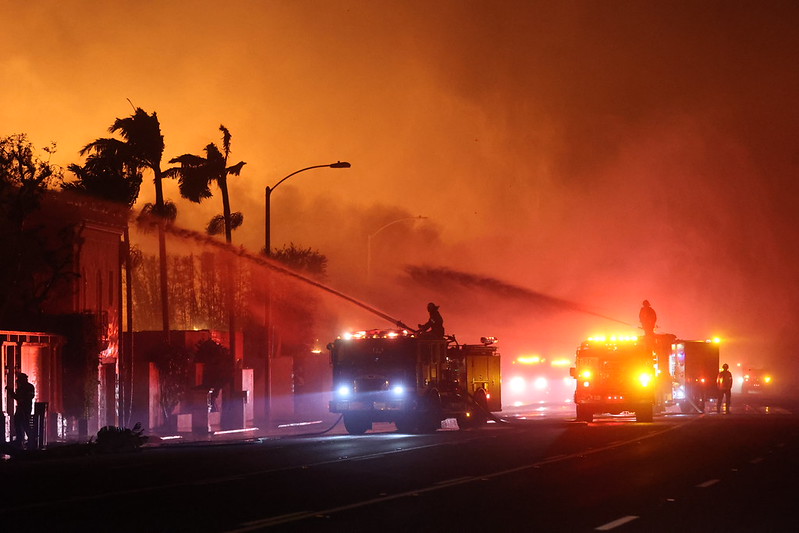
Palisades Fire January 2025 – Los Angeles County – California – USA
Photo Credit: CalFire Photo Album
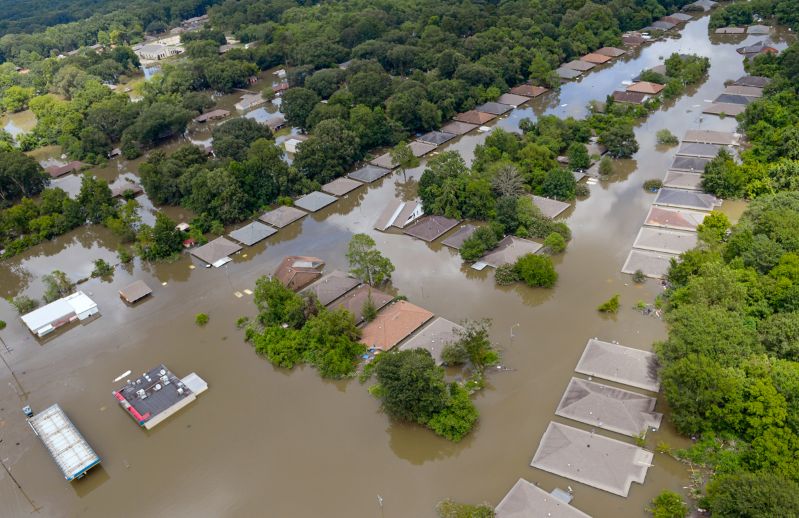
Great Flood Baton Rouge August 2016 – Louisiana – USA
Photo Credit: Climate Central (Photo by Bill Feig/The Advocate)
This is the third article in my series about our changing Earth from interviews with Native Americans shared in We Are the Middle of Forever: Indigenous Voices from Turtle Island on the Changing Earth, edited by Dahr Jamail and Stan Rushworth (USA 2022). My presentation does not follow the order of the interviews.
#3: Terri Delahanty (Cree) – Sacred Feminine and Sacred Masculine
(Chapter 7, pp. 96-107)
Terri Delahanty, a Cree woman, was interviewed by Dahr Jamail in her home in October 2019, several months before the COVID-19 lockdown. (The majority of the Cree Nation resides in Canada. In the USA, they are primarily located in Montana.) A Sun Dancer for eleven years, she maintains a regular practice of Native ceremonies, meditation, and women’s traditional ceremonies. Also an ordained minister, she is the Native American chaplain for York Correctional Institution, a high security women’s facility, as well as for three of the men’s prisons in Connecticut. She is a founding member of the board of Women in the Spirit and sits on the board of trustees at the Institute of American Indian Studies in Washington Depot, Connecticut.
As a certified parent educator, at the supervisory level, through the National Parents As Teachers Organization, she is the director for Greater Hartford Even Start, a family literacy program. For over twenty years, she is also the director for the extended day program and program coordinator at the University of Hartford Magnet School.
Terri sees her spirit’s journey as bringing knowledge to the Indigenous community about returning to the Sacred Feminine and Sacred Masculine, lost through patriarchy. “We’ve gotten away from our heart center,” she told Jamail.
She believes that the internal spiritual rupture and wounding of the sacred masculine and feminine occurred from the fifteenth to eighteenth centuries across Europe with the slaughter of six to nine million women, accused of being witches. This rupture was further intensified with the genocide of Indigenous peoples, the Jewish Holocaust, and the African chattel slavery. There remains an open wound that still needs to be healed. Men couldn’t protect their women and families were separated.
There was something broken in the heart, and until we come back to being heart-centered, how do we understand each other?
As Terri sees it, if humans are to have a chance of surviving the existential crises we now face, we must all return to Indigenous ways of being.
Because Indigenous people understand their place, they know how to live in that area. There are Indigenous here that know how to live in this area with the waters and the mountains or whatever the landscape was right for, sustainably. So I think we’re coming into a point where Earth is doing what Earth is doing because we’re not together as humanity.
Returning to the imbalance between the sacred masculine and sacred feminine, Terri explained that the sacred masculine carries the fire while the sacred feminine carries the water. Under the patriarchal system, masculinity has been drying up the women. To regain equilibrium, the onus not only falls on the male. The female must also stop putting out the fire of the male.
It’s so out of balance now. I think it’s necessary for communities to come back to honoring the women and the fact that we are the bearers of life…. We need to come back to really figuring out what the woman has to offer. And I don’t think humanity is going to solve anything until the woman steps back into her power.
Terri pointed out that she in no way means “power over,” but simply that women are recognized for who they are. She also expressed concern over the power-over dynamic demonstrated by both men and women.
So how do we get rid of that power-over attitude? It’s about really honoring what you bring as a male, and what I bring as a female. If we can bring that into every relationship, then our children are going to see that we’re going to be honoring our elders.
She does not see how humanity will survive the climate crisis if we fail to return to the sacred masculine and feminine.
Women are destroying themselves in the dominant culture, and are destroying other women, and until we come back to the sacredness of being a life bearer and a life giver and all those ways of knowing that accompany that, we are lost.
Terri believes if women are not supporting each other, they are not going to know the sacred feminine.
We need to go back to really learning what sacred feminine is, what sacred masculine is, and allow our men to be men and not try to be the strength that they are. We can let them take care of us. The sacred masculine can protect and take care of the sacred feminine while she takes care of the home.
Terri thinks it’s degrading for women to shun taking care of the home, considered a part of being in the sacred feminine.
And instead, now, essentially, almost nobody’s taking care of the home. Everybody’s just out running around making money, chasing things, addicted, distracted, and completely missing the point.
When asked about her thoughts on the climate crisis, Terri was very clear about the necessity for human connection with Earth.
If there is no connection to Earth, and we’re not bringing our children there, and we’re not going to see that the words from our elders are right, I don’t see a way out of it.
She believes whether people admit it or not, we all know we’re headed toward extinction.
We need to get back to where there’s no separation between you and me. I pray for it, because I think that’s the only thing that’s going to heal the Earth. I pray for all those unborn generations, for all those new species that can come about.
Only when we know that we’re connected to all things, to one another, and to the Earth, will we change our ways of being and doing.
* * * * * *
I join Terri Delahanty in her pursuit for the return to the Sacred Feminine and Sacred Masculine, connected in Indigenous cultures by the elements of water and fire respectively. Same essence. Different gifts and strengths. Complimenting each other for a stronger and optimal partnership relationship.
Once again in human evolution across the millennia, dominant men—not forgetting the women who enable them—are defying established norms of human moral behavior. Powerful madmen now threaten to destroy an entire civilization in one night—never to rise again. Drunk with military might, they believe they can do whatever they want to the inhabitants of Earth. No man, woman, or child is safe from the fire of their wrath.
In California, we’ve witnessed at close range the destructive power of wildfires, fueled by drought and strong winds. (See captioned photo of the 2025 Palisades Fire.) Without water, parched land and vegetation become a tinderbox. When the rain comes, it’s a deluge. (See captioned photo of the 2016 Great Flood Baton Rouge.) Equilibrium is key, as Terri reminds us. We humans ignore the lessons of Mother Nature at our peril.
Under current geopolitical conditions, I see little chance of restoring a partnership relationship between the male and female, once enjoyed by Indigenous nations before the arrival of the White man to the Americas. What’s more, economic gains—from detention centers, war games, rising oil prices, and more—continue to benefit the superrich whose vaults are topped up to the ceilings. How many men among the struggling working-class can afford to have their women stay at home to care for a family?
A study done by Jaclyn DeJohn, Director of Economic Analysis at SmartAsset and a Certified Financial Planner™, found that raising a young child in the USA can now reach over US$40,000 a year (US$3,333 per month), depending on where you live. In her article “Staying Home to Raise the Family? Here’s What the Working Spouse Needs to Earn – 2025,” published by SmartAsset on December 2, 2025, we learn that Hawaiians rank in top position for earnings needed for one parent to stay at home—at least US$102,773 for two adults and a young child. Not far behind, California comes in second place with US$97,656.
The most affordable US states to be a stay-at-home parent are West Virginia (US$68,099); Arkansas (US$68,141); Mississippi (US$70,242); Kentucky (US$70,408); and North Dakota (US$70,949). And we wonder why American couples are putting off having children.
Contrary to Terri’s ideal conditions, the stay-at-home parent could fall to the male as the partner with the lower income. This was the case for me and my husband, following the birth of our first child in Guyana. Unable to afford childcare, we decided that he would stay at home while I, as the higher wage-earner, would continue to work at the commercial bank where I was employed at the time. He later started a home-based pastry business that, within two years, covered the cost of hiring a nanny.
Regardless of the animosity that exists between us, our lives as male and female are intertwined. More than ever, with the existential crises humanity now face—extreme weather events, ecological degradation, nuclear deterrent, and artificial intelligence—we have to work together as one with mutual respect to change course.
Blessed are our elderly couples who have tapped into their sacred feminine and sacred masculine, bringing out the best in each other. Despite all the ups and downs of life, they have raised well-adjusted offspring and continue to enjoy many fulfilling years together. Let them be our guide forward toward a better future for humanity on this beautiful planet we call Earth.
Click on links below for previously featured interviews:
#1: Raquel Ramirez (Ho-Chunk, Ojibwe, Lenca) – Awareness
#2: Alexii Sigona (Amah Mutsun) – Stewardship
 Three Worlds One Vision