
Tags
Belmont/Trinidad & Tobago/Caribbean, Colonial and Post-colonial oppression, Environmental Degradation, Poem “Uprising” by John Robert Lee, Poetry Collection Belmont Portfolio by John Robert Lee (UK 2023), Ravaged Earth, Saint Lucia/Caribbean, Saint Lucian Poet John Robert Lee, Western exploitation
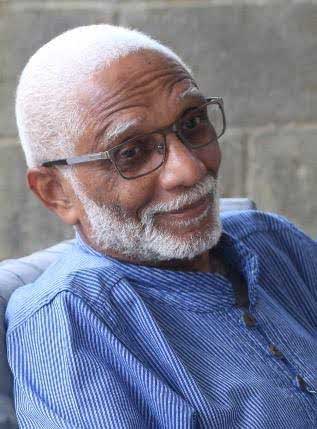
Photo Credit: The Voice St. Lucia News / Photo by Tara Lucien
My Poetry Corner February 2026 features the poem “Uprising” from the poetry collection Belmont Portfolio by poet, preacher, and retired teacher and librarian John Robert Lee, published by Peepal Tree Press (UK, 2023). Born in 1948 in the Caribbean Island nation of Saint Lucia, he majored in English and French Literature, including Caribbean Literature, at the University of the West Indies in Barbados (Cave Hill Campus) and Jamaica (Mona Campus) in the early 1980s.
Ordained in 1997 as an Elder of Calvary Baptist Church, Lee continues to be active in his local Baptist Church where he preaches occasionally. While he remains connected to the pulse of Caribbean literature and the arts, he is no longer actively involved in theatre and broadcasting as he once was. Father of three children, he lives with his wife in Saint Lucia.
During an exclusive interview with Caribbean Writers and Poets Magazine in November 2023 to talk about his poetry collection Belmont Portfolio, Lee said:
“I explore my world and what is happening in it, Caribbean and international; my culture and its history, its music, both traditional and contemporary, its life in all that complexity; my own personal experiences of maturing, aging, and my ever-deepening faith.”
Belmont in the title is a historical and cultural neighborhood in northeast Port of Spain, capital of the Caribbean Republic of Trinidad & Tobago. During his stay in Belmont, while attending the Caribbean Festival of Arts (CARIFESTA) in 2019, Lee took photos of the area that later inspired a series of ekphrastic poems.
In the two-part poem “Watchman,” the epigraph from the biblical Prophet Ezekiel 3:17 – Son of man, I have made you a watchman for the house of Israel; therefore hear a word from My mouth, and give them warning from me – sets the tone and warning of the poetic persona.
In the six-stanza “Part I: Babylon – City of Man,” the poetic persona speaks out with the fervor of the Prophet Ezekiel against colonial oppression, and post-colonial human exploitation and injustice (stanzas 1-3, p. 41):
Ask native peoples who trusted paper promises
ask Africans chained below decks of slave caravels
ask Asians & other immigrants from islands of the sea,

ask them about liberal democracy that plants burning crosses
on their lawns, knees in their necks, metal in their fleeing backs,
that makes them invisible ciphers fenced in minority ghettos,

that gives power to autocrats who suppress their votes,
ask. This is Babylon. This is its system of privilege.
This is Nimrod’s land, Babel in the plain of Shinar.
The term “Babylon” has its origin in the Afro-Jamaican Rastafarian religious/social movement in the 1930s. It represents the white European colonial and imperialist power structure which has oppressed black and brown peoples across the Caribbean Region.
The ten-stanza “Part II: Chant down Babylon” takes us to a city street on a Caribbean Island, where a local, black, dread-locked prophet rails against the wrongs he sees within the society (stanzas 1-3, 8-10, pp. 42-43):
The dread-locked prophet comes every day to his box under the flamboyant tree
in the square by government house, facing the cathedral,
with people passing through to taxi stand & restaurants,

& every day mockers give him talk when he chant down the system,
chant down Babylon, bloodfire scandals,
point with his shaking finger at the pride & selfishness

of the busy metropolis; & he chant down
meaningless religion, church & state complicity,
idols of liturgical masquerade, big pomposity,

[…]

when you poor you like dog! This Babylon! This slave colony of Babylon!
& he come out against racism in Amerikkka, classism in his own island,
against hatred for people who different –

& the prophet start to bawl when he see what they doing
with their garbage, to the fish with their plastic,
how they cut down trees to build hotel & warehouse

& more golf course. & prophet chant & he chant & he chant
all the way to his little place outside the town.
The chants of the dread-locked prophet fall on deaf ears.
The poetic persona in the featured six-stanza poem “Uprising,” with the epigraph from another biblical Prophet Jeremiah 22:29 – O earth, earth, earth, / Hear the word of the Lord – pleads with humanity to address the junk and plastic waste destroying human and non-human lives. It’s a prophetic call for the uprising of the human spirit to save our ravaged, sorry earth from our neglect and abuse.
The first three stanzas connect the links between our disregard for each other and the non-human beings with whom we share our planet (p. 40):
Like all our garbage throttling oceans, the barrage
of horrendous news from every corner of this fatigued planet
deadens us to suffering life in war zones, famine-plagued villages,

Race-baiting sidewalks, grief-stricken ICU wards, streets of homeless children
& aging dementia, numerous catalogues of pain
to which we have grown numb, dumb & frankly, bored –

Hearts & minds are choked with junk, vain
matter on which we feed neglected souls,
desacralized spirits, if you allow me to invoke imago Dei,
In stanzas 4 and 5, the poetic persona draws our attention to sacred deep-sea spaces, where we throttle [marine life] with careless plastic capital – / we need, we need to rise to life, rise to see our fall / from the grace we were gifted, rise with hearts leaping to do right.
The prophet can only draw attention to the follies of humankind. It’s up to us to heed the warning and do the necessary hard work: [to] rise up over our ravaged, sorry earth.
To read the complete featured poem “Uprising” and learn more about the work of Saint Lucian poet John Robert Lee, go to my Poetry Corner February 2026.
 Three Worlds One Vision
I’m very touched, Rosaliene, after having read this very interesting poem by John Robert Lee and our sooo advanced society!
LikeLiked by 3 people
Martina, I’m glad that my featured poems have touched you. Tragically, the arrogance of our species will be our undoing.
LikeLiked by 2 people
Absolutely, Rosaliene!!
LikeLiked by 2 people
Poems with a powerful message. It is awful to think that these things happened, an nobody cared enough to make it change. Economics led for humans to treat other humans with nothing but money in mind.
LikeLiked by 3 people
Thanks very much, Diana. This is what we get when we put profits before the well-being of human and non-human life.
LikeLiked by 2 people
Powerful work from biblical times of oppression to today’s fascism – the world has not improved
LikeLiked by 1 person
Sadly true, Derrick 😦 You would think that after millions of years in the making, we would be wiser and more loving.
LikeLiked by 1 person
Safiya Sinclair’s memoir, How to Say Babylon comes to mind as I read this.
LikeLiked by 2 people
Madeline, thanks for bringing Jamaican-born Sinclair’s memoir to our attention. I’ve added her memoir and her debut poetry collection to my To Read List.
LikeLiked by 1 person
My book club read it last year. It was informative and eye-opening because none of us knew much about Rastifarians. Granted, this was one person’s experience, but it was educational. I highly recommend the book.
LikeLiked by 2 people
Thanks again, Madeline. I look forward to reading it.
LikeLiked by 1 person
The more the world advances, the further from reality we all get. Are AI and Bitcoin more important than civility and empathy? Thanks for this post Rosaliene. Allan
LikeLiked by 3 people
You’re welcome, Allan. As an urban dweller in America’s second largest city by population size, I can see how easy it is to become disconnected from the natural world that sustains human life and become enamored with the systems we have created. Humankind looked at its creation and believed that it was good.
LikeLiked by 2 people
Wow — John Robert Lee is a terrific/powerful social-justice poet, Rosaliene. (When I saw his “Uprising” title, I was reminded of Muse’s excellent 2009 song of the same name.)
LikeLiked by 2 people
Dave, I’m glad that you also find Lee’s work as terrific/powerful. Thanks for mentioning Muse’s song of the same name. I was not familiar with the song or the group. I assume that their 2009 song was a response to the 2008 global financial crisis:
Rise up and take the power back / It’s time the fat cats had a heart attack / You know that their time’s coming to an end / We have to unify and watch our flag ascend / (So come on)
LikeLiked by 2 people
You might very well be right, Rosaliene, about what Muse was reacting to!
LikeLiked by 2 people
🥰
LikeLiked by 2 people
John Robert Lee doesn’t pull his punches. Difficult to read for the unflinching assessment of where we are and yet I’m grateful you shared. Thank you, Rosaliene.
LikeLiked by 3 people
You’re welcome, Tracy. Thankfully, he doesn’t live in a society that considers critical thinking as an act of treason. Though the collection was published in 2023, his assessment still remains relevant to our current situation.
LikeLiked by 2 people
So awful and so true that critical thinking is considered treasonous. Living in this timeline sometimes feels surreal. I appreciate you. Solidarity.
LikeLiked by 2 people
Solidarity, Tracy.
LikeLike
Thanks for sharing another great truth teller, Rosaliene. The part about the barrage of news (and junk) making us numb is so true and a reminder of the importance of not letting it consume us. We need to “rise with our hearts leaping to do right”. Amen.
LikeLiked by 3 people
You’re welcome, Mara. Lee is, indeed, a great truth teller and great Caribbean poet. Amen to his call to “rise with our hearts.”
LikeLiked by 1 person
Thank you for your thoughtful analysis and presentation of samples of this man’s work, Rosaliene. He writes with stark realism, but also includes such beautiful imagery of the bountiful sea life threatened by humans’ negligence. I appreciated the link to your other site where I could read the featured poem in full. The biblical introduction adds potency that I feel not so subtly exposes the hypocrisy of those who claim their direction comes from above.
LikeLiked by 2 people
You’re welcome, Steve. I’m so glad that you noticed his beautiful imagery that’s also evident throughout his collection of poems. I love your observation about the poet’s choice of biblical epigraph. He calls out this hypocrisy in Part II of his poem “Watchman,” where the dread-locked prophet “chant down / meaningless religion, church & state complicity, / idols of liturgical masquerade, big pomposity.“
LikeLiked by 1 person
Mmm, yeah. And I love the way he writes as if using spoken dialect. That really attracted me; makes the piece so much more human, making the piece so much more like a conversation that’s accessible to anyone.
Thank you, Rosaliene, for sharing such interesting writers whose messages are so timely and impactful.
LikeLiked by 1 person
My pleasure, Steve.
LikeLiked by 1 person
Thank you for this inspiration which I am still processing, and for your clarifications, like about Babylon. When I spoke the whole poem out loud, I was even more moved.
“we need, we need to rise to life, rise to see our fall
from the grace we were gifted, rise with hearts leaping to do right”
Those lines especially nudge my sometimes sluggish courage. We need to keep asking, keep chanting… keep taking action. whether in small or large steps.
LikeLiked by 2 people
You’re welcome, JoAnna. There’s a lot to process in the featured poem. His call “to rise to life…” does demand courage. The siblings of our collective American family in Minneapolis have shown us what such courage entails.
LikeLiked by 1 person
Yes. Our Minneapolis siblings can teach us a lot.
LikeLiked by 1 person
As someone born in a British colony and brought up with a colonial mindset, it was only later that I recognized the inherent oppression of colonialism and wrote several personal essays on the subject. The problem was that my writings were through my eyes, through the eyes of a one-time beneficiary of oppression. Just as Rex Nettleford, in the 1980’s, introduced me to a perspective on colonialism through the eyes of the oppressed in Jamaica’s history, the poetry of John Robert Lee also provides a view from the inside, from the perspective of the descendants of those “chained below decks”. Perspective matters.
LikeLiked by 2 people
Thanks for sharing, John. Perspective does matter. The white experience in former British colonies was much different from that of the non-white descendants of African slaves and East Indian indentured laborers. Even the descendants of Portuguese immigrant laborers were treated as a lower white class. The Chinese ranked below them.
LikeLike
What a wonderful presentation, Rosaliene! This poet’s stark yet beautiful portrayal of endangered sea life is deeply moving. The biblical preface adds a bold, thought-provoking layer that subtly questions the sincerity of those who claim to act in God’s name
LikeLiked by 2 people
Thanks very much, Ravindra.
LikeLike
John Robert Lee seems like a very interesting poet, writer, and thinker, but I’d unfortunately never heard of him before.
Thanks for introducing me to him.
LikeLiked by 2 people
That’s understandable, Luisa. Very few Caribbean poets have gained international fame like the Nobel Laureate Derek Walcott (1930-2017), a Saint Lucian like Lee and supporter of his work.
LikeLiked by 1 person
Thank you so much for this kind reply!
LikeLiked by 1 person
🙂 ❤
LikeLiked by 1 person
Beautiful and evocative. Oh, to have the patience to be a poet! Thanks for finding such treasures, Rose.
LikeLiked by 1 person
My pleasure, Pam. So glad that you like Lee’s work.
LikeLike
What a fascinating profile on John Robert Lee my dear Rosaliene! 👏🏼 He connects to our modern day reality so profoundly. Thank you for connecting us to a St. Lucian treasure I was unaware of sis. 🥰💖🙏🏽
LikeLiked by 2 people
He sure does, Kym. My pleasure 🙂 ❤
LikeLiked by 1 person
You are so, so very welcome Rosaliene. I appreciate your cultural research, connections, and shares sis. Thank you! 😘💖😍
LikeLiked by 1 person
Thanks very much, Kym 🙂 ❤
LikeLiked by 1 person
My pleasure always my dear sistah!
LikeLiked by 1 person
John Robert Lee certainly is a poet with insight and gifts that resonate! Thanks for sharing Rosaliene! xx
LikeLiked by 2 people
My pleasure, Cindy. So glad that Lee’s poetry resonated with you 🙂
LikeLike
This poetry really gripped my heart, Rosaliene. Thanks for the introduction. ☀️
LikeLiked by 2 people
My pleasure, Lisa. I’m so glad that you connected with Lee’s poetry.
LikeLiked by 1 person
So much wisdom, such clear messages given through the dread locked savior.
LikeLiked by 1 person
I totally agree, Rebecca. We are foolish to ignore the warnings of the dread-locked prophet.
LikeLiked by 1 person
What if our savior came and we did not recognize him or her because we had preconceptions about how they would look? All too likely a scenario.
LikeLiked by 1 person
Rebecca, I believe that many saviors or leaders, as I would prefer to call them, of diverse origins, walk among us and are doing their part to make our world a better place.
LikeLiked by 1 person
Good, we need inspired leaders.
LikeLiked by 1 person