
Tags
Brazilian Poet Micheliny Verunschk, Human and Non-human Migration, Poem “Wildebeests Migrate Across the Serengeti / Gnus Migram Através do Serengeti” by Micheliny Verunschk, Poetry Collection The Movement of Birds / O Movimento dos Pássaros (2020) by Micheliny Verunschk, Recife/Pernambuco/Brazil
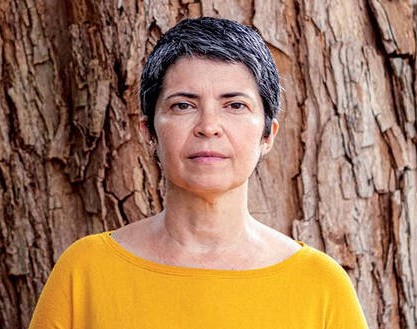
Photo by Renato Parada (2023)
My Poetry Corner June 2025 features the poem “Wildebeests Migrate Across the Serengeti / Gnus Migram Através do Serengeti” from the poetry collection The Movement of Birds / O Movimento dos Pássaros (2020) by Micheliny Verunschk, an award-winning Brazilian poet, romance novelist, literary critic, and historian. All the excerpts cited in this article are from this collection.
Verunschk was born in Recife, capital of the Northeast State of Pernambuco, in 1972 during the period of Brazil’s military dictatorship (1964-1985). Her father was in the military; her mother was a teacher. She holds a master’s degree in Literature and Literary Criticism, as well as a doctorate in Communication and Semiotics from the Pontifical Catholic University of São Paulo (PUC). She has lived in São Paulo since 2004.
The young Micheliny spent most of her childhood in Arcoverde, a violent city in the semi-arid interior of Pernambuco. Exposed to violence at an early age, she was curious about what her father was doing in the military. She also lived in Tupanatinga, yet another violent city in the interior. It’s no surprise then, with her father’s encouragement, that she found release in writing poetry and stories as early as nine years old.
As Verunschk shared in an interview in 2003, following the release of her debut poetry collection, writing was vital for her life, like breathing. Writing made her feel she existed and made it possible to interact with the world. Yet, based on the excerpt from her poem “All the verses I want to write,” not all her teachers were open to what she had to say:
everything I want to say has already been said
but the assistant teacher imposes his own rhythm
write fifty times on the board

it is forbidden to disrupt the class
it is forbidden to disrupt the class
it is forbidden to disrupt the class

but everything I want to shout
is stifled in the throat
Verunschk’s 2020 poetry collection, The Movement of Birds, explores the migratory movement of human and non-human lives. She speaks of lives that come and go, crossings, continuous passageways, and our attempts to settle somewhere in the world.
In her 45-line poem, “Guidebook,” she takes us to the streets of any big city, such as São Paulo, New York, London, or Mexico City. As we walk these streets, we rarely consider the diverse people with whom we share these streets. Nor do we think about the suffering and losses of the people who have come and gone before us. Much as some people would like us to believe, we do not exist in a social/historical vacuum.
As the poet asks in lines 5 and 6: With how many colors do you paint your feet? / How much blood do you inject into your chest?
Lines 16 to 27 address our fears of the immigrant, forgetting that we are all immigrants in a country that is not ours. This is true for us in the USA/North America as it is in Brazil/South America.
Every day you migrate and don’t even realize it.
Every day looking for a sanctuary
more or less safe
in a country that is not yours.
And yet
with painted feet
and trafficked blood
you,
you yourself
are nothing more than just another textbook Roman
fearing the invasion of the barbarians
and suffering in advance for the fall of the empire.
We are reminded that migrants/immigrants are not a new phenomenon in our country or across the world. The following excerpt are lines 28-30 and 39-45: When my grandfather / arrived in this country / they wanted him as a slave […] he crossed the sea / fleeing from hunger / in Old Europe / (the sea / a vast space / surrounded by lice and cholera). / The whole earth is made up of these people who move.
The history of human civilizations reveals that we are a species constantly on the move. That movement or migration will only intensify as extreme weather events make certain areas unsafe or uninhabitable.
The two-stanza featured poem, “Wildebeests Migrate Across the Serengeti,” considers the unique restraints to human migration in relation to non-human life with whom we share our planet.
Wildebeests migrate across the Serengeti
monarch butterflies by the millions
traverse the Americas
reindeer travel a thousand kilometers
to reach the north
and the dark harrier
almost like an albatross
circles the planet one and a half times
sixty-three thousand kilometers in the flutter of its wings
almost the same thing as the Arctic tern
Though the migration of the species cited are not constrained by human-defined, national borders, they also face the negative impacts of human activities and severe weather on their habitats and feeding grounds. You can learn more about the threats to these non-human species mentioned in the featured poem:
The second stanza of the featured poem focuses on the human species. Unlike the monarch butterfly, we need visas to cross frontier borders. What’s more, these borders are policed by special border agents. To enter or traverse a foreign territory without the requisite papers is a crime, punishable with deportation or imprisonment, if caught. Beware of indiscriminate enforcers.
Only man
that strange species
made of paper and signatures
understands what is a frontier border limit
only man
knows what is a padlocked chain cable
only man
that strange species
understands what is the police force.
The poet’s description of the human species as made of paper and signatures could not be more precise. From the moment of our birth, our passage through the various stages of our life is marked by special papers with signatures, known as certificates. The moment of our death is similarly recorded. Without these papers, one would cease to exist as a member of society.
To read the complete featured poem “Wildebeests Migrate Across the Serengeti / Gnus Migram Através do Serengeti” in its original Portuguese, and to learn more about the work of Micheliny Verunschk, go to my Poetry Corner June 2025.
 Three Worlds One Vision
Wonderfully written post Rosaliene
LikeLiked by 2 people
Thanks very much, Kate.
LikeLiked by 1 person
I read this with great interest. I feel so close to the themes not just in the featured poem but others that are briefly touched on in your wonderfully succinct overview of Micheliny Verunschk’s life and poetry. Thank you!
LikeLiked by 4 people
Thanks very much, Dingenom. My pleasure 🙂
LikeLike
Only someone who has experienced a paper and signature life could write about it so well. I fear the way things are going, papers and signatures will no longer be enough to allow humans to migrate. Happy Sunday Rosaliene. Allan
LikeLiked by 3 people
Sadly true, Allan 😦
LikeLiked by 1 person
Micheliny Verunschk is a great poet with a lot to say about migration and more. Thank you as always, Rosaliene, for introducing another excellent writer to your readers.
LikeLiked by 4 people
My pleasure, Dave.
LikeLiked by 1 person
Rosaliene, Your posts continue to expand my horizons. Living is migration, through space, time, and the mind’s frontiers. Thanks for your contributions to life’s pleasures.
LikeLiked by 3 people
Katharine, thanks for dropping by and sharing your thoughts. Perhaps, our greatest challenge right now is migration across mind’s frontiers.
LikeLiked by 1 person
I have a good feel for Pope Leo IV. He seems to be a true peace proponent. What do you think? (Not sure how this is related to your post, but maybe the spirit of brotherhood is rising amidst the migratory chaos.)
LikeLiked by 1 person
Sad to say, Katharine, but we’ve a long way to go in building a spirit of brotherhood.
LikeLike
Your thoughtful overview of Micheliny Verunschk’s life and poetry truly resonated with me. I found myself deeply connected to the themes in the featured poem and those you highlighted—thank you for sharing such insightful reflections!
LikeLiked by 3 people
My pleasure, Ravindre. I’m glad that Verunschk’s poetry resonated with you 🙂
LikeLike
Goodness, Rosaliene! What wonderful lines from this poet, new to me! 🤗😊
LikeLiked by 2 people
Ashley, I’m glad that you love her poetry 🙂
LikeLiked by 1 person
Your insights into and thoughts about her works are right on the money.
LikeLiked by 1 person
Thanks very much, Neil.
LikeLiked by 1 person
Rosaliene, what a timely post! Wonderful poetry comparing migrations of humans and animals. 💕The motivations and hazards are similar, whatever the species, but only humans suffer the paperwork.
I have two children adopted from Russia…and oh, the paperwork!
On the other hand, migrating animals are often photographed with wildlife video cams, fitted with tracking collars, or banded.
This quote spoke to me:
“you yourself
are nothing more than another textbook Roman
fearing the invasion of the barbarians
and suffering in advance for the fall of the empire”
LikeLiked by 1 person
Cheryl, thanks very much for sharing your thoughts. I can well imagine that the amount of paperwork for international adoption is much like the immigration process. As you mention, we also track the movements of migrating animals.
The verses you’ve cited also caught my attention in how spot on they are in describing the fears of some descendants of former “Old Europe” immigrants to the USA.
LikeLike
👍
LikeLiked by 1 person
Hi Rosaliene,
Thank you so much for a lovely post and introducing us to Micheliny Verunschk poetry that speaks volumes with lots of food for thought!💓
LikeLiked by 1 person
My pleasure, Cindy. Verunschk’s poetry is, indeed, thought-provoking.
LikeLiked by 1 person
You’re so very welcome! It truly is! 💕
LikeLiked by 1 person
Very apt you highlight the phrase that our lives and identities are “made of paper and signatures.” I like the way Verunschk compares the migration of wild and human animals.
LikeLike
It sure is apt, Rebecca, when one considers the essence of being “undocumented.” In comparing the migration of wild and human animals, she also calls our attention to the ways in which we address human migration/immigration.
LikeLiked by 1 person
The barriers to freedom and dignity must fall like the Berlin Wall.
LikeLiked by 1 person
Amen.
LikeLiked by 1 person
Wildlife as powerful metaphors
LikeLiked by 1 person
They are, indeed, Derrick.
LikeLiked by 1 person
I can really identify with her poem, “All the verses I want to write”. I like the way she speaks about man as a strange species. I hate borders. Lots of truth here.
LikeLiked by 1 person
Mara, I’m glad that you could connect with her poetry. We are a strange species in far too many ways. It’s difficult for me to visualize Earth without political borders. That could change in some distant future. Who knows?
LikeLiked by 1 person
It’s hard for me also to visualize a world without borders but at least Verunschk helps us see how silly they really are.
LikeLiked by 1 person
So true, Mara.
LikeLike
Oh Rosaliene, Micheliny Verunschk is a lovely poet and I love her philosophy! And I agree that migrants/immigrants are not a new phenomenon. I appreciate you sharing this amazing creative with us sista’! 🥰✍🏼🤗💖😊
LikeLiked by 1 person
My pleasure, Kym 🙂 I’m so glad that you love her philosophy ❤
LikeLiked by 1 person
Yes I did Rosaliene and thank you for sharing her story with us. 🥰💖🙏🏼
LikeLiked by 1 person
All creatures are on the move, including us. Micheliny Verunschk gives us much to think about in her poetry. Thank you for the introduction to this profound poet, Rosaliene.
LikeLiked by 1 person
My pleasure, Mary. I’ve observed since moving here that Americans are constantly on the move, within and beyond our borders.
LikeLike
Very poignant, and very timely, given the castigation and mockery that migrants are currently receiving. Migration has been part of our stories, and the feeling of superiority is a human trait too.
LikeLiked by 1 person
Tamara, it’s incredible how the descendants of immigrants have forgotten their own personal stories of migration. Our belief in our superiority will be our undoing as a species.
LikeLiked by 1 person
Very true. My daughter is very cognizant of my parent’s immigrant pasts, and I know she taught the kids, though they’re still young to be expressing views on the subject. I’m appalled how people forget they’re the children or grandchildren of immigrants!
LikeLiked by 1 person
Tamara, I guess there must be several reasons for this.
LikeLiked by 1 person
Yes, I’m sure you’re quite right!
LikeLiked by 1 person
This is such an important post, especially poignant at this point in time. I love how she points out the different attitudes held by humans and other beings re “borders” and how movement flows naturally for everyone but those of us walking on two legs. Paper and signatures, indeed. My elder son (known on my blog as Wildebeest :)) is a restaurant server and while working the day of the No Kings protests was quizzed by a patron on his feelings re immigration. My son laid it all out there, including how borders are a made-up concept, to the dismay of the man who’d initiated the conversation. Wildebeest heard him complaining on the way out and also his friend who responded, “You asked and he answered.” Thank you for putting Micheliny Verunschk on our radar. Beautiful.
LikeLiked by 1 person
My pleasure, Tracy. She was an unexpected find in my search for a female Brazilian poet with insight for us during these scary times. (Seek and you shall find.) We’ve forgotten that our nation owes its greatness to diverse immigrants who have settled here since our foundation. It’s a contentious issue that could’ve been resolved years ago if our dysfunctional two-party government truly wanted a resolution. Your Wildebeest did well 🙂
LikeLiked by 1 person
You’re like a treasure hunter, Rosaliene. Poet-treasures. 🙂
LikeLiked by 1 person
Thank you, Rosaliene. The featured poet and the poet in you have intertwined our present, past, and future of times and troubles for us and the ecology of the planet.
LikeLiked by 1 person
My pleasure, Dr. Stein. According to Einstein’s space-time continuum, the past-present-future are but an illusion.
LikeLiked by 1 person
Human lives are much more complicated than they need to be with papers and signatures that feel like barriers or hoops we have to jump through. Thank you for sharing Micheliny Verunschk‘s poetry showing us deeper reality. We are all connected.
LikeLiked by 1 person
My pleasure, JoAnna. I guess change will only come when billions of humans can see how connected we truly are, with each other and Mother Earth. For good and for bad, we humans have created very complex societies held together with an overwhelming number of papers and signatures that define who we are, how we should live, and our place in the world.
LikeLike
The papers and signatures try to define us…. Paperwork was the main reason I retired from my job as soon as I had the chance.
LikeLiked by 1 person
JoAnna, unfortunately, lots of jobs bury us in paperwork. Lives also depend upon the accuracy and timeliness of this paperwork. Such is the nature of modernity.
LikeLike
True.
LikeLiked by 1 person
Wow. That’s a powerful and illuminating comparison.
LikeLiked by 1 person
I totally agree, Ilsa.
LikeLiked by 1 person
I appreciate this poet’s work! She’s made me think of our inhabiting of this country differently. Thanks for sharing her poetry, Rosaliene!☀️
LikeLiked by 1 person
Lisa, thanks very much for dropping by and sharing your thoughts. Verunschk does, indeed, force us to look anew at the movement of our species across space and time. My pleasure 🙂
LikeLiked by 1 person
Rosaliene, I appreciate how, through your Poetry Corner and excerpts on this blog, you introduce me to writers I might never encounter on my own. As an initial observation, in addition to the documentation you reference, the phrase “paper and signatures” is highly evocative in these times of executive orders; once a rare act.
I was quite taken with the comparison between humans and wildebeests and that made me think of our naivety around the impending migration that climate change and sea level rise will bring to humanity. We humans are so arrogant, thinking we know everything, and this recalls for me my dear friend and spiritual guide in Colorado who refers to the million years of wisdom in the crows that visit him daily. Thank you.
LikeLiked by 2 people
Steve, thanks for sharing your thoughts and the wisdom of crows. I’m so glad that you appreciate the work that I do ❤
Your observation about executive orders once being a rare act is so spot on. Now, they are being used as a power tool for governance.
I was also taken with the way Verunschk linked humans with wildebeests. Our arrogance is proving to be our undoing as a species.
LikeLiked by 1 person
You’re welcome, Rosaliene. I admire your courage and voice.
LikeLiked by 1 person
Thanks very much, Steve.
LikeLiked by 1 person
🙏🏼
LikeLiked by 1 person