
Tags
Climate Change, Climate Disasters November 2023 to August 2024, Global warming, Mountain Fire/Southern California, The 2024 State of the Climate Report, UNEP Emissions Gap Report 2024, UNEP Video It’s Climate Crunch Time October 2024, WMO Global Atmosphere Watch (GAW), WMO Greenhouse Gas Bulletin No. 20, WMO Growth Rate of Global Carbon Dioxide 1985-2023
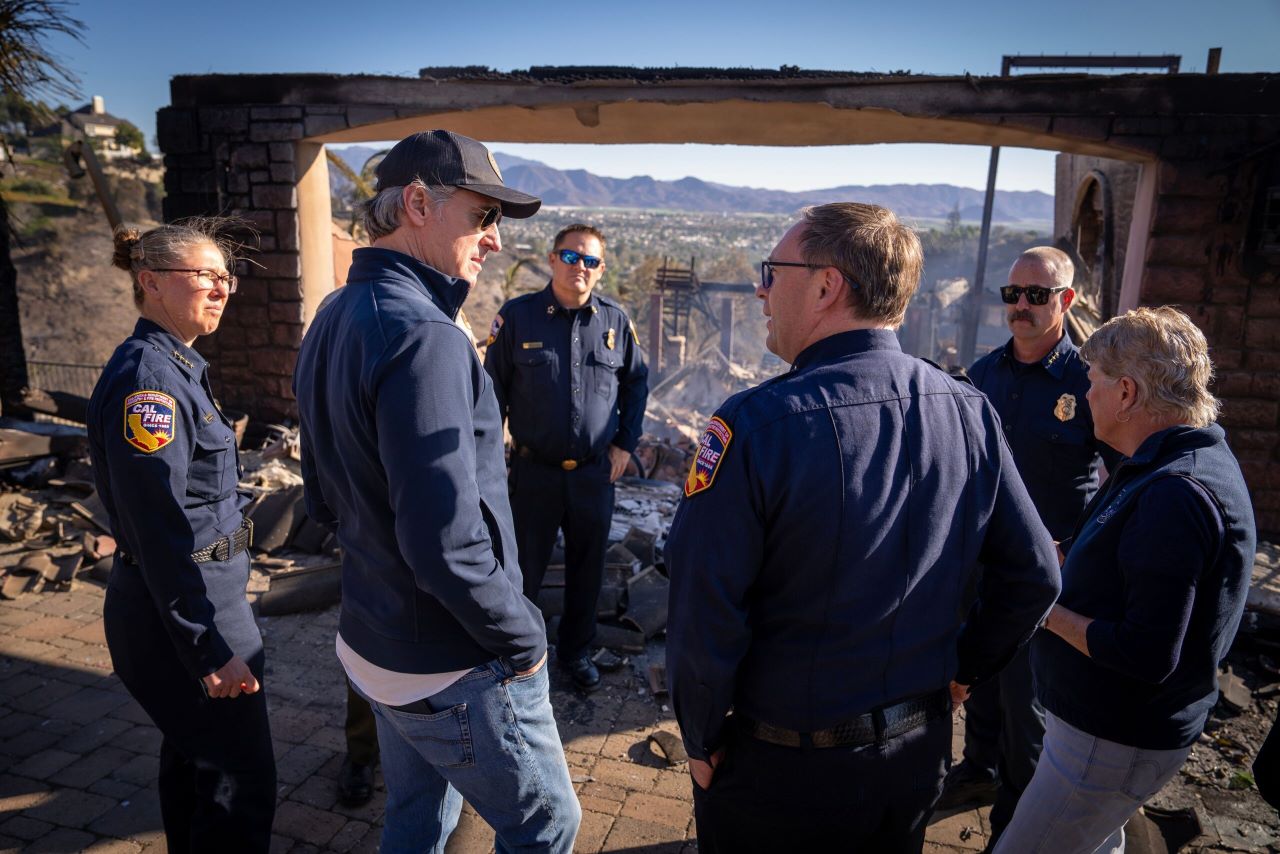
Photo Credit: Official Website of Governor Gavin Newsom
The news is not good. Here on Planet Earth, we live in perilous times. Such is the warning from fourteen climate experts from Australia, Brazil, China, Denmark, Germany, Switzerland, the United Kingdom, and the United States in their article “The 2024 State of the Climate Report: Perilous times on planet Earth” published in the BioScience magazine on October 8, 2024.
“We are on the brink of an irreversible climate disaster,” they warn. “This is a global emergency beyond any doubt. Much of the very fabric of life on Earth is imperiled. We are stepping into a critical and unpredictable new phase of the climate crisis.”
Why the bleak prognosis? Of the 35 “planetary vital signs” they use to track the climate emergency, 25 are at record extremes. These include U.S. heat-related mortality, fossil fuel subsidies, coal and oil consumption, carbon dioxide emissions, per-capita meat production, global tree cover loss due to fires, ocean acidity and heat content change, glacier thickness change, and ice mass change in Antarctica and Greenland.
As demonstrated in “Table 1: Recent Climate Disasters from November 2023 to August 2024,” they emphasize the rapidly escalating climate-related impacts of our global failure to support a rapid and socially just fossil fuel phasedown. Not included in this list are the supercharged Hurricanes Helene and Milton that developed in the Gulf of Mexico in late September during publication of their report. Unforeseen, too, are the flash floods in Spain on October 29th triggered by an “extraordinary deluge” that dumped twenty months of rain in just eight hours. Sounds familiar?
Meanwhile, here in the United States, the world’s largest historical climate polluter, a climate change denier and lover of “liquid gold” won a landslide victory to covet the presidential position. It turns out that the state of the economy was the defining issue for working-class voters. Do they know that there’s no economy on an unlivable planet?
On Wednesday, November 6th, yet another wildfire, named the Mountain Fire, exploded in Southern California. This time, it’s a residential area northwest of Los Angeles. Our Governor Gavin Newsom declared a state of emergency on Thursday after the fire grew to 20,000 acres in 24 hours. Driven by fierce offshore Santa Ana winds, the fire moved so fast that some people only escaped with their lives. (See captioned photo and link to emergency declaration.)
“Climate crunch time is here,” climate scientists say in their Emissions Gap Report 2024, released by the United Nations Environment Program (UNEP) on October 24, 2024. The time for procrastination has long passed. We’re now in the end game when decisive action is needed. With global greenhouse gas (GHG) emissions reaching a record high in 2023, an increase of 1.3 percent from the previous year, it’s now imperative that nations worldwide make massive increases in their pledges to reduce their GHG emissions.
This calls for severe cuts of 42 percent of emissions by 2030, compared with 2019 levels, and 57 percent by 2035. If they don’t, the Paris Agreement target of holding global warming to 1.5°C will escape humanity’s control within a few years. Only the gods know what life would be like with warming of 2°C.
The good news is that sectors are shifting towards renewable sources and electrification. But it’s not yet fast enough to make a dent in displacing fossil fuels. The six largest emitters in 2023 are China (30%), the United States of America (11%), India (8%), the European Union (6%), the Russian Federation (5%), and Brazil (2%).
The G20 members accounted for 77 percent of global GHG emissions, excluding the 55 countries of the African Union (6%) which joined the group in 2023. The Least Developed Countries, comprised of 47 countries, accounted for only 3 percent. To be fair, it makes total sense that the G20 nations should reduce their emissions at faster rates to close the emissions gap.
The Greenhouse Gas Bulletin No. 20 published by the World Meteorological Organization (WMO) on October 28, 2024, paints a detailed picture of the three top greenhouse gases (GHG) driving climate change: atmospheric carbon dioxide (CO₂), methane (CH₄), and nitrous oxide (N₂O). Based on the latest analysis of observations from the WMO Global Atmosphere Watch (GAW), globally averaged surface concentration for all three gases reached new highs in 2023. [The following emphases are mine.]
Atmospheric carbon dioxide (CO₂) is the top greenhouse gas driving climate change. It accounts for about 66 percent of radiative forcing by the long-lived greenhouse gases in Earth’s atmosphere. CO₂ is accumulating in the atmosphere faster than at any time during human existence. The current atmospheric CO₂ level is already 151 percent above that of the pre-industrial (before 1750) era. Since then, humanity’s addiction to fossil fuels continues to pollute our atmosphere with ever-growing emissions of carbon dioxide.
The year 2023 was an exceptionally warm year. Global temperature across the land and the oceans was the highest in records dating as far back as 1850. While California burned, releasing more CO₂ into the atmosphere, I remember well doing all I could to stay cool during another summer of scorching temperatures. On the other hand, many terrestrial systems absorb less carbon when faced with extreme heat. It’s no wonder that my firestick succulent plants collapse during extremely hot days.
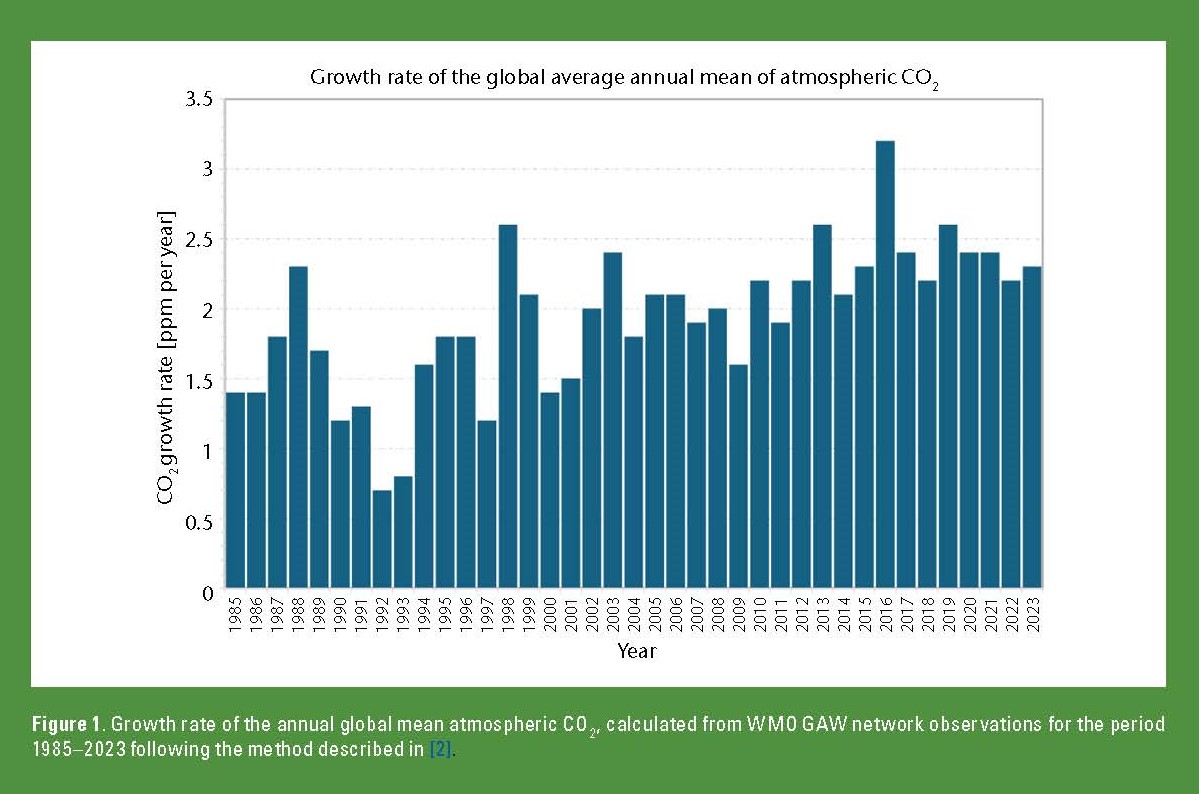
Image Credit: WMO Greenhouse Gas Bulletin No. 20
Atmospheric methane (CH₄) is the second largest contributor to increased climate forcing. Compared to pre-industrial levels, methane soared by 265 percent. It’s emitted from anthropogenic sources, such as fossil fuel exploitation, livestock, waste and landfills, and rice cultivation. Natural sources include wetlands and shallow lakes.
Nitrous oxide (N₂O), the third most important individual contributor to global warming, has increased 125 percent compared to pre-industrial levels. It’s emitted into the atmosphere from natural sources (approx. 57%) and anthropogenic sources (approx. 43%). These include the oceans, soils, biomass burning, fertilizer use, and various industrial processes.
The sirens are blaring non-stop. If we are to leave a livable planet for our children and grandchildren, we must change our way of being and doing. Not tomorrow. Yesterday. Those of us who live in the G20 advanced economies must let go of our privileged lifestyles. I know, it’s not easy. We’re accustomed to having what we need and desire at our fingertips.
To deny meticulously observed and recorded climate data will not change the outcome. To threaten and silence our climate experts, who dare to tell us the truth, will not end the growing number of catastrophic, natural disasters here in the USA and worldwide. To accuse “radical leftist elites” of controlling a supercharged Category 4 hurricane is, in my view, the ultimate self-delusion.
Breathe in… Breathe out.
Video: “It’s Climate Crunch Time. It’s Time to Level Up,” published by UN Environment Program (UNEP), October 24, 2024
 Three Worlds One Vision
The current situation looks to me as if we were driving a car into the wall and those in charge are arguing about who gets to sit in the front row.
LikeLiked by 6 people
It’s crazy, Friedrich!
LikeLiked by 1 person
Do you follow the financial sectors? More or less out of control. But now with Mr. Musk as big Orange’s buddy…..
LikeLiked by 1 person
Friedrich, my sister is the one who keeps abreast with the ups and downs of the financial market and calls me with alerts. Mr. Musk was not satisfied with pulling the strings in the shadow. He wants to take control. Let’s see how long this bro-love will last.
LikeLiked by 1 person
A detailed and depressing post, Rosaliene. 😦
LikeLiked by 3 people
It is, indeed, depressing, Dave 😦 Just where the CEOs of the fossil fuel industry would like us to be: feeling depressed and powerless to fight for needed emission reductions.
LikeLiked by 1 person
Thanks for sharing this post, I found it very interesting and depressing.
LikeLiked by 2 people
You’re welcome, Luisa. It is truly a depressing situation. All the more reason for us to pressure the fossil fuel industry to reduce their emissions.
LikeLiked by 1 person
Thanks a lot also for this precious reply, Rosaliene 🙏💗
LikeLiked by 1 person
A pertinent article, drawing attention to a world-wide crisis. I guess working together is the hardest part for humanity to tackle in many ways. I agree that encouraging people to let go of privileged lifestyles is a big challenge.
LikeLiked by 2 people
Ada, you’re probably right about not being able to work together. After all, there’s no money to be made or immediate reward in drastically cutting back on our carbon emissions.
LikeLiked by 1 person
Thank you for sharing!!.. “Change will not come if we wait for some other person, or if we wait for some other time. We are the ones we’ve been waiting for. We are the change that we seek.” (Barack Obama ) so all we can do as individuals is to continue to do what we personally can to deal with climate change and at the same time work with others, using today’s technology and knowledge, to hopefully leave a better world for future generations… 🙂
Hope all is well in your part of the universe, the fires are not threatening, your path in life is paved with peace, love and happiness and until we meet again…
May flowers always line your path
and sunshine light your way,
May songbirds serenade your
every step along the way,
May a rainbow run beside you
in a sky that’s always blue,
And may happiness fill your heart
each day your whole life through.
May the sun shine all day long
Everything go right, nothing go wrong
May those you love bring love back to you
And may all the wishes you wish come true
(Irish Saying)
LikeLiked by 2 people
You’re welcome, Dutch. I agree that we much each play our part in bringing about the needed change. We are stronger working together.
LikeLike
“Consult not your fears but your hopes and your dreams. Think not about your frustrations, but about your unfulfilled potential. Concern yourself not with what you tried and failed in, but with what it is still possible for you to do…” (Pope John XXIII )… 🙂
LikeLiked by 1 person
Dutch, thanks for sharing those wise words from Pope John XXII. I appreciate all that you share on your blog to inspire and motivate us to become our better selves ❤
LikeLike
In the immortal words of our former and soon to be president, “it is what it is.” Thanks for such a detailed overview of our path to destroying ourselves, Rosaliene! And I totally agree, as hard as it is, we need to drastically change our way of life immediately and collectively.
LikeLiked by 1 person
You’re welcome, Mara! For those of us who live in manicured suburban neighborhoods, we never see the devastation our lifestyle exact on less privileged people and non-human life. That will all end when we hit Scenario 3.
LikeLiked by 1 person
So true, Rosaliene. It’s such a challenge to see reality and even when I do it’s STILL so hard to change my ways. But, the more I talk about it and read posts like yours, the more determined I am to do it!
LikeLiked by 1 person
Mara, I’m glad that my post serves to prod you to make needed lifestyle change 🙂 You’re already doing a great job with your garden that provides a refuge for small animals, birds, and insects. You can start in small ways to transition to a plant-based diet and reduce non-essential consumption (including energy use).
LikeLiked by 1 person
You’re right, Rosaliene. We buy locally raised meat and the most sustainable fish in a can on the market but yes, we can still cut down. Better for the planet and the wallet! Now I just have to convince my husband. Oh, and my other weakness is coffee. That’s a really tough one for me.
LikeLiked by 1 person
Mara, convincing your husband to change his diet would be tricky if he’s a climate change denier like my son. Thankfully, my sons cook their own meals.
LikeLiked by 1 person
No, he’s not a climate denier. He just likes meat. And, I have to admit, so do I. But, we also like meals without meat. That’s great that your sons cook their meals. In the end, it’s what we do and not what we believe that matters I guess.
LikeLiked by 1 person
Mara, it’s a plus that your husband is not a climate denier. Giving up our favorite foods is very difficult. After giving up beef and then chicken, I held onto fish and cheese for several years.
LikeLiked by 1 person
You are a true inspiration, Rosaliene. It’s hard but must be done.
LikeLiked by 1 person
🙂 ❤
LikeLike
Don’t you know all us lefties are climate alarmists putting a dire warning on a “natural cycle”? I really fear what #47 will do to your country and the world and would like to believe we are just pessimists, but, we have seen this movie before. Hard to believe that in a country whose initials spell US, there is still so much Me,Me,Me. Sure the cost of living is high, but that is a result of the pandemic and the greed of corporations and billionaires. The cost of living is also high here and around the world. That is not Biden’s fault or even Trudeaus. Thanks for all the research Rosaliene. Have a good Sunday.
LikeLiked by 4 people
You’re welcome, Allan. You’re so right about the reasons for the high cost of living, but it’s so much easier to scapegoat illegal immigrants. I’m stubborn in hoping that my climate alarmist warning would get through the dense veil of misinformation and disinformation about what is now a climate emergency.
LikeLike
Slow “progress” will occur. But it likely won’t be enough to make a meaningful improvement.
LikeLiked by 3 people
I share your view, Neil. That’s what so terrifying. We’re like the walking dead heading towards the precipice.
LikeLiked by 1 person
So hard to think about what is to come.
LikeLiked by 1 person
It’s mostly what I think about, Kim. I recently printed a “Disaster Ready Guide” sent to my mailbox by the Governor of California’s Office of Emergency Services. The climate crisis is for real here in California: drought, extreme summer heat, excessive rainfall with flash floods, and fierce wildfires. That’s on top of the earthquakes that rattle us every now and then.
LikeLike
I’m glad you keep this issue forefront in your posts. Whoever is president, we must continue to reduce our emissions.
LikeLiked by 2 people
Rebecca, as I mentioned in my comment to Kim (klmalcolm2014), climate change is for real here in California. I cannot avoid or ignore this existential issue. I take it seriously when the governor of our state sends us a “Disaster Ready Guide” that covers wildfires, wildfire smoke, severe storms, floods, extreme heat, fast & cold water, earthquakes, and power outage.
LikeLiked by 1 person
Oh my gosh, a definite fact complete with disaster guide.
LikeLiked by 1 person
Rebecca, now we’ve got to add dust storms to the disaster list. Yesterday (Monday) a dust storm descended on the City of Fresno in California’s Central Valley. The dust storm downed trees and power lines, leaving 12,000 residents without power on a chilly day.
LikeLiked by 1 person
Thank you for your unflinching gaze on the climate catastrophe, Rosaliene. I’ve been replaying Rebecca Solnit’s words in my head this week: “The fact that we cannot save everything does not mean we cannot save anything and everything we can save is worth saving.” Solidarity!
LikeLiked by 2 people
Tracy, thanks for that reminder of Solnit’s words. Our struggle intensifies. Solidarity!
LikeLiked by 1 person
Scenario 1 is the only way, “with a massive collective effort.” 🌍🌎🌏Thank you for your attention to this most pressing issue.
LikeLiked by 2 people
You’re welcome, Michele. We’ve lots of work ahead, each one doing their part in this ongoing struggle.
LikeLiked by 1 person
We’ve heard the warnings for several decades, and now, Trump, will ignore these warnings even further. I’m sad for younger generations who don’t yet have control but will get the brunt of ignorance.
LikeLiked by 4 people
Mary, we can’t tell our children and grandchildren that we were not warned about this existential threat. The fossil fuel industrialists continue to dominate the narrative.
LikeLiked by 2 people
❤️🩹
LikeLiked by 1 person
Crystal, we all need much love to get through whatever weather disaster awaits us. You’ve been hit before. It could happen again ❤
LikeLike
Mankind will continue to ruin the planet as long as there is money and profits to be made.
LikeLiked by 4 people
Exactly
LikeLiked by 2 people
Sadly.
LikeLiked by 1 person
Thanks for dropping by, Mary.
LikeLike
Terrifyingly true, Tamara. We are so flawed as a species.
LikeLiked by 1 person
We live within the constraints we come with and impose on ourselves.
LikeLiked by 1 person
Rosaliene, this is a horrifying summary of the state of our global climate. I fear the latest reports will be ignored, just as the others have been. By now, even the most dramatic rhetoric gains no attention from a society bent on consumption.
LikeLiked by 3 people
Steve, I hate to admit that your fears are spot on. While I’m mentally preparing myself for societal collapse, I hold out hope that more people will come to their senses before it’s too late to delay Scenario 3.
LikeLiked by 1 person
Hope is about all we have at this point, Rosaliene. 🙏🏼
LikeLiked by 1 person
Indeed, Steve, plus the determination to continue our fight for a better tomorrow.
LikeLiked by 1 person
Whether the politicians in the west (left, centre or right) agree and do something about the situation, there are still some very big players who will never agree to change and will never agree to anything the west puts forward, So, Mother Earth will have her say!
LikeLiked by 1 person
Ashley, humanity is truly in a bad place. These “very big players” live in a world far removed from the world you and I live in. They act like gods, believing that they will escape whatever chaos and collapse lie ahead.
LikeLiked by 1 person
Oh Rose, I am so despondent I just can’t even think straight. What are we going to do??
LikeLiked by 1 person
Pam, I felt that way when I awoke on November 6 to the news of having a climate change denier in charge again. We’ve got to intensify the struggle on all fronts. As a writer and storyteller, I plan to change my focus to cover the degradation worldwide. There will be more bad news to come in this space. Solidarity!
LikeLiked by 1 person
Well, I guess we all have to roll up our sleeves then. What else is left to do, Rose?!🥀
LikeLiked by 1 person
I see no other way, Pam. Find strength and support among your community of environmental activists on the frontline ❤
LikeLike
Thank you for continuing to report the scary truth we don’t want to know, because we need to know and do what we can like not eating meat which I’m good at and driving less which I can work harder on. I have to focus on things I can do something about to keep the despair from growing, especially after the US election….It seems like Gavin Newson cares and is working hard for your state. I’m thankful for leaders like him. Reminds me of the old-ish novel Ecotopia in which CA and the other pacific states secede from the US.
LikeLiked by 1 person
JoAnna, you’re already way ahead of so many of us in making the necessary lifestyle changes. In your recent move to a rural community, you’re now in a better position to connect with Mother Nature and, at some future time, be a important light for your local community.
I hadn’t heard about the 1975 novel “Ecotopia” by Ernest Callenbach. (Thank you, Wikipedia). Sounds like Callenbach was way ahead of his time.
LikeLiked by 1 person
Thank you very much, Rosaliene for your faith in me and understanding that at some future time, I can be a light. I’m still learning about the subcultures around me. There are glimmers of light here that I’m working to support in “animal control” and the Episcopal church we found in the next town. Instead of curbside recycling, we take cardboard, paper, and aluminum to a county facility and divide them. They don’t take glass though. The vegan cafe is going out of business, but I’m asking about potlucks. Ecotopia was out of print for several years and seems to have been resurrected. I think I donated my old paperback copy.
LikeLiked by 1 person
JoAnna, what a pity that the vegan cafe is going out of business. I suppose it’s part of the economic difficulties that our neighbors face. It takes time to fit into a new community and learn the way things function.
LikeLiked by 1 person
One day at a time.
LikeLiked by 1 person
M donates 100 Mio for election propaganda and got richer 21 billion in the first 3 days after the election. Sounds a solid investment so we can all learn from M.
LikeLiked by 1 person
Friedrich, this gross lack of morality and social/economic injustice of the uber-capitalists is driving our planet to its limits of sustaining both human and non-human life.
I’m currently reading “It’s OK to Be Angry About Capitalism” by Bernie Sanders (USA, 2023) in which he “takes on the billionaire class and speaks blunt truths about our country’s failure to address the destructive nature of a system that is fueled by uncontrolled greed and rigidly committed to prioritizing corporate profits over the needs of ordinary Americans.” (Excerpt from back cover)
LikeLiked by 1 person
Thank you for this, Rosaliene. You, the various commentators, and the UN video have covered the ground — a ground that is losing its stability.
LikeLiked by 1 person
You’re welcome, Dr. Stein. The instability will continue to grow, affecting all areas of our lives.
LikeLiked by 1 person
That’s serious dust to down power lines! Very strong winds.
LikeLiked by 1 person
Excactly. Not only does Robert Kiyosaki predict a Banking Crash with his words: “Crashes are when the rich get richer.” We all know this and still, like in the scenarios you pointed to, we cannot do anything. Big investors like Warren Buffet have been selling their stocks like crazy and sit on huge amount of cash, waiting for the crash as a chance to buy again on bargain prices. Again the rich get richer and the mass is paying the price.
LikeLiked by 1 person
Here is a link in case you like to read Mr. Kiyosaki’s comment on this: https://coingape.com/trending/robert-kiyosaki-predicts-banking-crash-and-unveils-a-game-changing-solution/
LikeLiked by 1 person
Frederick, thanks for sharing the link to Kiyosaki’s article. Another financial crash will definitely devastate the working class that has no available income to invest in the financial products recommended by Kiyosaki.
LikeLiked by 1 person
😢 The news never gets any better does it?
LikeLiked by 1 person
And it’s only going to get worse moving forward, Kym 😦
LikeLiked by 1 person
Sistah Rosaliene, don’t talk about it. 😫 How can anyone think what our climate is going through is a freaking hoax? Crazy I tell ya! 😡
LikeLiked by 1 person