
Tags
Asheville/North Carolina, Department of Homeland Security (DHS), DHS in Mandate/Project 2025, Disaster Recovery Reform Act of 2018, Federal Emergency Management Agency (FEMA), Hurricane Helene 2024, Hurricane Milton 2024, Ken Cuccinelli, National Flood Insurance Program (NFIP), Proposed Polluters Pay Climate Fund Act of 2024, Robert T. Stafford Disaster Relief and Emergency Assistance Act 1974
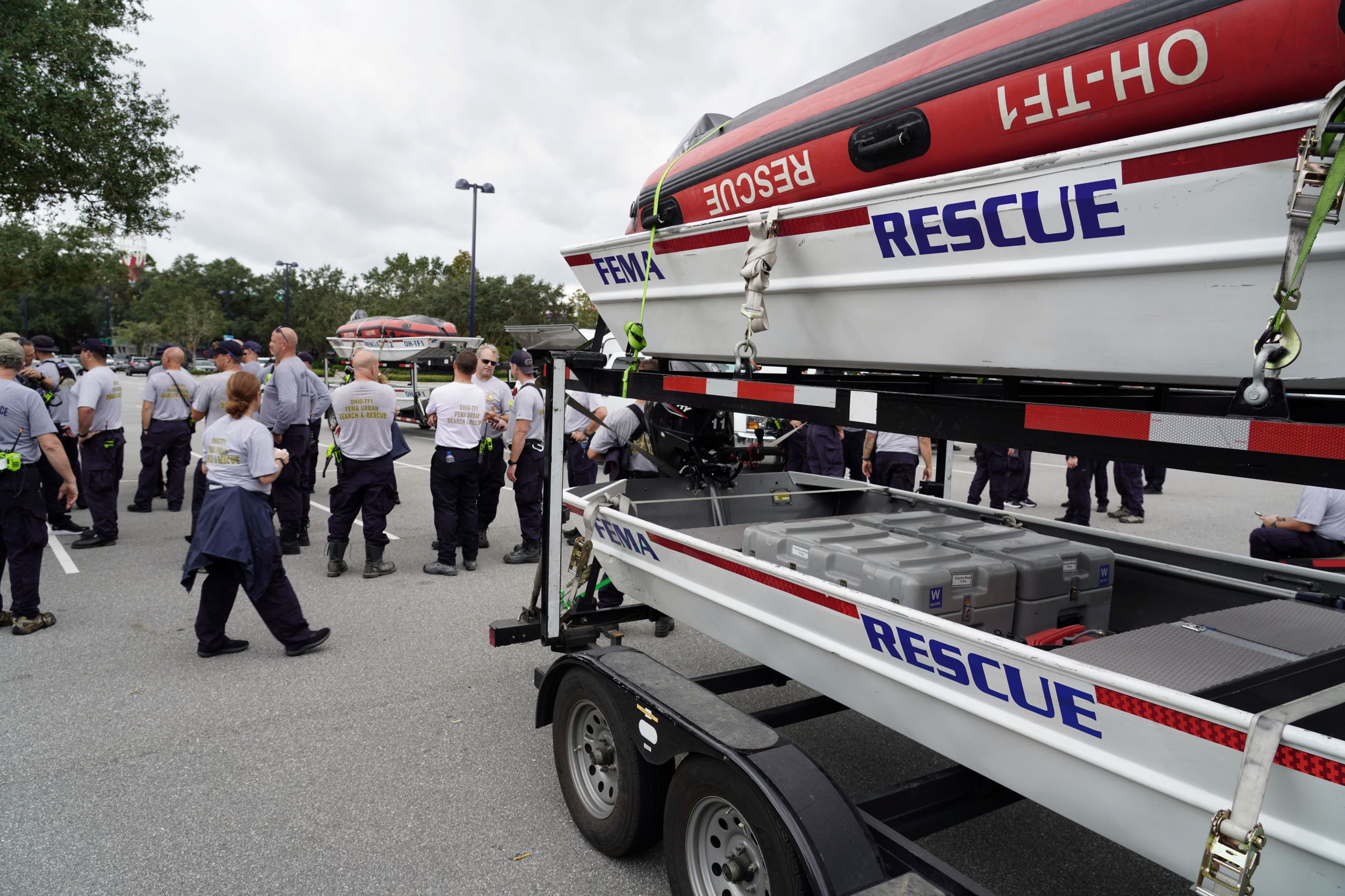
Photo by Patrick Moore / US Department of Homeland Security Media Library
My heart goes out to all the folks whose lives have been upended by Hurricanes Helene and Milton. As the warming of Earth’s oceans and atmosphere continues unabated—due to humanity’s inability to reduce our dependency on fossil fuels—tropical storms have become supercharged and more destructive over a much wider area.
Such was the case recently when America’s southeastern states were hit by Hurricanes Helene (September 26-28) and Milton (October 9-10). It’s not just their wind speeds that make these storms deadly. Their size, speed, and capacity to hold more moisture can wreak havoc over more extensive areas. What’s more, their rapid intensification has alarmed our meteorologists. Within just two days, the unusually warm water of the Gulf of Mexico transformed Hurricane Helene from a relatively weak tropical storm into a historic Category 4 hurricane for this time of the year. Not to be outdone, Hurricane Milton took just over 48 hours to intensify from a tropical depression to a Category 5 Hurricane, according to NOAA Climate.gov. This is bad news. Millions of people in their projected path may not have sufficient time in which to evacuate to safety.
After making landfall on Thursday night, September 26, 2024, along Florida’s Big Bend with wind speeds up to 140 mph (225 kph) and a storm surge of up to 15 feet (4.6 meters), Hurricane Helene veered northeastwards toward Central Georgia and onward for over 500 miles (804 kilometers) across South Carolina, North Carolina, Tennessee, and Virginia. With an expansion of about 200 miles (322 kilometers) and supercharged with moisture, Helene washed away roads, commercial buildings, homes, vehicles, and felled power lines. Millions of people across these six states are now without power, cellphone connection, and access to water.
When a natural disaster of this magnitude occurs, it matters knowing that there’s help to rebuild our lives. State government officials, regardless of their political affiliation, know that they can call on the federal government for emergency assistance. After the protocol for approving Major or Emergency Declarations from affected states, Democratic President Joe Biden coordinated a federal response together with the Federal Emergency Management Agency (FEMA).
You would think that during a natural disaster of such magnitude, we would be able to put aside our political differences. Not so, for some among us. The opposition Master of Chaos and his minions soon spread disinformation and outright lies about the selective or lack of federal response, jeopardizing FEMA’s work on the ground. To counter the threats to the safety of their staff and volunteers, the Agency was forced to set up a line/link to tackle the false rumors.
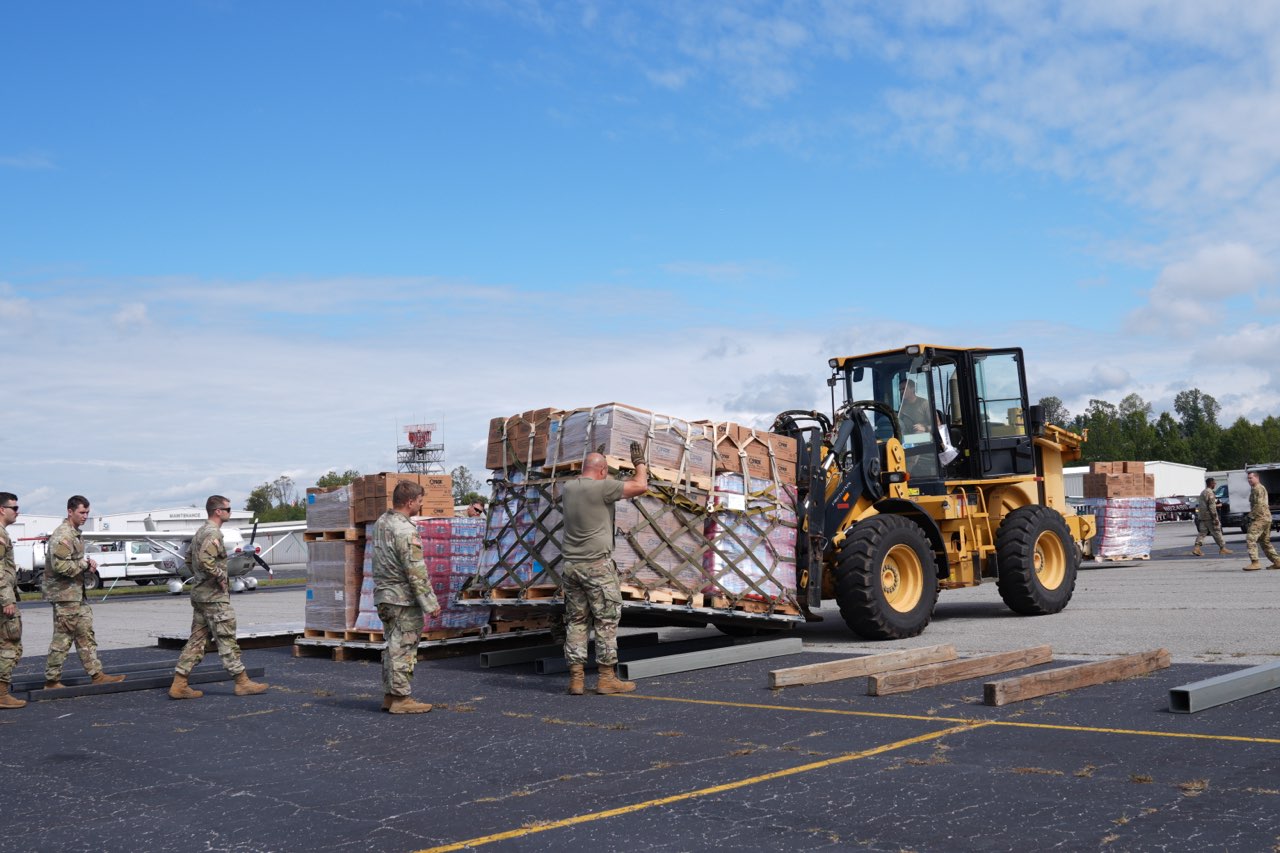
Photo by Madeleine Cook / US Department of Homeland Security Media Library
Check out the following links for more information:
- If you live in any of the disaster zones, you can learn more about FEMA’s response and how you can obtain assistance.
- You can also find resources to help you recover from the disaster at USA.gov.
- If you’ve experienced flooding and have flood insurance from FEMA’s National Flood Insurance Program, learn more about filing your flood insurance claim at How Do I Start My Claim.
While California has its full share of natural disasters, due mainly to wildfires and flash flooding, the city where we live has not yet suffered a major natural disaster. Given our ongoing climate crisis, I know that it’s just a matter of time. No place is safe from a climate change disaster. Just ask the folks in Asheville, a city of over 93,000 people in western North Carolina, who promoted their city as a climate change haven. After all, they’re located in a mountain region, hundreds of miles away from both coasts.
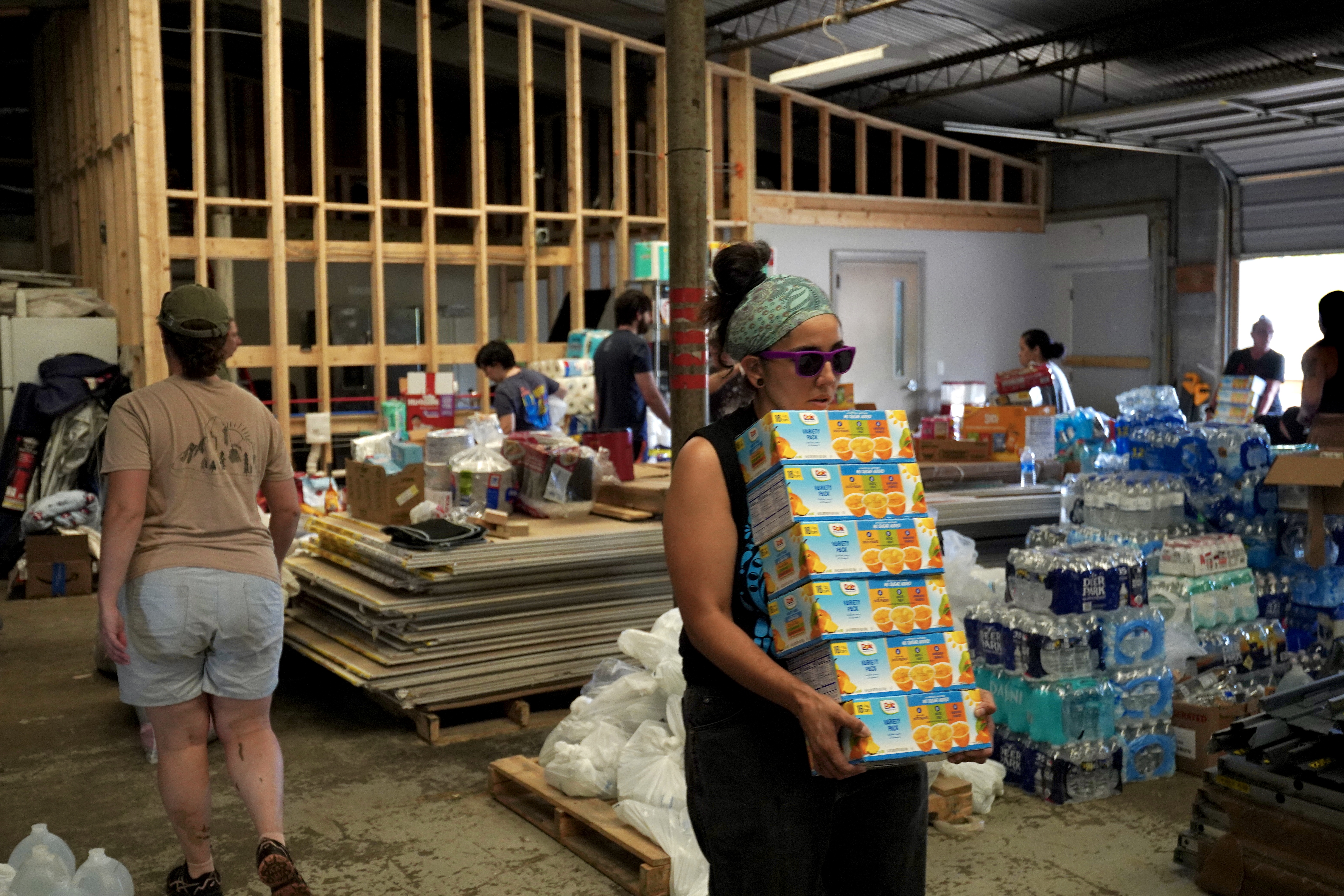
Photo by Madeleine Cook / US Department of Homeland Security Media Library
In addition to dealing with the latest disinformation and lies about FEMA, we the people have a real challenge. Will the Agency have the funds necessary to deal with an increasing number of multi-state natural disasters, like we now face after Hurricanes Helene and Milton?
I’ve learned from FEMA’s official government website that the Agency—established in April 1979 by Democratic President Carter—became better prepared to deal with natural disasters during Republican President Trump’s administration. The historic Atlantic hurricane season and extreme wildfire disasters in 2017 alerted his administration to the need for building a culture of preparedness and reducing FEMA’s complexity. To implement these goals, the U.S. Congress passed the Disaster Recovery Reform Act of 2018. “The legislation is a landmark law that highlights the federal government’s commitment to increasing investments in mitigation and building the capabilities of state, local, tribal and territorial partners.”
There’s proposed legislation right now before the U.S. Congress, known as the Polluters Pay Climate Fund Act, to increase FEMA’s budget to no less than $15 billion “to address climate-related disasters, including hurricanes, flooding, extreme heat, and wildfires, of which not less than $3 billion shall be used to carry out the Building Resilient Infrastructure and Communities program under section 2036 of the [1974] Robert T. Stafford Disaster Relief and Emergency Assistance Act.”
As presented by Democrat Senator Chris Van Hollen (Maryland) and House Representative Jerry Nadler (New York), the Polluters Pay Climate Fund Act would levy charges on companies that extract and refine fossil fuels in the U.S. to create a $1 trillion fund to address “harm and damages” caused. The bill was presented on September 12, 2024, before Hurricanes Helene and Milton devastated the southeastern states, the majority of which are governed by Republicans. Perhaps, this bill may gain some traction. Perhaps not.
The Heritage Foundation Mandate/Project 2025 presents a very dismal diagnosis of FEMA’s fiscal health. In “Chapter 5: Department of Homeland Security,” Ken Cuccinelli calls for needed reform as “the lead federal agency in preparing for and responding to disasters…is overtasked, overcompensates for the lack of state and local preparedness and response, and is regularly in deep debt” (p.153). He regards FEMA’s operational system and relationship with the states as vulnerable to favoritism and misappropriation of funds.
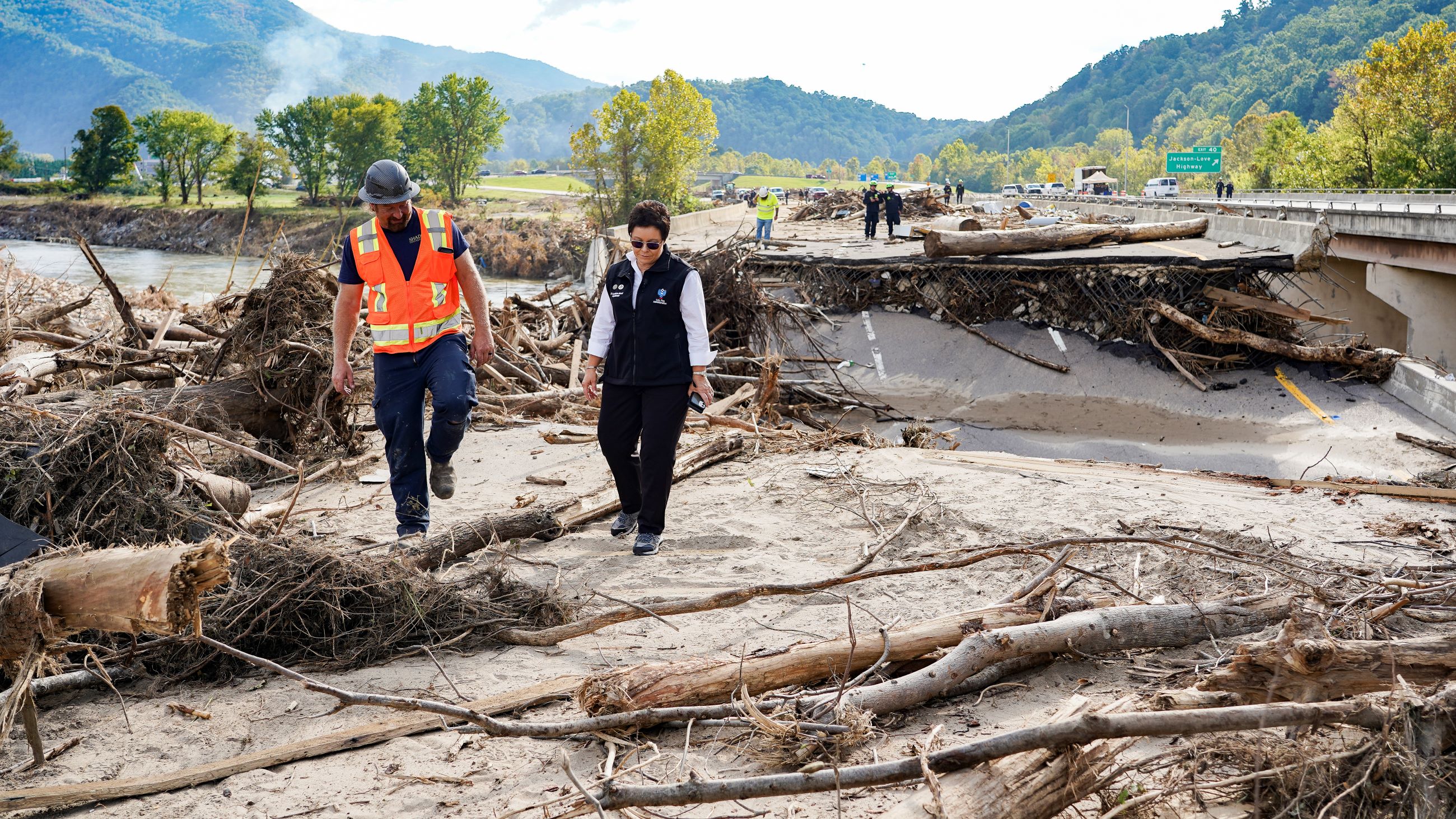
Photo by Robert Kaufmann / Department of Homeland Security Media Library
In case you had forgotten like me, the Department of Homeland Security (DHS) was created by Republican President George W. Bush in 2002, following the terrorist attacks on September 11, 2001. FEMA became a distinct agency within the DHS in 2006 because of the historic and deadliest Hurricane Katrina in August 2005. Cuccinelli’s “primary recommendation is that the President pursue legislation to dismantle the Department of Homeland Security (DHS).” In such an event, FEMA could be moved to the Department of the Interior or the Department of Transportation.
Whether or not FEMA is decoupled from the Department of Homeland Security, the Agency will face even greater pressure and costs in responding to natural disasters across our homeland. For our part, we must work at building connections within our communities. In the immediate aftermath of a disaster, before help arrives, our survival would depend on taking care of each other. The stories of courage and generosity, during this latest natural disaster, warm my heart.
 Three Worlds One Vision
Just returned home at midnight after being on the run since Monday from Milton.The drive going north to Georgia wasn’t easy Tuesday as all the highways were just bumper to bumper most times.
LikeLiked by 3 people
Yes. People running from a storm don’t know how to cope with disaster. When they crowd escape routes, they are dependent on systems and highways. Climate change is a popular notion, but man has been fiddling with the climate for centuries, using various mechanisms. Increasing bureaucracy in the US government to funnel help to individuals in distress breaks down for lack of funding.
LikeLike
Thanks for sharing, Jerry. Glad you made it home safely. Hope that your family in Florida are all safe and well.
LikeLiked by 1 person
I’m so sad about what’s happening there! I follow the news on TV and hope everything goes back to normal soon
LikeLiked by 2 people
It’s sad, indeed, Luisa! Areas most devastated will take years to rebuild.
LikeLiked by 1 person
I know…
LikeLiked by 1 person
As ice caps/glaciers continue to melt, severe consequences will only increase. We all know this. Some people don’t seem to care, though.
LikeLiked by 3 people
Neil, some are still in denial. Others now believe the latest lies that some unnamed entity (?) is controlling these super storms.
LikeLiked by 1 person
Those who try to affix blame rather than fixing the problem are despicable. When disaster strikes and people’s lives are upended, they do not care about your politics. They want to know they will survive and FEMA has been doing a great job giving countless hours and dollars to make lives just a little bit better. If politicians lie trying to get your vote, how far will they go to keep it? Wishing all disaster survivors a little peace in all the chaos. Allan
LikeLiked by 3 people
I agree, Allan. I imagine that it will be a long time before survivors find peace 😦
LikeLiked by 1 person
A depressing but very important and informative post, Rosaliene. How many warnings does nature have to give before ALL the “powers that be” do more to deal with the causes of climate change? And the deliberate Republican disinformation about the Biden/Harris administration’s hurricane response is evil and disgusting.
LikeLiked by 2 people
Thanks very much, Dave. I wish I knew the answer to your question. This latest preposterous lie is, to me, yet another expression of climate change denial.
LikeLiked by 1 person
Rosaliene, This is a big country, stretching form coast to coast, and it leaves out individuals in trying to manage big problems, like natural disasters. Local help is most needed, as neighbors can hope to depend on each other in a true crisis. Political bickerings do not help in an emergency. Ex-post facto governmental solutions solve nothing.
LikeLike
Important information, Rosaliene. It appears that climate change denial is part of the requirement to get into Marjorie Taylor Greene’s club. Sad for everyone.
LikeLiked by 2 people
Thanks very much, Dr. Stein. Truly sad, this latest lie, with real-life consequences 😦
LikeLike
We’re living in the days that are proving or disproving what the environmentalists and the naysayers have been saying back and forth. Environmentalists are pointing out the trends and the deadlier directions our weather is taking, while the naysayers are holding fast that anomalies are normal and this timeline is just a glitch and we should return to normal soon.
If the world cooperates and we can dial back the havoc, the deniers will just ignore those efforts and just claim they were correct. The fight is here to stay for a long time unfortunately.
All we can do is follow our own consciouses and try to partner with people of like mind.
LikeLiked by 2 people
The sad truth about where we’re headed, Tamara 😦
LikeLiked by 1 person
Too true, unfortunately!
LikeLiked by 1 person
Interesting information about FEMA, Rosaliene. I’ve seen some of the crazy stuff out there about them. One was a Tik Tok video where a guy said FEMA was spending all its money on migrants instead of hurricane victims. I know they’re no where near perfect but I’m sure the many people they’ve helped are thankful. I would say and I’m sure they would agree that’s tax money well spent. It’s also heartening to hear about all the people volunteering to help. You also right, we’re all going to face disaster at some point. Just a matter of time.
LikeLiked by 1 person
Thanks very much, Mara. I’ve also read about threats to FEMA workers and volunteers on the ground, preventing them from going door-to-door in some areas. Crazy stuff, indeed!
LikeLiked by 1 person
Wow! I just read about that in the comments. Just when you think things couldn’t get worse…
LikeLiked by 1 person
These are crazy times, Mara!
LikeLiked by 1 person
Thank you for this fascinating article, Rosaliene. I worked in emergency management full-time and on secondment for many years so it’s an area of interest. Quite astonishing how openly partisan the response is from the Republican side, recently. I appreciate how you bring these big issues back to the 2025 manifesto, as well, to expose its awfulness, and how you post sources to accurate information for those needing assistance.
LikeLiked by 1 person
Thanks very much, Steve. There’s so much misinformation and disinformation spreading across social media, I do my best to share reliable information from official agencies.
LikeLiked by 2 people
It is unfortunate how much mistrust there is even toward official agencies nowadays, because of those who know only deception.
LikeLiked by 1 person
Thank you for keeping us informed regarding recent weather devastation and events surrounding the agency established to assist those dealing with the aftermath. Supporting each other locally is a paramount.
LikeLiked by 2 people
You’re welcome, Michele. We’ve got our own natural disasters to deal with on the West Coast. Couldn’t agree more about local support.
LikeLiked by 1 person
Yes, you sure do. Every place has its challenges, it seems. It is inspiring when communities come together during times of need. A hopeful reaction and response.
LikeLiked by 1 person
❤
LikeLiked by 1 person
As always, Rosaliene, you offer important information and details in your posts based on credible sources. We certainly don’t need the “Master of Chaos” adding to chaotic weather that he didn’t want to do anything about when in office.
LikeLiked by 1 person
Thanks very much, Mary. To this day, I can’t forget him tossing toilet paper rolls to the crowd during his visit to Puerto Rico after devastation from Hurricane Maria (2017), killing over three thousand people died.
LikeLiked by 1 person
Thanks for the facts, Rosaliene, and info for those who were in the Hurricanes’ path. I hope the FEMA workers can get supplies to people who live in mountain areas. Parachute drops of supplies, perhaps?
LikeLiked by 1 person
You’re welcome, Rebecca. I haven’t seen any news about dropping supplies by parachute. I did read news of using mules to deliver supplies to an area cut off by washed out roads. Check out the following article “Hurricane Helene battered North Carolina’s mountain trails. Now, mules are vital for delivering supplies,” published in Citizen Times on October 4, 2024.
https://www.citizen-times.com/story/news/2024/10/04/helene-north-carolina-tennessee-appalachians-mules/75510853007/
LikeLiked by 1 person
Very cool, mules are a perfect application for the conditions. Thanks for the link.
LikeLiked by 1 person
🙂 ❤
LikeLiked by 1 person
Very informative as usual Rosaliene. They are certainly becoming more and more necessary
LikeLiked by 2 people
Thanks very much, Derrick.
LikeLiked by 1 person
Thanks so much for this informative and well-researched message Rosaliene. And to make matters worse, because of the ongoing fanning of disinformation, FEMA worker’s lives are being threatened and they were advised to shelter in place this weekend and stop doing what their jobs, due to the lies that Trump and Vance have not stopped echoing every day. 😡
They did arrest a man who was armed. However, he was released on only a $10,000 bond. Reports are saying that an armed militia out to harm FEMA workers was debunked for now, but this mess is ridiculous and dangerous. This intentional divisiveness and bold-faced lies, aside from that Project 2025 report is creating mayhem and increased hatred that some folks think is okay. 😠
Some of these lying folks better heed that old saying, “When the chickens come home to roost,” which means “Curses are like young chickens, they always come home to roost.” 🤔
LikeLiked by 2 people
I’ve been taking a media break and while I did know they were spreading more lies, I had no idea they were actually threatening the lives of FEMA workers. Appalling.
LikeLiked by 2 people
Appalling, indeed, Tracy!
LikeLiked by 1 person
Tracy, taking a media/social media break is a lifesaver these days. I have never seen the divisiveness so easily fanned like a wildfire. Somebody, please find unity, peace, and love and tell them to come back please! 🙏🏼 I appreciate your warm and caring response Tracy. 🤗💖🥰
LikeLiked by 2 people
Thanks very much, Kym. How quickly the Master of Chaos has forgotten the power of disinformation and lies that put his own life at risk. What a total mess!
LikeLiked by 1 person
Honey Rosaliene, don’t even talk about it! Just when you think it couldn’t get any crazier…guess whaaaaatttt??? Crazy grows to a new level of bizarreness! 😣🤷🏻♀️🙄 I suppose nothing should surprise us anymore. SMH
LikeLiked by 1 person
😦 ❤
LikeLiked by 1 person
You’re doing a great service by providing this information in a very accessible manner, Rosaliene. Thank you.
LikeLiked by 2 people
I appreciate your feedback, Tracy. It was a difficult article to write. In immersing myself by following these two hurricanes, I could not look away from the devastation.
LikeLiked by 2 people
I thought that very thing while reading it, that it must’ve been emotionally exhausting to do such a deep dive into the issue(s).
LikeLiked by 2 people
❤
LikeLiked by 1 person
I can’t get over all the damage that was done. Thank you for this post and it’s also a reminder that there are so many wonderful people in the world. We need each other more than ever.
LikeLiked by 2 people
You’re welcome, Belladonna. Do you live in a state affected by Hurricane Helene? I couldn’t agree more that we need each other more than ever ❤
LikeLiked by 2 people
No I’m not but I have a few friends that do.
LikeLiked by 2 people
Same here, Belladonna. They need our support more than ever now. Thanks for the feedback.
LikeLiked by 2 people
They really do!
LikeLiked by 2 people
We never imagined so much destruction from a hurricane would come so far west into the Carolina mountains. I’m thankful that my family is safe, but so many were not. The abundant stories of courage and generosity, warm my heart, too. I hope that if worst comes to worst, we will continue to take care of each other. Thank you for showing the work that needs to be done, the services that need to be improved or at least maintained.
LikeLiked by 2 people
It’s incredible, JoAnna! Even Eastern Tennessee got hit. You were the first person who came to mind when I learned that North Carolina was also hit. I’m thankful that you and your family are safe.
LikeLiked by 2 people
Thank you, Rosaliene.
LikeLiked by 2 people
Natural disasters are so frightening and sad. The way people come together and help, putting aside every possible difference, is heart-warming. It’s a shame something like this has to happen to remind people that all humans are worthy of love and support.
LikeLiked by 3 people
So true, Betsy. In my attempts to connect with neighbors, I’ve found we can be so caught up in the challenges of our individual lives that we don’t truly see others around us… Until a disaster strikes.
LikeLiked by 2 people
It is so terrible what has happened to the poor victims of the natural disasters in the US. Thoughts and prayers are with them, and I hope they get the help they need to rebuild their lives.
Thanks for sharing this post!
LikeLiked by 2 people
Lewis, thanks for dropping by and sharing your thoughts and prayers 🙂 ❤
LikeLiked by 2 people
I’m catching up on blogs this weekend and was sorry I was too tardy to leave a comment on your somewhat related post about the NOAA. The narrative there is horrifying in terms of recommendations to dismantle it.
Reading here that the President-Elect improved FEMA’s capability while in office previously is slightly heartening in the grand scheme of things, though I guess no one will know until he starts making announcements and executive orders (many of them to undo President Biden’s legislation, no doubt). The politicization of aid is despicable.
I worked full-time in emergency management for four years and retained ancillary, part-time duties for another 12. In our provincial system, the Emergency Measures Organization bounced around from department to department in various reorganizations, depending on the government of the day and the view of where it “fit.” I’m not sure how much that affected it as it had more to do with reporting lines than actual changes in the branch’s mandate and resources.
Here’s hoping FEMA’s capabilities are further enhanced in a society mostly unwilling to reduce reliance on climate-harming fossil fuels.
LikeLiked by 1 person
Steve, thanks for sharing your thoughts. The President-Elect has already threatened to withhold FEMA funds from California if we don’t agree with his policies 😦
LikeLiked by 1 person
Oh my, Rosaliene, that is deeply disheartening. Even if it’s an empty threat, it’s such a terrible message to people who may have lost loved ones and everything they own.
I fervently and perhaps naively hope kindness will find a crack to open up a place for it to flourish.
LikeLiked by 1 person
The disheartening truth, Steve, is that the minority ruling elite don’t care about what happens to us in their pursuit of wealth and world domination.
LikeLiked by 1 person