
Tags
Black Men in America, Blackness and Patriarchy, Nigerian American Poet, Poem “Nevertheless” by Olatunde Osinaike, Poetry collection Tender Headed by Olatunde Osinaike
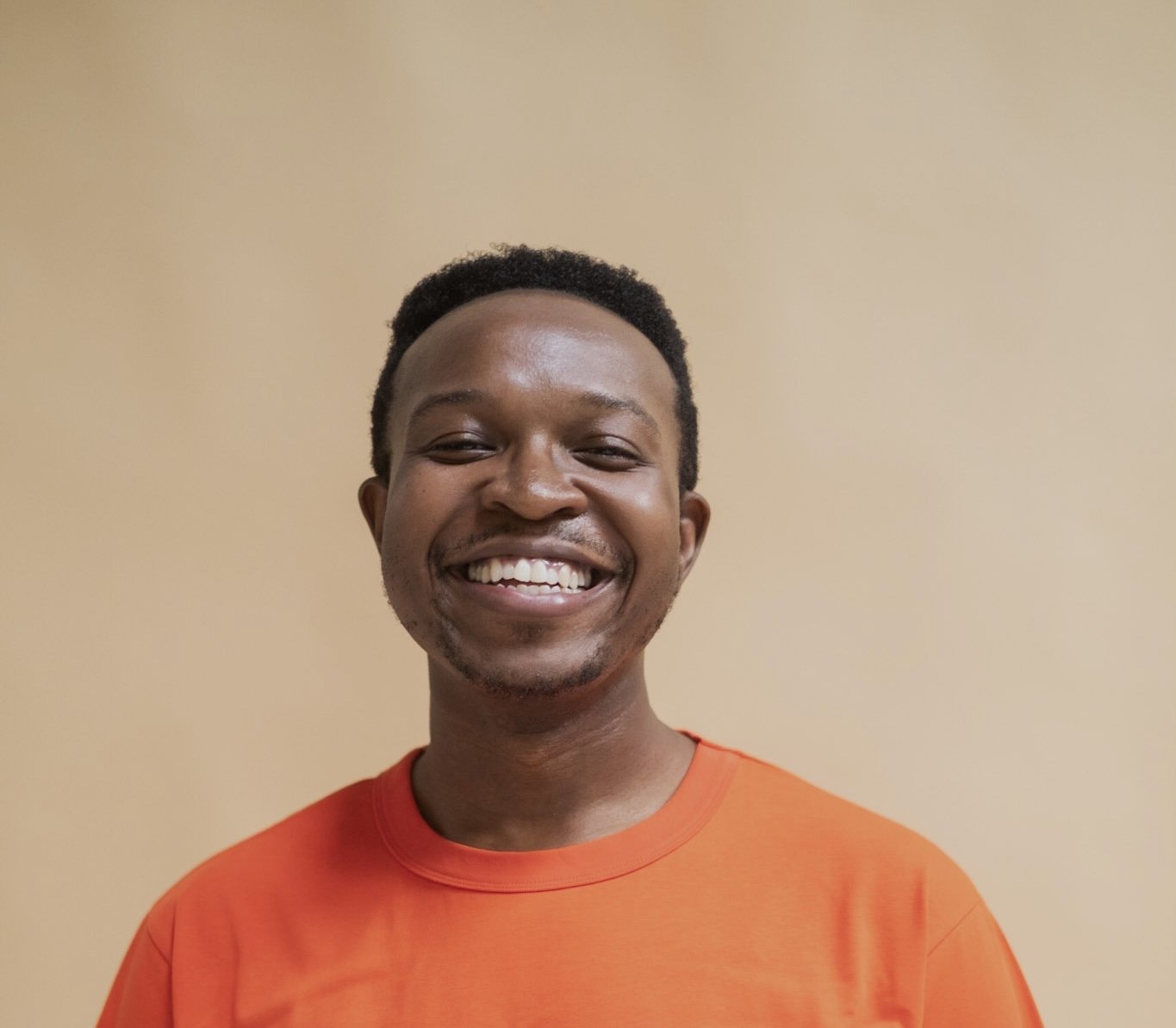
Photo Credit: Poet’s Official Website
My Poetry Corner July 2024 features the poem “Nevertheless” from the debut poetry collection Tender Headed (USA, 2023) by Olatunde Osinaike, a poet, essayist, and software developer. The following excerpts of poems are all sourced from this collection, winner of the 2022 National Poetry Series.
Osinaike earned his BS in Engineering from Vanderbilt University (Tennessee) and his MS in Information Systems from Johns Hopkins University (Maryland). Originally from the West Side of Chicago (Illinois), he currently lives with his wife in Atlanta, the capital of Georgia.
How did a data scientist for the consulting firm Booz Allen Hamilton also become a poet? In an October 2023 interview for his alma mater, Vanderbilt University, Osinaike said: “I don’t think of the data science and the writing as different. You definitely use a lot of creativity in how you code. The best observations I ever got were in a technology forecasting class with Andy Van Schaack [associate professor of the practice of engineering management] my junior year at Vanderbilt. We talked about scenario analysis, convergent opinions. So, even if I’m looking at something under a microscope, I’m also thinking about the world around what I’m observing.”
In his debut collection, Osinaike questions what makes a man and, more specifically, the Black man like himself. His introductory 28-line, block form poem, “Men Like Me,” frames the collection with its list of the diverse ways in which Black men present themselves to the world (p. 11):
Boys. Will be boys. Manly. Slick. Elbow grease. Baritones. Singing low. Unruly. Higher than a hierarchy. Inherit. Plausible deniability. Disorder. Bachelors and awful apostles. Dark knights…. Treat all we touch like tungsten. Can’t temper anything. Love a melting pot. Get physical. Have a problem with the word no. Yes men. Have more than just a problem with the word no. Antsy with violence…. Men of the house. Our own men. Might not start it, but will end it. Love when we aren’t followed or replaced. Love having the last word so we take it wherever we go. Front lines. Confessional booths. Prenups. Shotgun weddings. Law & Order reruns. Boardrooms. Proms. Distilleries. Salary negotiations. Horror films. Oval offices. On air.
In “Twelve,” his longest prose poem, divided into six segments (pp. 47-52), Osinaike, raised a Christian, explores what it means to stand before God as a man born with two blades in my back / a fist of intent as many arteries as there are hours in a day / and less than half the cynicism it takes for a white man to pray […] Who’s to say this world has a long memory and forgets anyway / several times I’ve been several feet from men who look like me with hands / dapping up like mine would on the same dim-lit corners I have been / stopped on I’ve walked miles in shoes a cop might think were theirs […] I can attest that men learn to play men from / men still learning lord forgive me for the times I / have said give me a sign when I meant let the dark / of my eyes see light the way a harbor can […] god as my witness I’d take anything resembling the warmth of forgiveness…
The featured five-stanza, prose poem, “Nevertheless,” is one of hope in the face of adversity (pp. 58-59). The poet also mentions forgiveness in the first verse. In this case, he refers to forgiveness of self. Forgiveness for his own existence?
I want to take this time to focus on the timeless, as certain ones take up arms to remove the lifetime of those like me. My favorite word above: a dove that sounds like I forgive myself, like a red redacted, like a gospel according to the camaraderie I can make cousins out of.
The poet refers to “nevertheless” as his favorite word. Despite certain ones seeking the removal of Blacks from the body politic, he continues to exist by the grace of God. The religious connotation is reinforced in the second verse:
There is no new ecclesiastical under the sun. No shortage of my people sporting basketball shorts beneath true religion jeans. We reincarnate every morning in these precincts with the good news delivered more than once already. The protests of messengers sent down, the blaze
No matter the protestations of certain ones, Black athletes are celebrated across several sports in the USA and worldwide. Their achievements and success and those of other Blacks matter. But it’s not enough, as expanded in the third verse:
after the crossfire, a chosen people who are either a jaywalk away from the love of our lives or our lives left to love. I have found that the self can be its own exodus, be a black sitcom or an intercessor for the one who waits but never goes. When I say my favorite word,
“The self can be its own exodus,” the poet writes. Whatever oppression we may face, the power to free ourselves lies within us. We hold the power, too, to uplift those who are too broken to save themselves. Even so, there’s more to consider as the poet relates in the fourth verse:
I think of how often our joy can become a win-win, how the pores of a mother can cup holy water. Some say the world is still becoming, but no, our angels trumpet our timbre. They are in the streets where peace is sold separately and critique is still, policed. They stay in the cut
Who are these angels protesting in the streets? So often, they are our sisters, wives, mothers, and grandmothers. Strong women who know how to “cup holy water.” He concludes in the final verse:
and on exhibit, like a glass-stained window meant to color the light. Know we have everything in common. Nobody move. I need to capture this moment where we are one with the unease that stomachs us like a morning rush. How we might fill in the blank with our story, our chalices next to paper plates, our fried and our black-eyed, our dressing, our Lawry’s, our fridge tetris, and most of all, most of all, our seconds.
Their lives may be on the line in public spaces, nevertheless all is not bleak or lost. They share common ground within their communities of fellowship. The simple joy of sharing a tasty meal with extended family and friends should be celebrated. Better yet, when no one goes hungry and there are seconds for all. I see the poet’s face light up with joy.
To read the complete featured poem and learn more about the Nigerian American Poet Olatunde Osinaike, go to my Poetry Corner July 2024.
 Three Worlds One Vision
He makes nevertheless really count
LikeLiked by 2 people
He sure does, Derrick. It surprised me that an adverb, we often utter without much thought, could speak such volumes to one who listens.
LikeLiked by 1 person
Olatunde Osinaike sounds like a fascinating human being. And he lives near me (sort of), in Atlanta! I’m curious about how he found his way from Nigeria to Chicago and South to Vanderbilt and Johns Hopkins. I’m going to employ more “nevertheless” in my thinking and speaking. Great word.
LikeLiked by 1 person
Katherine, I was also curious about his early years, but found nothing in his bio or other online sources. His movement across states in pursuit of academic certifications also intrigued me.
He does, indeed, give a whole new significance to the word “nevertheless.”
LikeLiked by 1 person
I think I’d like to meet him but need to be able to pronounce his name, first.
LikeLike
I also like the title “Tender Headed”.
LikeLiked by 1 person
I also like the title, Katharine. As there’s no poem with this name, the reader must sift between the lines of his poetry to reveal the tenderness of the Black male one rarely sees in mainstream media. In his poem, “The Third Degree” (p. 240), he writes:
“No one desires to be burned. Everything within shouting distance is an emergency contact. I, like everyone, wanting to be made whole by sight.”
LikeLiked by 1 person
I live around many blacks, and I find them generally warmer, more spirited, and more friendly than whites. The men, especially, are tender headed.
LikeLiked by 1 person
Brilliant, affirming, and touching, all at once. If the human race is to survive, it is men like this who will lead the way. Thank you, Rosaliene.
LikeLiked by 1 person
My pleasure, Dr. Stein 🙂 I’m so glad that you appreciate the work of this young poet.
LikeLiked by 1 person
A brilliant man and poet, Rosaliene. Thanks for sharing. Allan
LikeLiked by 1 person
My pleasure, Allan 🙂 He is, indeed, and he’s just beginning his journey as a poet.
LikeLiked by 1 person
Thank you for spotlighting this ultra-talented poet, Rosaliene. Olatunde Osinaike is quite a writer!
LikeLiked by 1 person
He sure is quite a writer, Dave! I could only imagine what lies ahead for him as his poetic voice develops in the years ahead.
LikeLiked by 1 person
Interesting that he thinks the ways he uses his mind in writing and in his scientific work are the same.
LikeLiked by 1 person
Neil, I think that this is what makes his work so striking. With this way of thinking, his poetry presents us with a more integrated vision of the world around us. Consider the juxtaposition of his free-flowing thoughts in “Men Like Me” (p. 11):
“Jog freely at night. Night and day. Interrogate. Bastard. Blue everything. Culture coercion. Hate to admit it. With tailored suits. Soot and tie. Checker. Call it chess. Don’t call it control. Call it. Like a time of death.”
LikeLiked by 1 person
Olatunde Osinaike doesn’t shy away from difficult topics. We need his truth.
LikeLiked by 1 person
So true, Rebecca. What’s more, he tells his truth in a unique way of combining words and images.
LikeLiked by 1 person
I especially appreciate “Men Like Me” and the glimpse it gives the reader into how Black men navigate this world that is so hostile to their existence. Thank you for sharing this with us, Rosaliene.
LikeLiked by 1 person
My pleasure, Tracy 🙂 I also appreciate “Men Like Me” for the same reason.
LikeLiked by 1 person
🙂
LikeLiked by 1 person
A powerful combination of hope, truth, and depth. I’m going over to your poetry corner to let it sink in deeper.
LikeLiked by 1 person
Thanks very much, JoAnna. Even after reading the poem several times, there’s still a lot for me to unravel.
LikeLiked by 1 person
His take on black men intrigued me. I would’ve thought it was written by a woman who has yet to meet a good man.
Interesting.
LikeLiked by 1 person
Interesting, indeed, Betsy. Not too many men, regardless of race, are willing to accept their character weaknesses.
LikeLike
Very true. Which shows his character strength, ironically.
LikeLiked by 1 person
Relating one’s experiences and circumstances in a poetic form is brilliant!
LikeLiked by 1 person
Thanks for adding your thoughts, Zet Ar. Osinaike’s poetry is, indeed, brilliant.
LikeLiked by 1 person
Thank you for introducing me to this good young poet and some of his literary production
LikeLiked by 1 person
You’re welcome, Luisa 🙂
LikeLiked by 1 person
🙏💙🙏
LikeLiked by 1 person
Thank you for introducing another brilliant poet, Rosaliene! “Where peace is sold separately”, he nails it. Seconds for all. Yes!
LikeLiked by 1 person
My pleasure, Mara 🙂 He sure does nail it about peace! We also see it playing out in real time right now between Israel and Palestine.
LikeLiked by 1 person
Excellent poetry, Rosaliene. Thank you for making us aware of this fabulous poet.
LikeLiked by 1 person
My pleasure, Mary. So glad you like my choice 🙂
LikeLiked by 1 person
What an inspiring and incredibly talented young man! He’s definitely using both his right and left brain. Thank you for sharing another standout poet with us. Love these segments, along with your personal narratives too, of course.
LikeLiked by 1 person
My joy in sharing, Michele 🙂 I’m so glad that you find Osinaike’s poetry inspirational.
LikeLiked by 1 person
It is joyful, isn’t it. Thank you, Rosaliene.
LikeLiked by 1 person
🙂 ❤
LikeLiked by 1 person
WOW Rosaliene, this is powerful. You have no idea how much I appreciate you sharing the voices of poets, whose stories are so inspiring, that go beyond the ordinary expectations of poetry. Their stories give us a side of humanity and our environment that shapes who we are and the way we affect others around us (directly or indirectly). This is an excellent introduction my friend, and your review stands out, but this part that you mention about Olatunde Osinaike’s poem resonated with me:
“The self can be its own exodus,” the poet writes. Whatever oppression we may face, the power to free ourselves lies within us. We hold the power, too, to uplift those who are too broken to save themselves.”
Sistah girlfriend, what another excellent choice to feature in your Poetry Corner! 🥰👏🏼💖🙏🏼😘
LikeLiked by 1 person
Kym, I’m so glad that you like my featured poet/poem for my July Poetry Corner 🙂 It gives me great joy to be able to share diverse poetic voices who expand our vision of our shared humanity. Osinaike is a treasure. For a young man, his perception is that of one I call “an old soul.”
LikeLiked by 1 person
Oh Rosaliene, he seems like an old soul indeed. He is deep and authentic. I love that for such a focused young man. 😍👏🏼🥰
LikeLiked by 1 person
Thank you for sharing this talented person with us! Great post
LikeLiked by 1 person
Thanks very much, Belladonna. My pleasure in sharing 🙂
LikeLiked by 1 person
Thank you, Rosaliene, for your thoughtful examination of this important artist’s works.
LikeLiked by 1 person
My pleasure, Steve 🙂 Thanks for dropping by.
LikeLiked by 1 person
You’re most welcome.
LikeLiked by 1 person
A wonderful poet and a beautiful smile to boot!
LikeLiked by 2 people
So glad you like my featured poet/poem, Pam! He does have a beautiful smile 🙂
LikeLiked by 1 person
❤️
LikeLiked by 1 person