
Tags
motherhood, Poem “To Enter My Mother’s House” by Danielle Boodoo-Fortuné, Poetry Collection Doe Songs by Danielle Boodoo-Fortuné (UK 2018), The Feminine, Toxic Mother-Daughter Relationship, Trinidad & Tobago/Caribbean, Trinidadian Poet Danielle Boodoo-Fortuné, Women
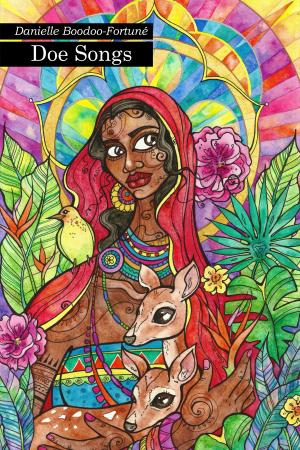
Photo Credit: Peepal Tree Press
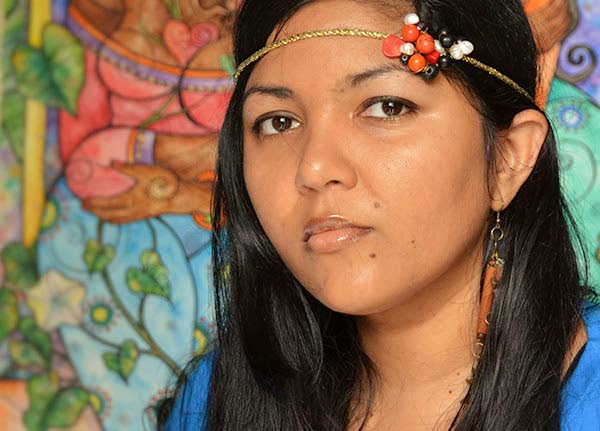
Photo Credit: Trinidad & Tobago Newsday Newspapers
My Poetry Corner May 2024 features the poem “To Enter My Mother’s House” from the debut poetry collection Doe Songs by poet and artist Danielle Boodoo-Fortuné, published by Peepal Tree Press (UK, 2018). The collection won the 2019 OCM Bocas Prize for Poetry.
Born in 1986 in the twin-island Caribbean nation of Trinidad & Tobago, Danielle Boodoo-Fortuné holds a Bachelor of Arts Degree in Literatures in English from the University of the West Indies, St. Augustine campus, where she later completed a Creative Writing Course in Poetry, taught by award-winning Trinidadian poet Jennifer Rahim (1963-2023).
Danielle was raised by her two grandmothers: Her maternal grandmother is of East Indian descent; her paternal grandmother is African and Chinese. One of her grandmothers was a secondary school English teacher who introduced her to reading and writing poetry at an early age. But it was not until joining Jennifer Rahim’s creative writing class that Danielle saw the power of poetry and committed to the craft.
“Poetry speaks not only of your brain and soul, but of your belly, your bones,” she said in a 2010 interview with Caribbean Literary Salon. “It is that bare truth and intensity that I love so much about poetry… the physicality of those simple words.”
From the very first poem, the poet launches the reader into the harsh realities of being a woman in our imperfect world filled with dysfunctional love that wounds male and female alike with disappointment, brokenness, and grief. What’s more, the poetic vision is one of interconnection between dreams/spirit and reality, humans and non-humans.
In the three-part “Doe” poem (pp. 10-12), the hunter remembers the doe he killed, not knowing she was pregnant: It was still warm, breathing / deep inside the half-moon / of her open belly. / “Leave it,” someone said. / But I couldn’t. I feared / the darkness would swallow me, / that the sighing trees / would remember my face. The hunter’s wife remembers the fawn: Its eyes were like yours, / difficult, hungry, / heavy with the memory of its mother’s ruined body. The hunter’s only daughter hears the fawn song: They say once you hear it, / you lay yourself down / beneath the trees, // and the fawn is the one / walking home / in your skin.
The connections between daughter and fawn, mother and doe are further developed in “Dream of My Daughter as a Fawn” (p. 13). To the mother/doe: Her amber eyes are her father’s, but her wildness is mine. To the daughter/fawn: See my hooves, mother, she whispers. The beginnings / of my antlers. See how I am fiercely made. The mother/doe concludes: Oh, I too was a fawn once. I know / the shots fire whether we are wild or not. / The hunters come with their guns / even though we are good. / Go on and run, I whisper / and her soft hooves fly.
The long poem “A Hammer to Love With” unravels the mother’s tough lesson to her teenage daughter (pp. 73-75) who must learn, as a wife and later as a young mother, to balance her vulnerability and strength. On her sixteenth birthday / you gave her a hammer, / told her, / Here, love with this. The daughter remembers: After all, a heart too soft / will fail.
It’s in the opening ten-stanza poem of the collection—featured this month of May when we honor and celebrate our mothers—that we must also come to terms with the toxic mother-daughter relationship. In the first stanza, set apart using italics, of the featured poem “To Enter My Mother’s House” (pp. 7-8), we enter the spirit world at the birthing of the poet persona. Born with longing for love and life. Is it the curse of the unwanted firstborn daughter?
The Heron god created daughter
on the last day. Not knowing
what to do with the longing
left over from creation, he poured it
into her open mouth, still warm
and echoing with earth.
In the next three stanzas, we know the dread of the thirty-year-old poet persona when she visits her mother.
To enter my mother’s house
I must walk backwards with
smoke in my mouth.

To pass through the keyhole
I must become a spout
of water, a single hair
from an ocelot’s back.

I must go back thirty years
to recreate myself, carve
my face on the unburnt tip
of a match, strike my teeth
thrice against her name.
The fifth stanza (in italics) takes us to the world of dreams where the daughter seeks answers for past hurts. In the sixth and seventh stanzas, the daughter recalls a loveless past of beatings, of struggling to be invisible. I must make myself small / and light as a bee, suspend / myself among the dust motes / and droplets, hum and fidget / among the noiseless things.
The closing one-line stanza echoes the opening stanza: I must never ask about my birth.
The circumstances of our birth matter, especially to those among us whose mothers show them no love or kindness.
To read the complete featured poem and learn more about the Trinidadian poet Danielle Boodoo-Fortuné, go to my Poetry Corner May 2024.
 Three Worlds One Vision
Wonderfully full of powerful metaphor and imagery. The cover is delightful
LikeLiked by 2 people
I agree, Derrick. I also love her book cover 🙂
LikeLiked by 1 person
Powerful words and imagery Rosaliene. Her words are certainly felt.
LikeLiked by 2 people
I agree, Kate. Thanks for dropping by and sharing your thoughts 🙂
LikeLiked by 1 person
The poem is wonderful and the images are great!
LikeLiked by 2 people
So glad you like my choice, Luisa 🙂
LikeLiked by 1 person
You’re more than welcome ❣️
LikeLiked by 1 person
Great, gut-wrenching poetry. Thank you, Rosaliene, for featuring Danielle Boodoo-Fortuné and her work.
LikeLiked by 1 person
My pleasure, Dave. So glad you like her poetry 🙂
LikeLiked by 1 person
Goodness! The poet’s words are full of fantastic images & echoed in her painting.
LikeLiked by 1 person
She blew me away, too, Ashley.
LikeLike
Beautiful art and words Rosaliene. Out of pain, comes art. Each of us carries some pain, but, it is how we respond to it that makes us who we are. Thanks for sharing. Allan
LikeLiked by 2 people
So true, Allan, about the connection between art and pain. It comes through so clearly in her poetry and art.
LikeLiked by 1 person
So much beauty, in the poetry and your analysis of it. Thank you!
LikeLiked by 1 person
My pleasure, Katie 🙂
LikeLike
Beautiful! I love the voice in this.
LikeLiked by 2 people
Tammy, I’m so glad that you could connect with Danielle’s poetry 🙂
LikeLiked by 1 person
She has a strong sense of language. The words she chooses to use don’t beat around the bush.
LikeLiked by 1 person
She does, indeed, Neil. She captured my attention from the very first stanza of the opening poem.
LikeLiked by 1 person
If I’m not mistaken, laws designed to protect animals in the U.S. preceded and led to laws that governed what humans do to each other. The use of animals and birds in Danielle Boodoo-Fortuné’s work is touching. Thanks you, Rosaliene.
LikeLiked by 1 person
My pleasure, Dr. Stein. Throughout her collection, she reminds us of our connection with the non-human world.
LikeLiked by 1 person
Although my first response was “powerful,” the feelings her images elicited cut deeply, surgically, and formidably. To survive such abuse and transform it into reverence for life is truly a gift
LikeLiked by 1 person
So true, Carol. Thanks for sharing this perspective of her work as reverence for life.
LikeLiked by 1 person
💜
LikeLiked by 1 person
Thanks for the intro to Danielle Boodoo-Fortuné’s work. The poets you choose are excellent.
LikeLiked by 1 person
Rebecca, I’m happy that you like my choice of poets. Our poets have so much to offer our troubled world.
LikeLiked by 1 person
It is true. They speak directly to our emotions and in that way can effect change.
LikeLiked by 1 person
WOW, Danielle shows her vulnerability and I love your touching review of her book Rosaliene. The depth of sadness in her relationship with her mother is heartbreaking and tormenting. Thank you for sharing putting a spotlight on such a passionate story about Danielle Boodoo-Fortuné. Another brilliant poet for sure. 🤗💖😘
LikeLiked by 1 person
Kym, she is for sure another brilliant poet. As a young poet, she still has many more years to go to explore and deepen her vision of being a woman in an imperfect world.
LikeLiked by 1 person
Oh I love it and the way you presented her story shows more promising things to come. She is already off on a great journey as an artistic and spiritual visionary. So proud of her work and mission. Thanks Rosaliene! 🥰🙏🏼🤗
LikeLiked by 1 person
She is, indeed, Kym 🙂 ❤
LikeLiked by 1 person
Her poetry is beautiful and sad. Thank you for sharing it, Rosaliene.
LikeLiked by 1 person
My pleasure, Mara 🙂
LikeLiked by 1 person
“Poetry speaks not only of your brain and soul, but of your belly, your bones.”
The poet made this statement about poetry in general, but I can’t think of a better example of those sensations than when I read her poetry. They brought tears, Rosaliene. “I must make myself small.” Indeed, that’s what many of us did/do. Thank you for sharing this.
LikeLiked by 1 person
My pleasure, Tracy 🙂 Thanks for making that connection about her poetry. When I first read her collection, it took me a few days to get beyond this opening poem. It also brought me to tears. She described so well my own fears of yet another attack whenever I entered my mother’s home.
LikeLiked by 1 person
Another fine selection and interesting discussion. Timely, too. I would like to read more of her poems. Thank you, Rosaliene.
LikeLiked by 1 person
My pleasure, Michele 🙂 I’m happy that you like my selection 🙂 Her book is also available on Amazon.
LikeLiked by 1 person
I saved your post. She seems like a poet that would fit well with writing workshop content. Thank you!
LikeLiked by 1 person
That’s great news, Michele! Also check out samples of art work on her website (see link below) that’s focuses solely on the female persona.
https://www.daniellebooodoofortune.com/gallery
LikeLiked by 1 person
Thank you very much!
LikeLiked by 1 person
You’re welcome, Michele!
LikeLiked by 1 person
Poetry at its finest, such as this, is expressive and emotional. Thank you for introducing me, once again, to an excellent writer, Rosaliene.
LikeLiked by 1 person
My pleasure, Mary 🙂 I’m so glad that you like my selection for this month’s Poetry Corner 🙂
LikeLike
Thank you for the introduction to Danielle Boodoo-Fortuné and for the diversity of voices you share in this space, Rosaliene. I love this: “Poetry speaks not only of your brain and soul, but of your belly, your bones.”
LikeLiked by 1 person
My pleasure, Crystal 🙂 I appreciate that you like the diversity of poets that I share each month. Danielle’s response to poetry expresses well it’s power to touch our lives at the deepest levels.
LikeLiked by 1 person
As a lover of non-human animals, the doe and fawn story certainly reached into my belly and bones. My heart has gotten softer as I age and things like this affect me more deeply. But, “… a heart too soft / will fail.” so I better find balance between strength and vulnerability. I’m thankful that Danielle Boodoo-Fortune is writing about these things in a way that opens our minds and hearts and thankful you have shared her with us.
LikeLiked by 1 person
It’s a joy to share her poetry, JoAnna. Her way with words and imagery does get into one’s belly and bones. There’s so much richness in her collection that I couldn’t share in a short post. Finding balance between strength and vulnerability is not at all easy, especially when it involves individuals who are close to our heart.
LikeLiked by 1 person
Wow, powerful words! What an incredible talent. Thanks for sharing, Rosaliene! ☀️
LikeLiked by 1 person
My pleasure, Lisa. Thanks for dropping by 🙂
LikeLiked by 1 person
When she wrote this poem, she actually implemented what she was taught at the university, she’s a true Poet!
LikeLiked by 1 person
She is, indeed, a true poet, Zet Ar!
LikeLiked by 1 person
Wow! Powerful! Beautiful prose!
LikeLiked by 1 person
So glad you like her work, Tamara!
LikeLiked by 1 person
I’m not normally drawn to poetry, but you do find some amazing poets!
LikeLiked by 1 person
Thanks very much, Tamara!
LikeLiked by 1 person
Of course! My pleasure!
LikeLiked by 1 person
And this is why I love poetry!!!! she is brilliant with words.
LikeLiked by 1 person
Thanks very much, Belladonna 🙂 So glad you like her poetry.
LikeLiked by 1 person
You’re welcome!
LikeLiked by 1 person