
Tags
British Guiana (Guyana)/South America, Cheddi Jagan (1918-1997), Cooperative Republic of Guyana (1970), Forbes Burnham (1923-1985), Georgetown/Guyana, Roman Catholic Church Second Vatican Council (1962-1965)
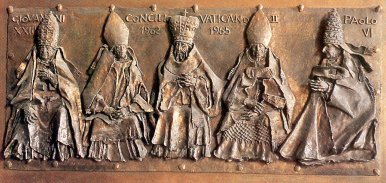
Photo Credit: Vatican Archives
In Chapter Seven of my work in progress, I tell two stories that played vital roles in shaping my young identity. These involved critical turning points within the Roman Catholic Church and the end days of European colonialism. What an interesting time to witness history in the making!
Beginning on October 11, 1962—after ninety-three years since the convocation of the First Vatican Council on December 8, 1869—between 2,000 and 2,500 Catholic cardinals, patriarchs, and bishops from all over the world, assisted by 460 theological experts, convened in Rome for the Second Vatican Council. For the first time, Protestants, Orthodox, and other non-Catholic observers were invited to assist. In attendance as observers were forty-two lay and religious men and women.
Meanwhile, in what was then British Guiana, our parents and grandparents were embroiled in the struggle for independence from Britain. Our country’s independence in May 1966 went way beyond constitutional change and self-governance. No longer socially inferior subjects of the former Mother Country, we the people also had to undergo the psychological process of “mental emancipation.” As I observed during my adolescence, the Church and State often disagreed on the means to achieve such profound changes of being and doing.
When I first drafted this chapter in 2017—yes, this project is years in the making—the MAGA administration of our 45th president held power in the White House. As I understood then, this rallying cry to “Make America Great Again” meant a return to the 1950s when the white male held power over non-white bodies and the female stayed at home to raise the family and serve her husband. I had visions of a return to life in colonial British Guiana. It meant a return, too, to my mother’s unhappy life as a stay-at-home working mother of five children and an abusive husband.
What a turn of events in the world’s richest and most powerful nation!
I imagine that this is not an easy time to be a young person in the United States. In addition to laws and regulations dictated by the Church and State, they must also contend with bullying and conspiracy theories on ubiquitous Social Media platforms. Added to that is gun violence in schools, colleges, and the public spaces where they socialize. For girls and young women, rights won by their mothers and grandmothers, through years of political activism, are being dismantled.
During my adolescent years, my steadfast faith in the teachings of the Catholic Church grounded me during those transformative years from a colonial country to a cooperative socialist republic. Moreover, as a young woman, I witnessed strong and courageous women lead the way forward. I feature three of these women in Chapters Eight to Ten.
Chapter Seven: The Making of a Christian Socialist
Beginning in the mid-1960s, the Roman Catholic Church Second Vatican Council (1962-1965) brought lots of changes, big and small, to the church in Guyana. Pope John XXIII (1958-1963), the head of the Roman Catholic Church, had taken a bold step to bring the church into the modern world. We females no longer had to cover our head at church. Not happy about the change, some older female churchgoers complained that we young people were being disrespectful in the Lord’s house. I soon found it pointless to explain that church rules had changed. That the old church ruling had never applied to men didn’t bother them.
A more important change was the use of the local vernacular instead of Latin for the church’s liturgical celebrations. Out went the Roman Missal for following the celebration of Mass. What’s more, the priest now faced the congregation instead of backing us. We were to become participants rather than observers in the celebration of Mass. Even the centuries-old hymns were gradually replaced by new religious songs. Fresh air seemed to have entered our church, a freshness more welcoming for us young people.
A big deal for us in Guyana, with large populations of Hindus and Muslims, was the Vatican Council’s recognition that salvation was not only reserved for Christians. Non-Christians, like many of my school friends, even atheists and agnostics, could also be saved if they followed their consciences. Who could judge the sincerity of another person’s conscience? At least, not me.
The change that shaped the vision of my place in society was the Council’s affirmation that the Church should get more involved in social, economic, and political affairs. Pope Paul VI (1963-1978), who succeeded Pope John XXIII after his death, considered nationalism and racism as major obstacles for a more just social order. Racism was a major issue in our country and only seemed to worsen in pre- and post-independent Guyana. At the time, nationalism was a new concept for me. Following our independence from Britain in May 1966, I felt pride and joy in being Guyanese. We were no longer “subjects.” We could now forge our own identity as a nation. Guyana’s destiny was my destiny. My contribution mattered.
With the new openness in the Catholic Church came an outreach towards us youth. When our parish started a youth group for those who were thirteen to eighteen years old, my sister and I joined. The organization and management of our youth group fell to a newly ordained priest in his twenties whose good looks attracted the attention of the ladies in our parish. Poor guy! All the female attention made his stuttering much worse. A recent arrival from the Canadian Scarboro Mission, he was by far more approachable than our two older Canadian parish priests. One of them had the habit of hammering the pulpit during his sermons, intent on filling the congregation with fear of the fires of Hell.
Our youth group met once weekly at the parish hall on the ground floor of the presbytery, located adjacent to the church. Under the guidance of our young priest-in-charge, we took part in fund-raising events, held concerts, visited the sick and aged, and joined neighborhood clean-up campaigns. We also met once a month on a Saturday evening for “Games Night.” I volunteered to be part of a male-female team for planning the event. Using a book of party games borrowed from the Georgetown Public Library, I met at home with Neville, my black partner who was older than I was. The dining room where we held our discussions was adjacent to Mother’s sewing room. Unless a client was trying on an outfit, the doorway remained open. No chance of any hanky-panky.
After our third meeting, Mother declared her verdict.
“I don’t want you meeting with that boy no more,” she told me. “He fulla sweet-talk. After he get what he want, he going dump you like a used tire.”
“But, Mom, we’re just friends. Nothing more.”
My objections couldn’t penetrate her predictions of life with a young man like him. Mother wounded me with her final sentence: “Don’t think for one minute I’m going to help you raise any bastard child.”
To tell Mother that I had no intention of making her mistake would’ve only angered her.
Neville was flabbergasted when I told him we could no longer work together. “What did I do wrong?”
How could I explain my mother’s fears? He had done nothing to deserve such a condemnation of his character. He left the group soon thereafter. I was sorry to see him leave: He was a jovial person and the best dancer in our youth group.
When I became eighteen, our young priest-in-charge elected me to represent the youth on the Parish Council. Months later, the members of the council invited me to address a seminar for Catholic parents about bridging the generation gap. The members of our youth group, now numbering about twenty, gave me several areas of conflict with their parents to raise in my presentation. Usually timid as a high school student to speak out in the classroom, I was forced into the spotlight. What an unnerving experience! The more than a hundred adults filling the auditorium seemed to look at me with accusing eyes. Seated in the front row, a prominent benefactor of the Catholic Church—a successful and well-respected businessman in the Portuguese community—made me uncomfortable with his stern expression and folded arms. Bridging the generation gap would not be easy.
Long before the directives from the Second Vatican Council, the Catholic Church in then British Guiana, during our struggle for independence, was in constant conflict with the left-wing communist government under Cheddi Jagan (1918-1997). In 1961, when Jagan’s government took over fifty-one Christian denominational schools, built wholly or in part with public funds, Mother and Auntie Katie joined hundreds of concerned Christian parents on the public Parade Ground to protest the decision. The government’s plan to bring all Church schools under their control, became a huge thorn in the side of the Catholic Church. In Chapter Nine, I feature the portrait of Janet Jagan nee Rosenberg, Cheddi Jagan’s American-born wife, who was also engaged in our country’s political and social struggles.
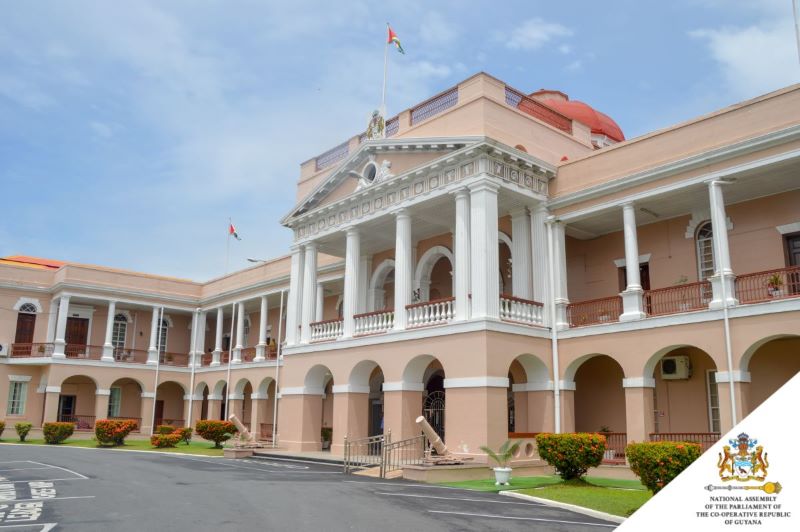
Photo Credit: Parliament of the Co-operative Republic of Guyana
In March 1963, the Catholic Bishop called on all Guianese who valued religious instruction for their children to oppose the government’s policy to banish God from the schools. Parents and children picketed outside the Parliament Building. With tensions rising across the city in the lead up to the 80-day general strike to protest the leftist government’s Labor Relations Bill, Father didn’t think it was safe for Mother and us children to be out on the streets. We watched passers-by from behind the safety of the four-foot-high concrete fence of our Queenstown home. A man rode by with a placard strapped to the handlebar of his bicycle that read: HANDS OFF OUR RELIGION. On April 30, after the general strike was declared, the churches held a torchlight procession and an all-night vigil of prayer and penance for our country in crisis.
Finally rising to power in 1964, the democratic socialist party under Forbes Burnham (1923-1985) led our country to independence in May 1966. In Chapter Eight, I feature the portrait of Winifred Gaskin, appointed as Minister of Education (1964-1968) in his government. A Methodist and son of a schoolmaster, Prime Minister Burnham assured the Catholic Church that he had no intentions of ending religious instructions in the schools. His brand of socialism was nothing like Jagan’s communist policies, he assured the religious leaders. Believing that they had averted the communist threat, the Church gave the Burnham government their full support. Great was the relief of the minority Portuguese business community!
Their relief was short-lived. Burnham’s signs of growing authoritarianism couldn’t be ignored. His democratic socialist government veered to the left. I had graduated from senior high school and was working in the private financial sector when, on February 23, 1970, he declared our nation a “cooperative republic.” The first of its kind in the British Commonwealth. While he remained Prime Minister, Burnham replaced the Governor-General, Britain’s appointed representative since our independence. In his place, the National Assembly elected a ceremonial president as our new Head of State for a five-year-term.
Guyana officially became a socialist republic. So began my transformation into a Christian socialist.
Up to that time, our four-year-old nation was independent only in terms of self-government. Our economy was still dependent upon foreign companies that exploited our natural resources and labor, and pocketed most of the profits. This was all going to change. We the people would take control over the economy with the formation of cooperatives.
“We must put economic power where it belongs,” Burnham said in his opening address to Parliament on February 23, 1970. “Be you a Christian, a Hindu, a Muslim, an agnostic, or what have you.” He envisioned an egalitarian society in which the “small man” would become a “real man.”
Father and his drinking buddies were content to wait and see developments. On the other hand, Mother saw no future for herself and five children in a country with an authoritarian man in power.
“I knew he was just a sweet-mouth to get our votes,” Mother told Auntie Katie, referring to Prime Minister Burnham.
I didn’t yet know what Mother was fussing about. She always had a vision of the future that was beyond comprehension of my adolescent mind. We were an independent country. Changes were inevitable and necessary. The innocence of youth!
 Three Worlds One Vision
Your engaging life story is developing into a fascinating history of an era
LikeLiked by 3 people
Thanks very much, Derrick. It’s an era that some of my collective American family would like to have restored.
LikeLiked by 1 person
Yes, it does sound a very interesting time to live through. Forbes Burnham was a name that rang a few bells, rather far off in the distance, I’m sad to say.
LikeLiked by 1 person
Thanks very much, John. Though the British had their doubts about Burnham, the US government thought that he was a better choice than Jagan to lead the colony to independence.
LikeLiked by 1 person
The British have their doubts abut everyone, particularly their own politicians. It’s one of the the big drawbacks of a two party system.
LikeLiked by 1 person
VERY interesting and well-written personal and national history, Rosaliene.
LikeLiked by 4 people
Thanks very much, Dave!
LikeLiked by 1 person
It’s fascinating reading your personal story mixed with such history. Looking forward to reading more.
LikeLiked by 2 people
Thanks for dropping by and reading 🙂
LikeLiked by 1 person
I always thought you’ve led an “interesting” life, Rosaliene. Isn’t there a Chinese curse that goes, “May you live in interesting times”? Terrific story! Thank you, Rosaliene.
LikeLiked by 1 person
Thanks very much, Dr. Stein! In hindsight, the period seems all so “interesting.” But, those were dangerous and uncertain times.
LikeLike
Hi Rosaliene. Your life story is fascinating and complex.
LikeLiked by 1 person
Thanks so much, Neil. These days, we live in even more complex times!
LikeLiked by 1 person
Wow! What incredible transformations! To write about pivotal events and to add personal experiences, what a great combination! Love reading about your past!
LikeLiked by 2 people
Thanks very much, Tamara! So glad that you’re enjoying these stories 😀
LikeLiked by 1 person
Yes, I find them fascinating and educational!
LikeLiked by 1 person
That’s great, Tamara! The reader’s engagement is paramount.
LikeLike
Absolutely! It is important to know that it’s there!
LikeLiked by 1 person
Beautiful Rosaliene.
LikeLiked by 1 person
Thanks very much, Kim 🙂
LikeLike
Thanks for having the courage to relive and share these pivotal, life changing events, Rosaliene. I am following and learning.
LikeLiked by 1 person
I appreciate your kind comments, Frank 🙂 I’m also learning from your own journey ❤
LikeLiked by 1 person
✌💜
LikeLiked by 1 person
I couldn’t help laughing, you’ve a tendency of making sad stories funny, be it your mother warning you about a boy or a protesting man riding a bicycle with a sticker ‘leave our religion alone’, etc, it’s just so funny!
We relate though, because Christians in our country, especially older generation, have been complaining about this “democracy” that allows every religion to exist while scrapping Christianity from schools. Some concluded it’s the reason we are now experiencing more crime and corruption, it’s because God dumped us.
LikeLiked by 1 person
Zet Ar, you make me smile when you find humor in my stories 🙂 Hopefully, a day will come when our political and religious leaders can find balance in promoting the beneficial values that all religious beliefs bring to our society.
As I see it, the God of Greed has risen to prominence worldwide, leaving crime and corruption in his wake. The God of Love still exists whenever we treat others with kindness and compassion ❤
LikeLiked by 2 people
I was just going to use the word fascinating and then I see that Derrick used that word also. And I like your contrast or comparison of the early years to the MAGA movement here. 😩
LikeLiked by 1 person
Thanks very much, Pamela 🙂 I happily accept another fascinating comment 🙂 Turning back time can be quite tricky if everyone, everywhere is not on the same time clock.
LikeLiked by 1 person
WOW Rosaliene. You know, it is so fascinating to see the impact of how important institutions in our life, especially in our formative years, shaped our being and our conduct. You mentioned, “undergoing the psychological process of “mental emancipation,” which strikes a cord with me. It’s interesting the way our thought processes were conditioned, and continue to be for many people’s mindsets. I often wonder, “When will people wake up and see how history not only repeats itself, but kicks repeated mistakes along with progress up a notch. I love the way you have woven real-life occurrences with wonderful storytelling. 🥰🙏🏽😍💖😊
LikeLiked by 1 person
Thanks so much, Kym! So glad that you love the way I’ve woven real-life storytelling 🙂
Profound change of mentality, of new ways of being, don’t come easy. This is especially true for those among us who seek to maintain the status quo.
LikeLiked by 1 person
You speak the truth so eloquently Rosaliene. You are on point sistah girlfriend. 😍💖😊🙌🏼🤗
LikeLiked by 1 person
Rosaliene you are such a interesting person! I would love to hear you tell this story!
LikeLiked by 1 person
Thanks very much for your kind comment, Belladonna!
LikeLiked by 1 person
You’re welcome!
LikeLiked by 1 person
Completely understandable that your project would be seven years in the making, Rosaliene. It is a well-written rich blend of personal narrative and historical details. The most interesting way to learn about history, in my opinion. I would love to sit in on a talk, based on your book. Engaging! 👏
LikeLiked by 1 person
Thanks very much, Michele! So glad that you found this chapter engaging 🙂
Who knows what the future holds for this book when published? We women throughout the ages have found ways to survive and thrive in a patriarchal–or more precisely, the heteropatriarchy–the world. It has been no different for my mother’s generation, my own, and the girls and women of today.
LikeLiked by 1 person
You are very welcome, Rosaliene.🌻The future is unknown, but I am certain you and your book will continue to make a positive impression and impact. Wonderful writing and yes women are strong survivors and thrivers! 👏🏻
LikeLiked by 1 person
I appreciate your positive feedback, Michele 🙂
LikeLiked by 1 person
I am reading, Rosaliene, and am so far delighted with what I have read. You write of an era in which I lost my dad, a policeman working for British Guiana and of a country which also moulded me. Please continue and I admire the blend.
LikeLiked by 1 person
Thanks very much, George! I appreciate your feedback 🙂 Sorry to learn that you lost your father at a young age ❤
LikeLiked by 1 person
So interesting that it seems while Burnham wasn’t popular with the church he seemed to improve the lives of many people including the very women who were against him. Or do I have that right? Great story!
LikeLiked by 1 person
Thanks a lot, Mara! In the early days of his government, Burnham had great support among the large black population, male and female alike. As a young woman, I also believed in his vision for our future as a nation. Until everything changed for the worse. More to come in Chapter 15: “Paramountcy of the Ruling Party and Free Education for All.”
LikeLiked by 2 people
So interesting. No surprise it would go down hill. Can’t wait to read chapter 15!
LikeLiked by 2 people
I did not know about the Vatican Council’s recognition that salvation was not only reserved for Christians but also for Non-Christians”, “…..even atheists and agnostics” who followed their consciences. That’s refreshing and more rational than some present day Christian denominations. I’m glad you’re writing this book and look forward to reading it.
LikeLiked by 2 people
JoAnna, I appreciate your support for undertaking this journey in writing this book. It has proven to be more challenging than I had imagined. Sad to say, divisions within the Catholic Church still exist–welcoming LGBTQ individuals into the fold and ordaining women to the priesthood–and could lead to another schism within the Church.
LikeLiked by 1 person
Well, what can I say?
I also grew up on a Catholic country, speaking Spanish, educated by Xavierans missionary priest from Italy, for the whole of my Elementary, Junior high and High school, for 12 years.
To later live, and work in my country of birth for fifteen years, before emigrating to Los Angeles to live and work for over 31 years, retire, and come back to my natal country to retire now since 2016, living in two different Worlds, and adapting and looking at life with two different views to look at the World, not an easy thing for many people to understand, who never went through our experince, of living in two very different Worlds, and explain to people who do not share our experience.
The funy thing it’s on my native country it’s hard for me not to look with a critical eye, at what for my past experiences have thaught me, and be a little critical from my natal country, and see our own lacks, and problems we where blind to see, before we went through our process of asimilation to another culture.
In fact I should write of it on my next blog, if I feel like to write about it.
Nice to read you, and best regards to you Rosaliene.
LikeLiked by 2 people
Burning Heart (sorry, I’ve never learned your name), thanks for sharing a bit of your own journey of living in two different cultures. I’m pleased that this chapter of my work-in-progress has inspired you to return to blogging. Those of us who have experienced life within and outside of the USA, have many stories to tell of our unwillingness as members of the body politic to see ourselves for who we truly are.
LikeLiked by 2 people
Sorry I forgot to tell you my name, Brígido Anaya Islas
LikeLiked by 1 person
Thanks, Brigido 🙂
LikeLiked by 1 person
Well written piece about an interesting era still etched in the minds of many Guyanese, especially the diaspora! The PPP government was villified often by an antagonist business sector (properties and business would be seized!) and churches across the religious spectrum (the PPP will ban religion!) despite assurances that the government had no such moves in mind. An example would be the last budget proposed by the PPP. A progressive budget proposing a Capital Gains tax and other measures drafted by Hungarian Economist Kaldor, measures already implemented by the Labour Party in England!
LikeLiked by 1 person
Ken, thanks for adding that important bit of our historical record. During the Cold War between the USA and the Soviet Union, any left-leaning government within the Western Hemisphere did not stand a chance in their struggle for the rights of working people.
LikeLike
I enjoyed this vulnerable and captivating entry immensely. Both the actions of Christ and the model of the early church suggest a socialist framework for our societies, but somehow the idea has been cast as evil by the majority of the American church. Your Guianese experience is enlightening, thank you for sharing
LikeLiked by 1 person
Nick, thanks very much for dropping by and sharing your thoughts 🙂 As I see it, Christianity has strayed so far from the teachings of Jesus that some Christians see nothing wrong in criminalizing those who feed and give shelter to the hungry and homeless. Some even criticize Jesus as being “woke.”
LikeLiked by 1 person
You weave the threads of coming of age so well; your country, your Catholic faith, and yourself. I liked hearing about the transformation of the church and what it meant to you and other young people. I grew up a non-Catholic among Catholics and noticed their rejoicing at the word made present with services in the vernacular. Really fascinating time. Thanks for chronicling these changes and sharing your personal story.
LikeLiked by 1 person
Thanks very much, Rebecca 🙂 As creative non-fiction is a new writing form for me, I’m so glad to know that I’m doing something right. Since the world was undergoing several changes, the challenge is knowing what to highlight and what to leave out in telling the stories of women during that era.
LikeLiked by 1 person
I think the changes in dressing for church and church participation are good details to hear from your experience.
LikeLiked by 1 person
Thanks 🙂
LikeLiked by 1 person
Thank you for sharing!!.. “Every single thing that has ever happened in your life is preparing you for a moment that is yet to come”. (Author Unknown)… 🙂
Hope your path is paved with love, peace and happiness and until we meet again..
May the dreams you hold dearest
Be those which come true
May the kindness you spread
Keep returning to you
(Irish Saying)
LikeLiked by 1 person
So true, Dutch. In looking back at my life, I can see how every single thing has prepared me for each obstacle and challenge ahead.
LikeLike