
Tags
COVID-19 pandemic, Even When We Sleep: Poems by Marilyn Kallet, Knoxville Poet Laureate (2018-2020), Pandemic Love Poems (2020-2021), Poem “Treasure” by Marilyn Kallet, Poet of Jewish Identity
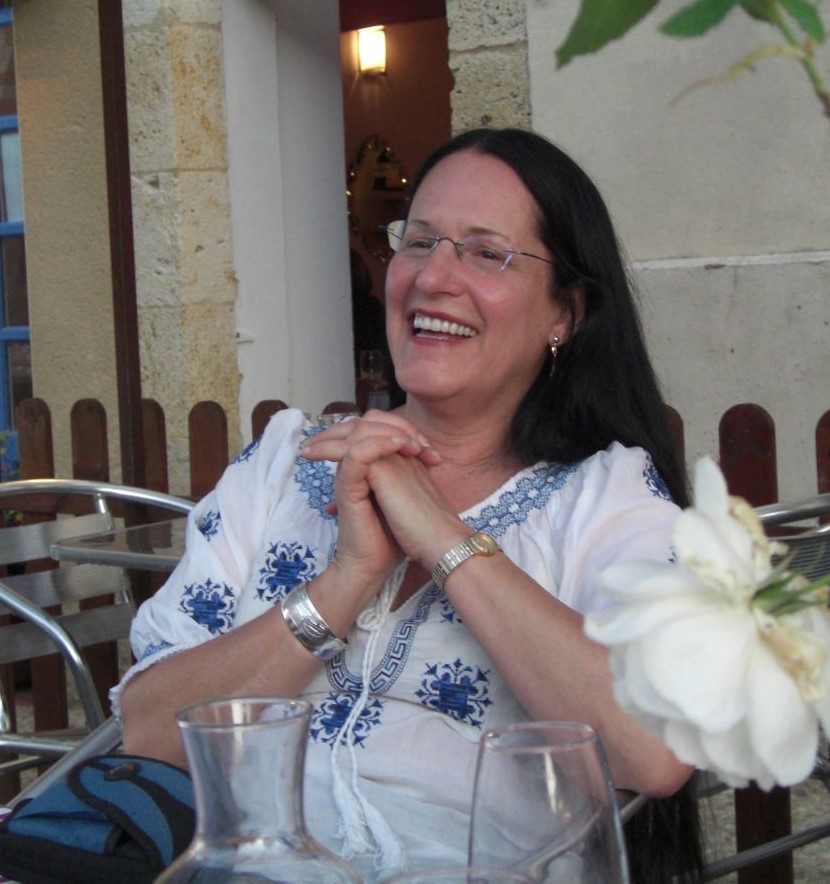
Photo Credit: Poet’s Official Website
My Poetry Corner October 2023 features the poem “Treasure” from the poetry collection Even When We Sleep (USA, 2022) by Marilyn Kallet, a poet, writer, and educator. She served two terms as Knoxville Poet Laureate from June 2018 to July 2020. The following excerpts of poems are all sourced from this collection.
Born in Montgomery, Alabama, Marilyn grew up in New York as a child. She attended Tufts University in Boston, Massachusetts, where she earned a B.A. in English and French in 1968. She also attended Sorbonne Université in Paris, France, where she received a degree in Cours de Civilisation (1967). Later, she received her M.A. (1976) and her Ph.D. (1978) in Comparative Literature from Rutgers University in New Jersey.
In her poem, “Returns,” Kallet tells us about leaving Montgomery as a child (p. 103-104):
You know my story, how
we got kicked out of Montgomery—
in my father’s version, it
was always “a miscarriage of justice,” as if justice was a bloody
baby. The big corps came after Daddy.
His watches were outselling Swiss brands,
American Merchandising must close down.
We had to scram, or the D.A. would toss
Grandma Stella in jail.
Kallet is Professor Emerita of English at the University of Tennessee, where she taught for 37 years until her retirement in 2018. From 2009 to 2018, she also hosted poetry workshops and residencies for the Virginia Center for the Creative Arts in Auvillar, France.
As a nineteen-year-old Jewish American student in Paris, she recalls in “No One” that her American schooling had not prepared her for French anti-Semitism. She learns that in September 1941, Parisians were on high alert / for sneaky Jews, and given cue cards with tips on how to recognize a Jew. We learn in the third stanza (p. 115):
The first I heard of this
was at the dinner table in Paris,
Avenue du Parc Montsouris, 1966,
when Monsieur M. laughed about the day
the Paris police arrived at his factory
“and took away the Jews.”
I was nineteen, a student boarder,
kept my mouth shut, except to eat.
“The main research project of my adult life has been about the Holocaust, and how that history connected to my family in Southwest Germany,” Kallet said during her interview with Shelby Rae Stringfield of Flyway Journal in December 2017. “The subject found me. My mother left a photo of herself with two elderly gentlemen, with the note: “The Nazis got the others.” What others? I went to the Holocaust Museum library in 2003 and started my research.”
Kallet’s latest and eighth collection of poetry, Even When We Sleep, was written during the pandemic (2020-2021). Inspiration came from hearing American cellist Yo-Yo Ma perform “Songs of Comfort” on PBS. It was March 18, 2020. He explained that at the start of the pandemic, he composed one song each day and encouraged others to do the same. Thereafter, she began writing a “comfort song” each day, keeping the project going for several months.
In her interview with Christal Rice Cooper for Art & Humanity Magazine, Kallet said, “the process of writing a daily song comforted me, deeply. I couldn’t control the pandemic, but I could control the space of the page.”
Housebound with her husband Lou, an ecologist at the University of Tennessee, Kallet opens the collection with sassy love poems, takes us to Paris, celebrates the unsung, and confronts anti-Semitism at home and abroad, ending with love and hope.
In “Housebound,” she describes her husband as my mage, my wand, / my weaver / of spells (p. 32). In her conversation with a hawk about her Seventh Grade snubs and loves in “Dismissed,” she reaffirms her love for Lou: Reader, every day / I marry / only / him. / One / long-burning / fire, one (p. 76).
The featured poem, “Treasure,” is from the third chapter “Sing the Unsung,” featuring the natural life around her that went under-appreciated before the lockdown: ragweed, mushrooms, blue jay, dogwood bark and buds, lichen, spiderwort, cucumber magnolia leaf, backyard possum, and more. In the four-stanza poem, “Treasure,” Kallet praises the fallen gold leaves of the prunus serotina tree, commonly called black cherry (pp. 96-97), untouched by the pandemic:
I search for one gold leaf—
not the kind men
crave, but a silken
teardrop, loose
leaf wish—yours,
young black cherry,
prunus serotina.
You know nothing of
human misery.
Though the leaf is cut off from the parent plant, it is not trapped in the ignorance and controversy Americans face during the Covid-19 pandemic.
Yours is not
the willful
“epistemology of ignorance,”
not a history of
bad choices and one
red-face
raging stump.
You don’t crave
words—just
sun, rain,
wind in your
leaves, and
you have all you
need. I read you,
soft and clear.
In the final two stanzas, the poet notes that the fallen leaf harms no one or seeks to enrich itself. You’re a slip of hope, / gold gleam / amid grass.
To read the complete featured poem and learn more about the work of American Poet Marilyn Kallet, go to my Poetry Corner October 2023.


A life well told
LikeLiked by 1 person
Thanks very much, Derrick 🙂
LikeLiked by 1 person
“The Nazis got the others.” — Such horror wrapped in one simple sentence… Thank you, Rosaliene, for introducing me to Knoxville poet Marilyn Kallet. I am looking forward to reading more of her work.
LikeLiked by 4 people
My pleasure, Sunnyside 🙂 Those five words do, indeed, reveal a horror story.
LikeLiked by 2 people
Thank you for introducing Kallet’s work, Rosaliene. She comes from a different background than many of the writers you feature but encounters an inherited set of prejudices so much like those from a different part of the world — her sisters and brothers of sorrow.
LikeLiked by 1 person
My pleasure, Dr. Stein 🙂 I learned about Kallet’s 2022 poetry collection while working on my featured poem in April by Joy Harjo, U.S. Poet Laureate 2019-2022. During an interview, Harjo praised Kallet’s collection. I discovered Kallet’s Jewish identity on reading her collection, never imaging what lay ahead for her Jewish “sisters and brothers of sorrow” on October 7th.
LikeLiked by 2 people
A shame we must write about the travesties of life, but the story must be told. Thanks for sharing Kallet’s works and story Rosaliene. Have a good Sunday. Allan
LikeLiked by 1 person
You’re welcome, Allan. I chose to feature Kallet’s poem “Treasure” to highlight her positive message of light and hope in our imperfect world.
LikeLiked by 1 person
She’s a thoughtful writer. You’ve brought her to wider attention.
LikeLiked by 1 person
Thanks very much, Neil 🙂
LikeLiked by 1 person
Thank you for mentioning somebody who is a victim of anti-semitism, one of the biggest prejudices in the modern world and one of the least publicised.
All racism is evil, and it’s as simple as that.
LikeLiked by 2 people
So glad that you appreciate my choice, John 🙂 When I bought Kallet’s collection earlier in June, I knew only that the poems in the collection were “falling-in-love poems,” to quote Joy Harjo, U.S. Poet Laureate 2019-2022. Amid the pandemic, the trauma of the Holocaust, and antisemitism worldwide, Kallet focuses on the gifts and beauty around us.
LikeLiked by 2 people
Thank you, Rosaliene, for focusing on another excellent poet with something to say!
LikeLiked by 1 person
My pleasure, Dave!
LikeLiked by 1 person
Rosaliene, you had mentioned before that you felt too timid to attend rallies and demonstrations, preferring instead quiet acts. It may be purely coincidence, but this week’s sorrows in Israel and Palestine are heart-rending, and perhaps showcasing a voice who is able to find beauty in a very difficult world is in itself offering a golden leaf to the world yourself?
LikeLiked by 3 people
What a beautiful and insightful observation, Tamara! Thanks very much ❤
LikeLiked by 1 person
All true!
LikeLiked by 1 person
Thank you for highlighting an interesting poet and her heartfelt poetry.
LikeLiked by 1 person
My pleasure, Mary 🙂
LikeLike
“I couldn’t control the pandemic, but I could control the space of the page.” This is true of so many things in life – there’s always something we affect or change- what we write, what say, do and think are within our control to a great extent. At least we can change our thoughts and what we focus on – the focus on a simple gold leaf, a slip of hope for example. Marilyn Kallet offers diversity in her writing about complicated experiences with depth yet offers the simple relief of nature in “Treasure.” I especially love the lines: “…and you have all you need. I read you soft and clear.”
LikeLiked by 2 people
I agree, JoAnna: The pandemic was a valuable lesson on what is within our control. Her poem “Treasure” keeps on giving new insights about what’s truly important in our lives.
LikeLiked by 1 person
Lovely. Good for Marilyn. 🙂
LikeLiked by 1 person
Thanks very much, Betsy 🙂
LikeLiked by 1 person
Your shares are rich in education and inspiration. Thank you. 🙏🏻
LikeLiked by 1 person
Thanks very much, Michele 🙂 My pleasure.
LikeLiked by 1 person
Welcome, Rosaliene. 😊
LikeLiked by 1 person
I was excited she included black cherry (Prunus serotina) in her poem. It’s one of my favorite trees in my garden. It grows well in disturbed areas and has a high wildlife value. It’s a healing tree and one that to me is the perfect symbol of resilience.
LikeLiked by 1 person
Mara, thanks so much for sharing this information about the black cherry tree. Your observation of its resilience adds yet another meaning to Kallet’s poem.
LikeLiked by 1 person
Thank you for introducing me to Marilyn Kallet. My heart hurt for her 19-year-old self at that dinner table, hearing those remarks and learning of those “cue cards.” I felt a kinship with her writing through the pandemic as that’s continued to be my refuge, too, and also our shared connection to nature. Lovely post, Rosaliene.
LikeLiked by 1 person
My pleasure, Tracy 🙂 I’m so glad that you connected with her pandemic poetry.
LikeLike
Beautiful post
LikeLiked by 2 people
Thanks very much, Satyam 🙂
LikeLike
Well written a good job in sharing in such an eloquent way.Thanks .
LikeLike
Thanks very much 🙂
LikeLiked by 1 person
I feel a new inspiration through Marilyn Kallet and Yo Yo Ma to write every day—even if it’s just for me, and I look forward to reading more of her poetry. Thanks for this spotlight, Rosaliene.
LikeLiked by 1 person
That’s wonderful, Crystal! My pleasure 🙂
LikeLiked by 1 person
Great stuff 👍
LikeLiked by 1 person
Thanks very much, Nikki. Thanks, also, for following my blog 🙂
LikeLiked by 1 person
You’re most welcome. Feel free to follow me back for the occasional post. I don’t blog much currently. Busy being a Mum. Reality wins!
LikeLiked by 1 person
Thank you for spotlighting the work and life of Marilyn Kallet, I am so pleased to continue reading her work, and so taken with her gift of unfolding such beauty within the retelling of horrifying ignorance and fear. Thank you for another treasure Rosaliene!
LikeLiked by 1 person
My pleasure, Liza 🙂
LikeLiked by 1 person