
Tags
Brazilian Poet Fabrício Carpinejar, Caixas do Sul/Rio Grande do Sul/Brazil, Contemporary Brazilian Poet, Death and the Human Condition, Poem “Ears of Dew” by Fabrício Carpinejar, Poema “Ouvidos de Orvalho” por Fabrício Carpinejar
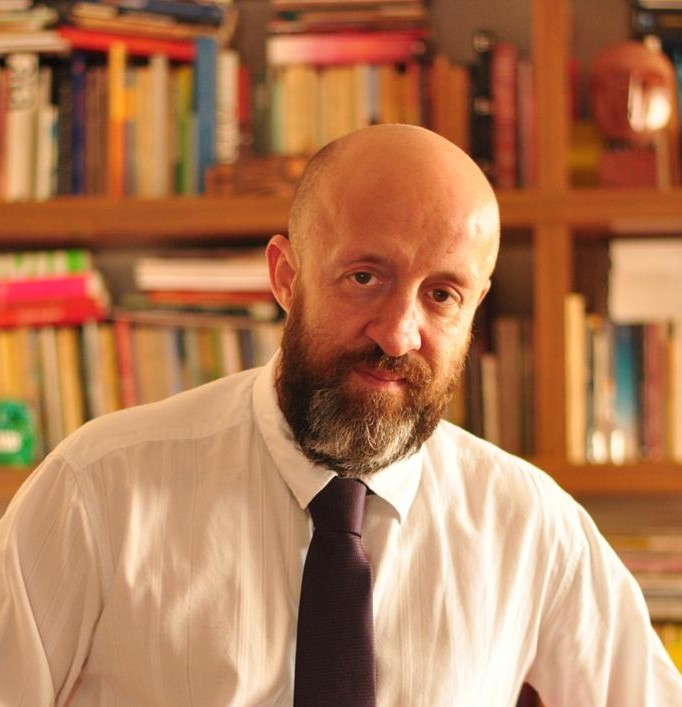
Photo Credit: Rodrigo Rocha
My Poetry Corner September 2023 features the poem “Ears of Dew” (Ouvidos de Orvalho) by Brazilian poet, writer, journalist, and columnist Fabrício Carpinejar from his award-winning 2002 poetry collection Biography of A Tree (Biografia de Uma Árvore).Born in 1972 in Caixas do Sul in Rio Grande do Sul, Brazil’s southernmost state, he is the third of four children of the poets Maria Carpi and Carlos Nejar. At nine years old, after his parents separated, he was raised by his mother.
Growing up in a home with a large library, the young Fabrício was free to explore any book that aroused his interest. “At 7 years old I was already a poet. I have always been excessively distracted,” Carpinejar told journalist Marcio Renato dos Santos during an interview for the Public Library of Paraná in August 2017. “Imagine, I am the son of two poets, so at home the language was metaphor. We spoke in metaphors, in figures of speech. I see people speaking objectively, but that’s not my idiom. I was raised in another environment. And I’ve always been a basement child, a tree child. There are children who have pets, I had a tree. A plum tree, lived in it, it was mine and no other brother could climb it. It was where I hid to cry, when I was angry, etc. This is a poetic distraction. So I’ve always been weird. And weirdness is a poetic gift.”
The blossoming poet moved to Porto Alegre, the state capital, where he studied journalism at the Federal University of Rio Grande do Sul, graduating in 1995. Upon launching his first book of poetry in 1998, he began signing his name as Carpinejar, the combination of his parents’ surnames. In 2002, following the success of his first four poetry collections, he became a master in Brazilian Literature at his alma mater.
Set in the year 2045, Carpinejar’s fourth poetry collection Biography of A Tree begins on his 73rd birthday when he settles his accounts with God. “It’s an intimate apocalypse,” he told Rogério Eduardo Alves during an interview for the Folha de S. Paulo in September 2002. “The poetry [in the collection] is the ear of the tree, the ear of the dew, the hearing of hesitations and small defeats. God does not speak; man fills his silence and squanders his name to relieve himself of his own judgment. I combat the easy idea of transcendence in Brazilian poetry. God appears in the book in the second person and always in lower case, in direct treatment, shoulder to shoulder. In the end, God is fired for just cause. To be fired is the contemporary and possible death of God, an evolution of death described by Nietzsche. To fire God is like taking away his market functionality, the productivity of his days, his guardianship over our destiny.”
The featured poem “Ears of Dew” is a free-style poem of 78 lines divided into 17 stanzas, each ranging from one to fourteen verses. The poetic persona speaks only in metaphors, making translation difficult. The two opening stanzas so captured my imagination that I accepted the challenge of transcending my physical human body and being poured into God, together with my waste (line 29).
In eternity, no one imagines oneself eternal.
Here, in this state, I think I will last
beyond my years, that I will have
another chance to get back what I didn't do.
If to forgive is to forget, the worst awaits me:
I will be forgotten when redeemed.

Don't forgive me, God. Don’t forget me.
Oblivion never returns its hostages.
The poetic persona sees his life with clarity[that] doesn’t repeat itself. He reckons with the voice com[ing] from the fire that cast [him] too soon into the ashes. During his lifetime, he risked shortcuts and unknow paths, believing that he could leave through the entrance. He admits in the sixth stanza that he was driven by fear of punishment.
My conversion is through fear,
praying on my knees before the revolver,
without turning aside,
not sure if it's a toy or real.
The wind bends in the following stanza, leaving me lost in the metaphorical meandering of the tree child’s conscience. Instead of making excuses for his actions, he chooses to withdraw in silence. In the tenth stanza, he acknowledges humanity’s failure to achieve our full potential as God’s creation, craving only the pleasures of life.
We sing in chorus like animals of the dark.
The eyelashes did not germinate.
There is a lack of planting in our mouths, vegetation in the nails,
impressions and herbs in the chest.
We plead for bass and treble, ecstasy and wonder,
composing corner with the night.
The human condition, in all its frailties, is explored in the following three stanzas: We are smoke and wax, / slime and tile, / fog and rudder. / Winter invented us. Whether we heed God’s word, we cannot escape death. In the fourteenth stanza, the poetic persona imagines his desolate fate beyond the grave.
I will be isolated and reduced,
a photograph emptied of dates.
Family members will try to decipher who I was
and what flourished from the legacy.
I would be a stranger in the portrait
with bright eyes on old paper.
He further explores the aftermath of our departure in stanzas 15 and 16 where, after death, everything can be read. There are no more secrets. Friends are recorded through newspaper obituaries. Nature’s beauty also fades like the rose [that] crumbles to the touch / in the paleness of petals and candles. In the final seventeenth stanza, he stands before his lifeless body, reluctant to let go.
There is nothing natural about natural death.
To divorce yourself from the body, to tremble on holding
the legs, to accommodate yourself in the finite
of a bed and to lie down with the tumult
that comes from an empty tomb.
The tumult… from an empty tomb suggests the tragedy of loved ones lost forever without closure: the missing, the taken, the disappeared.
To read the complete featured poem “Ears of Dew / Ouvidos de Orvalho” in English and its original Portuguese, and to learn more about Fabrício Carpinejar and his work, go to my Poetry Corner September 2023.
 Three Worlds One Vision
Thanks for all your work to bring new poets to our attention. I love how he grew up in a tree. Magical.
LikeLiked by 3 people
My pleasure, Rebecca 🙂 I also found that fascinating.
LikeLiked by 1 person
That captured my attention too, having spent a lot of time in tree tops as a child! I find it fascinating to hear that he grew up in a poetic home!
LikeLiked by 3 people
A poet with a poet mother and a poet father — wow! And Fabrício Carpinejar’s “Ears of Dew” is a powerful and pensive piece of writing, Rosaliene.
LikeLiked by 1 person
Thanks very much, Dave 🙂 What a gift! As I’m not blessed with his metaphoric idiom, I found it challenging, yet rewarding, to translate the featured poem.
LikeLiked by 1 person
This quote is amazing to me. I’m guessing that very few people ever have been raised similarly: “Imagine, I am the son of two poets, so at home the language was metaphor. We spoke in metaphors, in figures of speech. I see people speaking objectively, but that’s not my idiom. I was raised in another environment.”
LikeLiked by 1 person
Neil, I was also awestruck with his upbringing where the use of metaphors was second-nature to him. It shows in his poetry.
LikeLiked by 1 person
I always wait to read your Poetry Corner posts until I have time to savor both the poetry and your reflections. You wrote, “The tumult… from an empty tomb suggests the tragedy of loved ones lost forever without closure: the missing, the taken, the disappeared.” How timely – and true. Thank you, Rosaliene. ❤️🙏
LikeLiked by 2 people
Sunnyside, I’m happy to know that you appreciate my Poetry Corner posts 🙂 It’s a commitment I made years ago to support our poets and highlight their contribution to understanding the human condition.
The meaning of the empty tomb at the poem’s end puzzled me. After sleeping on it–Why an empty tomb?–I awoke the following morning with this insight. It may not be the poet’s intention, but I’m glad that my interpretation has resonated with you ❤
LikeLiked by 1 person
He seems to have had almost the perfect upbringing to become a poet in his adult life, although a seven year old boy who lived in his own private plum tree might be a little bit worrying for many sets of parents!
LikeLiked by 1 person
John, his submersion in the poetic language has certainly worked for him. He has received numerous awards for his work. I found his escape into a tree endearing, but recalled my own fears about my younger son’s love for climbing trees.
LikeLiked by 1 person
The Poet is good! His metaphoric description of life, death and the afterlife is absorbing.
LikeLiked by 2 people
Thanks very much, Zet Ar! I’m so glad that you’ve enjoyed his work 🙂
LikeLiked by 1 person
Such depth in your analyses suggesting you have done well with the translation
LikeLiked by 1 person
Thanks very much, Derrick 🙂
LikeLiked by 1 person
The originality of this man’s thought is breathtaking. His notion of God being fired brings to mind a story told by Ellie Wiesel about an experience in a concentration camp during WWII. He and a handful of inmates staged an impromptu trial of God on the question of his responsibility for what would come to be called the Holocaust. It was on a Friday just before sunset and the beginning of the Jewish Sabbath. They found God guilty, and then, because of the start of the Sabbath, they went to pray.
LikeLiked by 1 person
Thanks for adding your thoughts, Dr. Stein 🙂 Our love-hate relationship with God is as complicated as our relationships with our marital partners 🙂
LikeLike
I don’t have the words to express my admiration for you and the poet Fabricio Carpinejar, Rosaliene.
As I stumble along in stuttering English, the talents of others continue to impress me. Son of two poets, metaphor a family language or code, understanding the inherent poetry within nature, and writing in Portuguese, is a feat in itself. For you to take and appreciate that, and to translate and analyze for American and other audiences demonstrates an entirely separate set of talents, united at the heart and emotional levels. The image of a small child taking refuge in a plum tree is endearing.
LikeLiked by 1 person
Thanks very much, Katharine! Since I source Brazilian poets online, the process of selection is very intuitive. Though struggling with the complexity of Carpinejar’s metaphors, I knew that his vision of an older version of oneself was worth exploration. What happens at death depends on how we live our lives today and every day. Simple, eh?
LikeLiked by 1 person
Yes, and said many times in many languages over many centuries. Never often enough or deeply enough. Always worth hearing again, in different forms.
LikeLiked by 1 person
What a blessing to grow up in a home with a large library, as he did. Seems to have served him well! I enjoyed learning about this poet and reading his poetry. Outstanding! Thank you.
LikeLiked by 1 person
My pleasure, Michele 🙂 I’m so glad that you’ve enjoyed my selection. An even greater blessing these days with the growing number of banned books in school libraries.
LikeLiked by 1 person
I appreciate the time and effort you put into your posts. 🙏🏻 No doubt! 😞 Kind regards.
LikeLiked by 1 person
“It was where I hid to cry, when I was angry, etc….. So I’ve always been weird. And weirdness is a poetic gift.” His poetry is honest and feels sad which is understandable considering what’s happening to trees. I hope he still finds comfort in trees.
LikeLiked by 1 person
JoAnna, I also find his poetry honest. Perhaps, that’s why he’s so popular in Brazil. I don’t know if he still finds comfort in trees, but, based on the poems I’ve read, they seem to have played an important role in the way he sees our world.
LikeLike
Thanks for sharing this idea with these poets and so fascinating. Anita
LikeLiked by 1 person
You’re welcome, Anita. Thanks for dropping by 🙂
LikeLiked by 1 person
Interesting and thought-provoking find, Rosaliene!
LikeLiked by 1 person
Thanks very much, Betsy!
LikeLiked by 1 person
How interesting, Rosaliene that Fabrico’s parents also were poets and they spoke in metaphors. My mother thought writing was fine, but mostly, it was a waste of time. Fabrico was able to know who he was since his childhood.
LikeLiked by 1 person
Mary, Fabricio didn’t have it that easy on choosing a career. His parents and siblings all studied law and expected him to do the same. They were not happy when he chose a career in journalism.
LikeLike
Growing up with the language of metaphor. What a gift!
LikeLiked by 1 person
It sure is, Crystal! I wish I had the gift of interpretation 🙂
LikeLiked by 1 person
Wow, I never thought how being weird may be a credit to my creativity! These verses really grabbed at my heart. Such profundity. Thanks for sharing, Rosaliene. ☀️
LikeLiked by 1 person
My pleasure, Lisa 🙂 His weird comment struck me, too. So glad you could connect with his poetry ❤
LikeLiked by 1 person
I can relate to escaping to a tree to fully feel/vent my emotions. Here’s to all the creatives, young and old, making our way in this world!
LikeLiked by 1 person
Thanks for sharing, Tracy!
LikeLiked by 1 person