
Tags
British Guiana (Guyana)/South America, Dysfunctional Family, Forced Marriage, Los Angeles/Southern California/USA, motherhood, Parental Abuse, Pregnant teenagers out-of-wedlock, Trauma
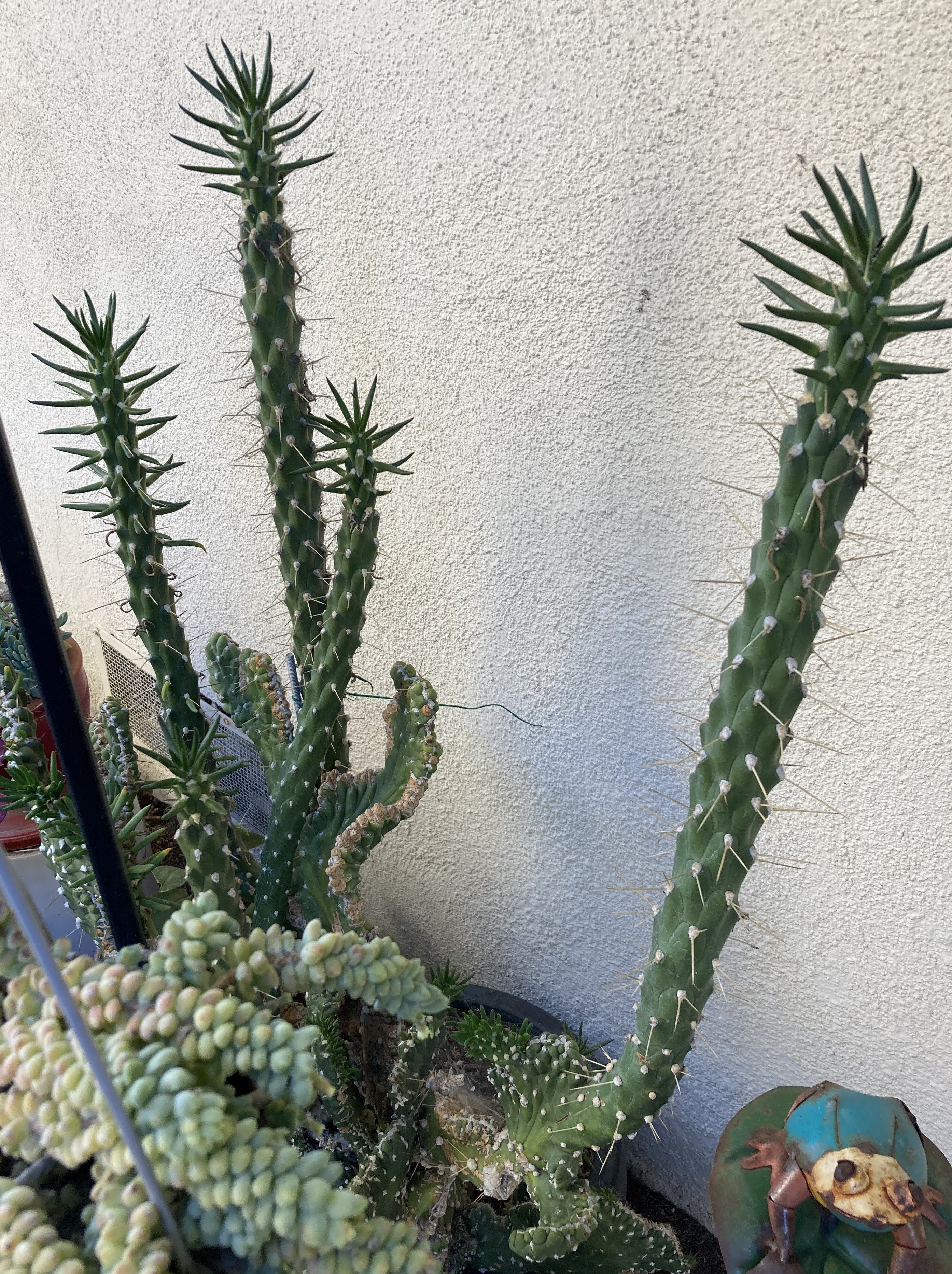
Photo taken in Rosaliene’s Garden
Chapter Three of my work in progress presents the first portrait of a woman in my life: my mother. As the most influential person in shaping my self-identity and vision of the world, I could not neglect to tell her story. Moreover, given the current reality of our lives as women in 21st century America, where conservative legislators and the women who support them have forced us back into the 1950s and 1960s, my mother’s story becomes even more relevant.
The first draft of this chapter was written in February 2017, shortly after my mother disowned me as her daughter. In revising this chapter six years later during a period of grief, following her death a year ago on August 22nd, I’ve come to realize how much of my mother’s own pain and loss I’m still carrying.
Given my closeness to the subject, I found it difficult to tell her story without bias or judgement. My objective stance faltered during the narration of intense interactions cited in the portrait. Though I know very little of her life over the thirty years of our separation, my siblings have all shared stories of the terror they had endured. Despite my questions, none of them have been forthcoming about the incident or event that unleashed her rage against them and their spouses. My turn came later, following our reunion in 2003.
The story’s time frame is not linear. Prompted by Mother’s tendency to uproot the past during our conversations, the narrative moves back and forth between our time together in Guyana and in Los Angeles, Southern California. Do let me know if you find this confusing.
Chapter Three: Mother – An Indomitable Spirit
Mother was never a hugging and kissing type of person. She could be demanding and scolded us whenever we failed her expectations. The world could be ruthless; we had to be tough. I don’t recall her giving us lashes: That was Father’s role. “Wait till your father get home,” she would say.
During the twenty years I lived under her roof, I never doubted that she loved us and wanted the best for us. After all, she dedicated all her time and energy to caring for us. Convinced that a high school education would give us a better chance of escaping poverty, she labored daily for long hours as a work-at-home seamstress. During peak periods, such as the Christmas Season and Old Year’s Night, she would even sew through the night.
As the eldest, I was the first to attend high school. From my bed on the top bunk, which I shared with my sister in our one-bedroom bottom flat in the tenement yard, I could hear Mother argue my case with Father in the dining room. Just short of three points in the high school entrance examinations, I had failed to obtain a government scholarship but had earned a place at one of our country’s top three secondary schools for girls.
“You did hear her teacher,” Mother said. “She bright. She going do well—”
“Where the rass I going get money for that? When she leave school, let her get a job at Bookers Stores. They pay good.” At the time, Father worked as a clerk, clearing imported goods at the port, for a small, family-owned, importer and wholesale fabrics firm.
“I going pay her school fees. I going take on more clients.”
And she did. Not just for me, but also for my three brothers and sister.
In those early days, I didn’t know that Mother had enjoyed a comfortable life as a kid growing up in a large house in Barbados, where her father was born, as well as in British Guiana. I also didn’t know that her parents did not keep their promise to return to then British Guiana for her and her two younger sisters. One day here in Los Angeles, while I chatted with her as she watered her flower garden, she flung the plastic watering can to the ground.
“It’s the nuns’ fault,” Mother said, raising her voice in anger. She could fly into a rage without a moment’s warning. “I had to become a Catholic to go to their school.”
Having learned not to intervene when she got into a tantrum, I waited for her explanation. “My rich aunt in Barbados would’ve let me live with her. She liked me. I was her white-skinned niece. It vexed her I had turned Catholic.”
This was the first time I had heard any mention of her black Barbadian relatives. Unlike her Portuguese mother’s side of the family, her Barbadian father’s family were of a different Christian denomination.
Mother regretted never being able to finish elementary school. The reason for this is unclear: Sending girl children to school was not a priority in the 1940s. How she fretted whenever one of us got a low grade in school!
“You want-a clean gutters on the streets,” she would ask my brothers.
She did not spare me and my sister. “You want-a clean other people house? You want-a end up like me?”
I couldn’t bear it whenever she got riled up over our poor grades. Our success in school was a top priority for her. I would lie in bed crying as she ranted, while the needle of her sewing machine pierced every word.
During my second year in high school, Mother fought with Father to leave the tenement yard for a better location.
“How you expect your daughter to bring her new friends to this mud hole?” Mother said, during yet another disagreement with Father.
“The rent too blasted high,” Father said, raising his voice above hers. “You want me to start thiefing now? You never satisfy.”
“I talk with Auntie Katie. She agree to share the rent. Is three bedrooms. She like the back bedroom next to the toilet and bathroom.”
“The two-a-you got it all figured out, eh?” He slammed his hand on the kitchen table.
Somehow, Mother won yet another battle. Auntie Katie, our next-door neighbor with whom Mother had become very close, moved with us into a modern concrete bottom flat of a two-story house, just a block away in the middle-class neighborhood of Queenstown. With Father’s volatile behavior when drunk, the arrangement with Auntie Katie lasted for just over a year. After she left, Mother and Father moved into the room she had occupied, and the middle room became Mother’s sewing room. The five of us continued sharing the largest front bedroom, adjacent to the living room.
Over the following years, Mother furnished our new home with modern furniture. She upgraded her hand-crank table model Singer sewing machine for a foot-treadle model, the latest model in the 1960s. A local furniture maker she contracted constructed a cutting table with drawers for storing her sewing materials. We got a refrigerator. She bought everything on cash installment plans as was the practice in those days.
As her sewing assistant—hemming dresses and sewing on buttons, press studs, and hooks and eyes—Mother allowed me to continue working in a corner of the sewing room when clients came with their fabrics, to try on their dress or dresses before finishing, and to have their final fit and delivery.
One of her favorite clients was a single Portuguese woman in her early twenties, just five years younger than Mother. She had a vivacious and outgoing personality. Her boisterous laughter punctuated the stories she told Mother about the latest gossip at the Department Store where she worked as an office clerk. Without taking her eyes off the needle of the sewing machine, Mother listened to her woes about her boyfriend and in dealing with the men in the office. She made no secret of wanting to catch a rich husband. She liked her dresses to hug her curves, with low necklines to show off her cleavage. To her delight, Mother’s skill at sewing bust darts made her appear much bustier.
Miss Vivacious became Mother’s first bride, increasing her workload a hundredfold. As the wedding date drew closer, Mother sewed through the night on several occasions. In addition to the bridal dress, there were also the gowns for the three bridesmaids and the bride’s mother. My sister joined me in the laborious work of securing the embroidered lace appliques, beads, and sequins of the bridal gown. The church wedding for the bride and groom, the son of a prominent Portuguese family, attracted lots of curious onlookers.
Mother’s wedding dress and those of the bridesmaids won attention and new higher-paying clients. With the added workload, Mother hired a domestic servant (as they were called at the time) to take care of our washing and ironing.
Mother’s most regular client was a Chinese woman in her late forties. She and her husband owned and operated a general store in Georgetown’s commercial district. She was always well-dressed from her salon-done hairstyle to her painted fingernails and toenails, with matching jewelry and complete makeup. Every month, she brought Mother several cuts of cloth to make four to five new outfits. She never spoke about her husband, but another client told Mother that he was having an affair with a younger woman.
From among her several clients, Mother developed an enduring friendship with these two women, even after they migrated to North America.
While Mother stressed the importance of a good high school education to secure a well-paying job, she knew that a good appearance also mattered. Skilled at cutting out dress patterns to maximize every inch of the fabric, she managed to clothe me and my sister in the latest fashion at the lowest cost. If my sister and I could marry a doctor or a lawyer, her heart’s desire would be fulfilled. She never considered that I would have a dream of my own.
“I didn’t sacrifice my life to give you a good education for you to enter the convent,” Mother told me, when, at fifteen years old, I first gave her the news about my decision.
I heard the distress in her voice. I heard her sewing machine falter along the seam of the dress trapped under the broken needle.
Without any further discussion on the matter, Mother ensured that I went to every young people’s party, dressed in the prettiest frocks to catch the eye of every male present. When I graduated from senior high school at eighteen years old, she made her intentions clear. “You have to work for at least a year before you decide about becoming a nun.”
As always, I did as she wanted. To appease her.
Years later, here in Los Angeles, she became enraged at my refusal to do her bidding.
“I would’ve made a better nun.” She hurled the words at me. “You’re too selfish. You forget all you’ve achieved is because of my hard work.” She jabbed her chest.
Now a mature woman who had raised two sons alone in Brazil, I was no longer the compliant daughter who had helped her to raise my siblings and to make her burden lighter in every way I could.
“You’re not my daughter,” she shouted on another occasion, slamming the door of her apartment in my face and triggering the security alarm she had installed. From that day on, I ceased to exist for her. Such was the nature of her wrath for failing to live up to her expectations.
When economic conditions had worsened following our country’s independence from Britain in 1966, Mother, like thousands of Guyanese, saw no future for us in the newly independent nation of Guyana. After I left home for the convent in January 1971, she began sending my siblings, one at a time, to live overseas. Two brothers first lived with an old friend in Canada. My sister lived with one of Mother’s American-born sisters in the United States.
I was still in the convent when Mother left Guyana for the United States in the late 1970s—never to return. At the time, my youngest brother, who held a well-paying job at the local branch of an American bank, remained behind with Father. His immigration papers to America arrived years later in the early 1980s.
When Mother filed for divorce, her American lawyer mailed me the documents to serve Father. His anger left me with a migraine headache that lasted for three days. Their marriage had not been one based on love and mutual respect. Rather, it was one of expedience prompted by the societal Christian norms of the time for pregnant teenagers out-of-wedlock.
To outsiders, Mother and Father had seemed well paired. They were similar in height, about five feet six inches. They were both of mixed race and ethnicity. Neither were churchgoers. She was not a beauty, but her white complexion and pear-shaped body with shapely legs attracted the attention of men. He was a handsome man with a muscular physique from weightlifting. Both enjoyed dancing. But Mother had such an indomitable spirit that Father had no chance of conquering her heart, if he ever considered such a possibility. During the years I lived with him after leaving the convent, several women showed an interest in having a closer connection. Yet, he never dated or married again. Neither did Mother.
When we were kids, they went to dances and the cinema with friends. This changed over the years as Mother had little time for recreational activities. Father, whose life centered around his numerous friends, always had friends over at the weekend for drinks, eats, and card games. These became more lavish when we moved to the Queenstown flat that had a large backyard. For several years until Mother ended it with her persistent complaints, he organized a monthly barbecue on Saturday nights with music and dancing. My siblings and I had to help with the preparations and clean-up.
As early as I can remember, they argued about everything: money, Father’s drinking, his no-good friends, putting his friends before his children, his lack of ambition, her endless demands, her extravagant taste, and more money issues.
When I migrated to Brazil in 1987, Father was left alone in Guyana. He passed away in 2001. Still, until her death in 2022, Mother remained chained to his corpse, unleashing her fury and emotional pain on each of her children and their spouses. My sons, too, received an earful of hate about their “good-for-nothing father,” making it difficult for them to connect with her as their grandmother.
“He robbed me of my youth,” she told me one day outside her apartment in Los Angeles, furious at me for forgiving him. “Let me tell you what kind of man he really was.” She poked her forefinger in my face.
“I don’t want to know,” I told her, backing off. “It’s all in the past and long forgiven. You should forgive him, too.”
“Over my dead body!”
She flounced off, leaving me standing alone in the courtyard.
 Three Worlds One Vision
The topic of parents will probably never let us go completely. Some of what you write about happened to me in a similar way. I also distanced myself from my parents. But today I know how much they sacrificed for their children and I’m not sure if I could ever have done that. Sometimes I’m a bit ashamed of my dissociated attitude, which I’m sure they suffered from.
LikeLiked by 1 person
Thanks for sharing, Friedrich. All families have their differences, some worse than others. Being a parent comes with a lot of responsibility and sacrifices. It should be a choice.
LikeLiked by 1 person
All we can do is always try to do our best. Whether that was good enough usually only becomes clear much later.
LikeLiked by 1 person
I agree, Friedrich. We all survived those difficult years and my siblings and I became successful in our chosen professions. I guess what I did was good enough.
LikeLiked by 1 person
I am sure you did!
LikeLiked by 1 person
Painful as this it is beautifully written in flowing prose.” While the needle of her sewing machine pierced every word” is such a telling phrase..
LikeLiked by 3 people
Thanks very much, Derrick 🙂
LikeLiked by 1 person
Your mom and you had difficult lives. I feel sad that she was so hard on you, but I guess it was her way. Thanks for sharing this personal story. Maggie
LikeLiked by 2 people
Thanks for reading, Maggie 🙂 Those were difficult days, but, we both survived.
LikeLiked by 1 person
I feel for you, it was difficult. Sometimes the control comes from their lack of control.
LikeLiked by 1 person
Thank you very much, Diana 🙂 We also grow stronger.
LikeLiked by 1 person
We do ❤
LikeLiked by 1 person
It is courageous of you to write these painful histories & present them to us, your readers! In every life there is light & dark. Bless you, dear Rosaliene! 💓🌹🙋♂️
LikeLiked by 1 person
Thank you very much, Ashley ❤ I write for the majority of women worldwide who are dispensable, invisible, and voiceless.
LikeLiked by 1 person
Excellent, emotionally wrenching writing, Rosaliene. Family dynamics can be so painful.
LikeLiked by 1 person
Thank you very much, Dave 🙂 Your positive feedback means a lot, given your extensive literary background.
LikeLiked by 1 person
Rosaliene,
I have to respect, and even like, your mother, for her strong will and dedication to her family. It sounds as though she raised five children. You also had a father who was present, even if he drank, and he complemented your mother in ways maybe no one recognized at the time.
She must have been quite a seamstress and quite industrious, if she outfitted five fast-growing children, as well as a dedicated clientele. When did she have time to eat?
She did some things right, to have inspired and nurtured gifts you didn’t know you had.
As always, your stories intrigue me.
LikeLiked by 1 person
Katharine, thanks very much for sharing your insights ❤ I'm so glad that you find my stories intriguing.
My mother was well liked by our friends and clients. They saw only her kind and engaging personality. She was very talented as a seamstress and would've done well if she had gotten into fashion design here in America.
I came to appreciate my father during my adult years. Without my mother in his life, he became calm and was no longer abusive towards me.
LikeLiked by 1 person
A bittersweet ending, after all. I’m sure everyone has or had regrets, but there were good times, too.
LikeLiked by 1 person
Yes, there were good times, too.
LikeLiked by 1 person
You are such a good writer, Rosaliene! Although your relationship with your mother was painful in some ways, she was also a role model of strength and determination. I relate strongly to how your mother projected her own disappointments and frustrations about life onto her children (and particularly her eldest). I’m sending you a heartfelt hug.
LikeLiked by 2 people
Susan, thank you very much for your kind compliment and for your heartfelt hug ❤ I miss hugs. Since the pandemic, we've stopped hugging each other.
Without a doubt, she was a role model of strength and determination, qualities that helped me to raise my sons alone in Brazil.
LikeLike
A good story indeed Rosaliene. Many parents have a tough time letting their kids be kids or follow their own path. They always want their kid’s lives to be better than theirs and sometimes they have unorthodox ways of achieving that. We never told our kids what schooling to take or what career path to follow. We just told them to choose a career they would love and that would challenge them and allow them to live a balanced life. We supported them the best we could in their choices. My Mom was always my greatest champion and my Dad who always worked so hard pushed me off the farm for a better life. They were not perfect, but they did their best. It is a shame they both left this world so young. Have a good Sunday. Allan
LikeLiked by 1 person
So glad you like my story, Allan 🙂 Your feedback is much appreciated.
Thanks for sharing your own experience with your parents and as a parent yourself. I’ve also allowed my sons to choose their own career paths and support them in whatever way I can. Though we continue to live in close proximity, I have my own interests and writing career that occupy my time.
LikeLiked by 1 person
Your mother was given a gift with her sewing. So sad that bitterness developed over the years, sad for all of you. That’s why forgiving and moving on helps bring us happiness. The memory from the painful experience doesn’t go away at first, but when we forgive the ones who have hurt our hearts, that gives us a new day to start over, to make new memories from that moment on. If all works out well, the old hurt from the past will become smaller and smaller in our memory banks because we are filling our souls up with new healthier memories to replace the old hurtful ones. Imagine if more people did this. Everyone talks about how impossible it is to forgive and also forget. The forgiving part is easy enough but…”They will never forget” and that there says a lot. Says forgiveness hasn’t really happened yet. If someone has truly forgiven then they can hug it out and from that moment on only spend time together healing from the past through love and kindness for each other. Unfortunately it takes two for this to happen. Sometimes the one who has forgiven is not able to make happy memories with the one who has harmed…so all they can do is make sure their own hearts don’t become harden and filled with bitterness. The only way I have discovered to do that is to forgive someone in order to move on, and love from a distance. And to always pray for the ones who have hurt you…pray they change their ways and they find happiness and peace eventually. Thank you for sharing your story. I enjoyed reading it.
LikeLiked by 2 people
I’m glad that you’ve enjoyed reading my mother’s story 🙂 I agree that forgiveness is essential if we are to move on with our lives. Learning to forgive my father, mother, and ex-husband took time and brought me inner peace. To forget the harm done is another matter. In my experience, as occurred with my mother and ex, I opened myself to further abuse. As you have also discovered, it’s best to distance oneself and love from a distance.
LikeLike
I liked to know about your mother, she was a brave and courageous woman and every mother in the world is brave. I am also living a very difficult life because when I changed my old religion and accepted Christ, only my mother maintained a relationship with me and all the remaining people are enemies on my side to this day. On your behalf, I salute your great mother and thank you for sharing this story of your life with us and teaching us to move forward with courage and patience. Thank you very much.
LikeLiked by 1 person
Annaya, thanks very much for sharing your story. I’m so glad that my mother’s bravery and courage shine through. Our choices in life can have catastrophic consequences for our relationships with family members. Dealing with the loss and pain is not easy. Hold fast to your belief in the power of the love of Jesus. He will see you through. Blessings ❤
LikeLiked by 1 person
Your mother really cared about your education but she had a temper. She seemed disappointed with how her life turned out. I don’t think it mattered much that the story was jumping between Guyana, Brazil and Los Angeles. The story was about family relations, not a travel log. However, a one sentence explanation of when you were where, just to get a timeline, at the beginning of the story wouldn’t hurt. It was a very fascinating story and so candid and genuine. I loved it. It will become a very good book.
LikeLiked by 1 person
Thomas, I’m glad that you love the story 🙂 Thanks for the feedback and the tip about the timeline.
LikeLiked by 1 person
My dear Rosaliene, thank you for sharing your mother’s story. Though we grew up in different places, there are universal themes in your writing that never fail to connect with my own life and that of my mother and grandmother. Processing your own family relationships in writing can be brutal – but also healing and well worth your hard work. I look forward to more, as always. ❤️
LikeLiked by 2 people
Sunnyside, thanks very much for your kind words ❤ It's great to know that you can connect with the universal themes in my stories 🙂
LikeLiked by 1 person
You’re a strong person. That comes through clearly in your writings.
LikeLiked by 1 person
Thanks very much, Neil 🙂 I owe that to my mother.
LikeLiked by 1 person
Remarkable, Rosaliene. One of the best pieces you’ve done. Well organized and frank without being unforgiving. Her rage is present, as well as reasons for it that had many sources. I have always thought of you as brave, strong-willed, and committed to making the world a better place. Now I know more of the backstory. Thank you.
LikeLiked by 1 person
Thanks very much for your feedback, Dr. Stein 🙂 That you consider my mother’s portrait remarkable means a lot ❤ I've come to appreciate that I learned to be strong and resilient in witnessing and sharing my mother's struggle. I explore my commitment to making the world a better place in later chapters: "My Secret Love" and "The Making of a Christian Socialist."
LikeLiked by 1 person
I will look forward to it.
LikeLiked by 1 person
Rosaliene, thank you for your honesty and forthright writing on challenging family topics. I followed the time changes without confusion. I like how the sewing machine is a central rhythm to the story. Look forward to the completed work!
LikeLiked by 1 person
Rebecca, thanks for the feedback. Writing creative non-fiction is a new challenge for me. So glad to know that I’m doing something right 🙂
LikeLiked by 1 person
You have built up the narrative skill with your fiction and are putting it to good use.
LikeLiked by 1 person
I enjoyed reading about your childhood and family, Rosaliene. It’s fascinating to learn what we do with our unique stew of experiences. From my perspective, it appears that your mother had depth, unresolved conflicts, and deep passions. Her intentions seemed to be in her family’s best interest but resentment, frustration, and fatigue got in the way of showing her love. Do I understand this correctly?
LikeLiked by 1 person
Mary, I’m glad that you’ve enjoyed reading my mother’s story 🙂 Your insights of her characters are spot on! It’s interesting that you should mention her fatigue. Looking back now, I don’t know where she got all that stamina and energy to carry such a heavy workload for so many years.
LikeLiked by 1 person
It’s so hard to write about our parents, especially our mothers. Yet you’ve done this well. I don’t find it confusing. One part that stands out to me is, “I heard the distress in her voice. I heard her sewing machine falter along the seam of the dress trapped under the broken needle.” It makes her human. Her pointing finger reminds me of the sewing machine needle which is usually strong and sharp. It’s also important that, in spite of her harshness, you never doubted that she loved you and wanted the best for you. I’d love to know a little more after “As always, I did as she wanted. To appease her,” more about the year you had to wait to join the convent and your relationship with her, during that time, before moving on to “Years later in LA.” Your mother was certainly a strong woman who cared deeply in her own way. She gave birth to a strong first-born daughter.
LikeLiked by 1 person
Thank you very much for your feedback, JoAnna. When writing about each woman, I’ve tried to focus more on them and limit my interactions only to the essential. “Chapter 9: The World of Men in Finance” is dedicated to my experience of dealing with men in the workplace during the year before entering the convent and what my mother did to control the situation. There’s also “Chapter 8: My Secret Love” that covers this period, including my father’s scheme to get me interested in one of his young friends. Perhaps, I should consider re-arranging these two chapters.
LikeLiked by 1 person
Or you could just give a hint of the future chapters, as in…. I would later learn….. or my mother would later…… or just leave it as is. I’m looking forward to reading your book.
LikeLiked by 1 person
Great suggestion, JoAnna. Thanks.
LikeLiked by 1 person
You’re very welcome!
LikeLiked by 1 person
“Mother was never a hugging and kissing type of person”…and neither was mine. I have always thought that our family life would have gone a lot, lot better with a little bit of genuine affection expressed between us all.
LikeLiked by 1 person
John, thanks for sharing. After experiencing the warmth of the Irish nuns in the convent, I came to the conclusion that not showing affection was an English trait. It took me some time to get used to the Brazilian way of greeting each other with hugs and kisses. Showing genuine affection within the family, as I learned to do with my sons in Brazil, does make a great difference, especially when things get tough.
LikeLiked by 1 person
You are such a brilliant writer Rosaliene Bacchus! Despite the painful experience you’ve come across, I really enjoyed your style of writing, e.g., “mother remained chained to his corpse”, and the humour “I didn’t sacrifice my life to give you a good education for you to enter the convent” (I couldn’t help laughing). With all being said about your mother, I think she’s a brave woman who also wanted her children to be brave like her. Just like any parent, she also wished best for her children. I also like the fact that you understood what prompted your mother’s behaviour.
LikeLiked by 1 person
Zet Ar, thanks very much for your kind praise and insights! It’s good to know that her bravery shone bright in my portrait of her 🙂 I’m so glad that you found humor in my mother’s response, but it was no laughing matter for her. I’m not good at adding humor to my stories. Whenever I succeed, it’s by accident.
LikeLiked by 1 person
Great story and well written! Your mom was really something! She reminds me of my grandma who worked at a coat factory in Scranton, PA. I love the descriptions of your mom making clothes and wanting you to look good so you could catch a man. So sad she had so much anger and pushed you away later in life.
LikeLiked by 1 person
Thanks very much, Mara! Perhaps, she thought I would catch a man like her client, Miss Vivacious 🙂
LikeLiked by 1 person
This is very moving, Rosaliene. I’m sorry to learn that you were estranged from your mother. Family relationships are intense and shape who we are. I think what comes through in your writing is that your mother cared deeply for you and your siblings and only wanted to give you a chance at a better life, as hers was so hard. You’ve shown her human sides, parts we all have.
LikeLiked by 1 person
Barbara, thanks for reading and for your feedback 🙂 It’s good to know that I’ve succeeded in revealing her humanity and her strength. She was the best mother she could be and that’s what counts in the end.
LikeLiked by 1 person
You’re right – that’s what counts in the end 😊
LikeLiked by 1 person
Rosaliene, your writing is superb, rivetting and beautiful. It is not at all confusing, rather you capture the various places brilliantly. My heart breaks for you, the pain you endured. At the same time, your words convey the exceptional and formidable nature of your mother and her absolute drive for your education. The ferocity of the verbal exchanges is incredibly relayed and in between are the light and descriptive touches of your situation. I love this line: ‘I would lie in bed crying as she ranted, while the needle of her sewing machine pierced every word.’
LikeLiked by 1 person
Thank you very much for your feedback, Annika! She was, indeed, a formidable woman, up to the very end of her life. It’s always a blessing as a writer to learn what one is doing right 🙂
LikeLiked by 1 person
This is wonderful, moving, all good adjectives.
LikeLiked by 1 person
Thanks very much, Don ❤
LikeLiked by 1 person
Hi Rosaliene! You do an excellent job with this character driven story. The settings could almost be their own characters. What else can you say about Guyana and Los Angeles? I would like to visualize these places. I’m also curious about what it means to “unleash her fury.” I hope these ideas help with future revisions. I understand the difficulty and pain involved in telling true stories. ❤️
LikeLiked by 1 person
Crystal, thanks very much for your feedback! I’ve noted your suggestions about Los Angeles and “unleash her fury” for my next revision. As a writer yourself, you know well the endless revisions necessary during the creative process 🙂
With regards to Guyana–then British Guiana until independence on 05/26/1966–I’ve set the stage for the featured portraits of Guyanese women in the preceding chapters:
~ Chapter One: Severed Roots – Published on my blog dated 05/28/23
~ Chapter Two: The Violence of Men – Published on my blog dated 07/30/23
LikeLike
You’re welcome. Good luck, Rosaliene!
LikeLiked by 1 person
Thanks!
LikeLiked by 1 person