
Tags
Bookers Guyana, Caribbean poet Ian McDonald, Georgetown/Guyana, Guyana Sugar Corporation (GuySuCo), Old Age, Poem “Betty” by Ian McDonald, Sugarcane Workers, Trinidad/Caribbean Island
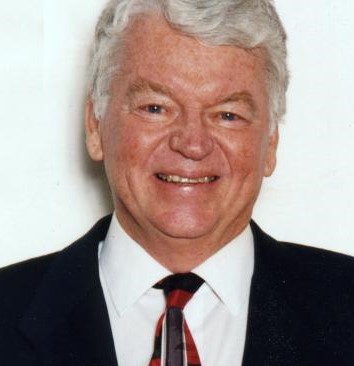
Photo Credit: Peepal Tree Press Ltd.
My Poetry Corner August 2023 features the poem “Betty” by Ian McDonald from his poetry collection New and Collected Poems 1957-2017 (UK, 2018). Born in the Caribbean Island of Trinidad in 1933, Ian McDonald is a poet, novelist, dramatist, and non-fiction writer. After moving to then British Guiana in 1955, he made his home there until his eighties when he migrated to Canada to be close to his children and grandchildren.
Born into a white family of power and privilege, the young Ian fell in love with literature and writing as a schoolboy. In 1955, after graduating from Cambridge University in England with a Bachelor of Arts Honors Degree in History, he began working with Bookers Ltd., then owners of the British Guiana sugar estates/plantations, where he rose to the position of Director of Marketing & Administration. When the company was nationalized in 1976, McDonald remained as the Administrative Director of the newly formed Guyana Sugar Corporation (GuySuCo) until his retirement in 1999. Following his retirement, he spent the next eight years (2000-2007) as the CEO of the Sugar Association of the Caribbean, located in Georgetown, Guyana.
McDonald’s contributions to the development and promotion of Guyanese and Caribbean literature, theater, and sports are impressive and memorable. How did he ever find time to write poetry? In an article “A Love of Poetry” for the Guyana Chronicle in September 2014, he said of his writing process: “Occasionally a poem emerges in the consciousness fully formed and can be dislodged from there onto paper with a shake of the pen. Mostly what occurs is a sense of something needing to be said, a couple of lines in the head, perhaps just a phrase, and the accumulation of a poem begins and goes on with many fits and starts and adjustments, abandonments and reformulations….”
His latest 445-page volume of poems, New and Collected Poems 1957-2017, released at 85 years old, is a legacy of sixty years of recording the expansiveness of his life’s experiences in poetic verse. His love for Guyana’s diverse landscapes, its peoples, and culture is evident throughout the collection. What’s more, he brings to our attention the ordinary and commonplace that often go unnoticed in our day-to-day interactions with others. With poetic sensibility and compassion, he memorializes the stories of simple men and women.
In “Gribba” (p. 380), the poet remembers an old man from his youth:
Old and bent by his work, he never missed a day,
they said. Thirty years stacking sugar bags
high as his head takes strength. I was the soft
white boy giving out prizes for tasks
I could never do. I reward him now by remembering.
I see his eyes undimmed, fearing no one,
feel his iron-strong handshake,
do not forget this measurement of worth.
Another old man, in the poem “Reward” (p. 366), expresses his gratitude by offering McDonald what must’ve been the man’s most treasured possession. Such is the measure of a simple man.
He had asked to see me in my big office,
the old man, white beard neatly trimmed.
From its green velvet pouch, he put
the gold sovereign reverently in my hand.
It felt quite heavy in my palm. In formal
ceremony it had been given him by
a governor for loyalty in long service
to the Crown. He wanted me to have it –
a reward for getting his only grandson
work in the office, where he had to wear
a tie….
The poet also reflects on aging and his own mortality. In “My Body Which I Still Love” (p. 423), he has become an old man.
I never used to examine my body when it was good,
admire it, yes, regularly – that was different.
Now, saggy at the throat, bags beneath the eyes so sad,
not a day passes I don’t check with sad distaste
some new blood mark, pain spot, muscle ache.
[…]
Can one delay this dilapidation? If I walk or run,
will half of youth’s easy spring return?
I know, of course, it won’t, but it may buy time,
fend off old age, which ends how old age always ends.
The featured short poem, “Betty” (p. 299), is from McDonald’s poetry collection River Dancer (2016). Though he does not state the old woman’s ethnicity, the name Betty indicates that she is East Indian. Beti (pronounced betty) is the Hindu word for daughter. In Guyana, the East Indian rural population also refers to any girl or young woman as beti.
Betty’s story lodges deep within my rib cage. McDonald must have met the former sugarcane laborer sometime during the 35 years he was a committee member of the Sugar Industry Labor Welfare Fund, established in 1947 to provide land and housing, water supply, and welfare facilities for sugar workers.
The most terrible conversation I ever had
the one that hurt my heart the most
an old woman from a rundown logie
visited to get details for estate resettlement.
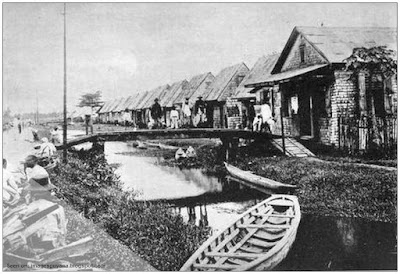
Photo Credit: ImagesGuyana Blogspot
On sugar estates across the coastlands in 1947, 1,247 logies or ranges housed sugarcane laborers and their extended families. Some of them, dating back to the days of slavery, were far more decrepit than the stables for mules used on the plantation. With the construction of some 10,785 houses between 1951 and 1964, only 30 logies remained standing by 1971. Convincing Betty to relocate to a new housing unit fell to McDonald.
Her eyes were filmed with sickness
said her life was nothing to her
said all women’s lives were as nothing.
No one had been pleased when she was born.
Boys were princes. Always she was hiding in corners
hiding her face, hiding. She had tried to help
by working hard. One time only she knew
some happiness. A man come and take she
to marry, and she belong to him and she
get to love him and for a while she was
a flower in his sun, but he find someone else.
In using broken English, the poet draws us into his conversation with Betty. Hardened by life as a sugarcane worker, abandoned by her family and forgotten by society, she has accepted her lot in life. The prospect of a new home holds no enticement for her. Her husband and son had put her with old women in this place. It was / what she knew; she didn’t want to move.
To read the featured poem “Betty” and learn more about the work of Ian McDonald, go to my Poetry Corner August 2023.
 Three Worlds One Vision
Betty is a heartbreaking poem, thanks for introducing his poetry. I feel like I’ve heard an interview with him before, the details of his life sound familiar, but I’d never have remembered it. Maggie
LikeLiked by 3 people
Thanks for reading, Maggie 🙂 It’s possible you may have heard of him in Canada. He’s well known among the Caribbean community in Canada.
LikeLiked by 1 person
I feel like I heard of him when I lived in Canada. These poems, particularly that of Betty showed someone who saw and observed. Many elite white people observed, but didn’t do anything to improve or to change the lives of workers. “Poor blighters!” they’d say, shake their heads and walk away.
Thank you for sharing not only poetry, but a view back on how life was.
LikeLiked by 1 person
My pleasure, Tamara 🙂 Agricultural workers in the sugar industry in Guyana continue to face low wages and poor working conditions.
LikeLiked by 1 person
I’m sorry to hear that is still true, but sadly I guess I shouldn’t be surprised.
LikeLiked by 1 person
Superb. Very much of a different place than most of what I read and more touching because of that. A world most of us in the USA pretend doesn’t exist, never existed. Thank you, Rosaliene.
LikeLiked by 2 people
My pleasure, Dr. Stein 🙂 Poetry can offer us a wonderful gateway into different lives and cultures.
LikeLike
Fascinating post, Rosaliene, about a person of privilege who wrote insightful, compassionate poetry.
LikeLiked by 2 people
Thanks very much, Dave 🙂
LikeLiked by 1 person
Oh, how I could relate to “My body which I still love.” Aging is a different kind of puzzle, it does require the special kind of love he is talking about. “Betty” was a heartbreak in words.
LikeLiked by 3 people
Bridget, I can also relate to his thoughts about our aging bodies. We do our best to remain healthy and active 🙂
LikeLiked by 1 person
As an aging octogenarian, I love “My Body Which I Still Love,” but I don’t love my body which I still have. Still, a grave-bound body beats the worm-bait body it will too-soon be (but not if it were up to me).
LikeLiked by 2 people
I cannot deny that, MisterMuse: Our aging body may be a sorry sight but it could still be vibrant with energy and your wit 🙂
LikeLiked by 1 person
The humility of the man shines through
LikeLiked by 2 people
It does, indeed, Derrick.
LikeLiked by 1 person
I really enjoyed reading (about) Ian McDonald’s poetry. It makes me wonder if all of his poetry was about people? He is a masterful portrait painter with words. Being a woman also, “Betty” is heart wrenching. And although many years off yet from Mr. McDonald’s 90, I found I could also relate to “My Body Which I Still Love”. (It’s a good warning bell to resist too much preoccupation, and yes, to keep exercising.) 😉
LikeLiked by 2 people
Susan, I’m also impressed with his mastery at bringing characters to life with words. And with so few words, too!
People fascinate him, for sure, but he also writes about love, relationships, and nature. I cite below the closing verses of “Forest Path, Nightfall” (pp 161-162), inspired during a walk along a forest path “cut last month to open up new timber…”
In this immense god-theatre, night after night brings on
a sense of never-ending mystery vast as time
that swallows man, all his art and legends.
You cannot walk in great forests without diminishment.
LikeLiked by 1 person
What an interesting man! He must be just about as different as you could get from 99% of the poets you have featured over the years.
I wonder why he was so very different. I can’t imagine that he was like very many of the other white men he came into contact with during the course of his daily business.
LikeLiked by 2 people
John, I’m so glad that you find McDonald interesting 🙂 What probably makes him different is that he’s a white man of British ancestry, born and raised in the Caribbean who considers himself a “Caribbean Man.” His success at Bookers Guyana suggests that he got on well with the British-born white men with whom he worked.
True, I’ve never featured a poet from the corporate world. Joao Cabral de Melo, featured in January 2014, was a Brazilian career foreign diplomat. Pedro Tierra, featured in February 2016, was a Brazilian politician and founding member of Brazil’s leftist Workers Party (PT).
LikeLiked by 2 people
I like his way with words. He brings things to life.
LikeLiked by 2 people
Neil, I’m glad that you like McDonald’s way with words 🙂
LikeLiked by 1 person
Intriguing that he’s a poet. His career doesn’t exactly scream “poet.” Interesting.
LikeLiked by 2 people
I know, Betsy! Perhaps, his career in Guyana’s sugar industry exposed him to a different world of immense inequality, changing his view of people and society.
LikeLiked by 1 person
That sounds like a good theory, Rosaliene.
LikeLiked by 1 person
“No one was pleased when she was born.” How sad. Every child is a gift from God and should be appreciated.
LikeLiked by 2 people
I agree, Mary. There are still many countries and cultures where a girl child is not a blessing but a burden.
LikeLike
Great article. At http://www.MiddleRoadPublishers.ca we have had the privilege and honour of publishing two books of poetry by Ian McDonald. The first was Mary’s Garden which is a tribute to his wife and the second The Garden about her garden. Ian is still writing and is working on an expanded edition of the latter. He spends time here in CANADA and winters in his beloved Guyana.
LikeLiked by 2 people
Thanks very much, Ken 🙂 Still writing at ninety! What an inspiration!
LikeLike
WOW Rosaliene, I was not familiar with Ian McDonald or his work. His poem about “Betty” is so heart-wrenching and painful, yet the events surrounding her life is one we have witnessed in times past. Boys were definitely more revered than girls. Thanks so much for sharing his story and his poetry my friend. 😊🙏🏼🤗
LikeLiked by 2 people
Check out his last two books of poems: Mary’s Garden and The Garden, published by http://www.middleroadpublishers.ca an available on amazon
LikeLiked by 1 person
Thanks so much for sharing this Ken! 😊
LikeLike
My pleasure, Kym 🙂 In some countries and cultures, boys are still more revered than girls.
LikeLiked by 1 person
Oh Rosaliene I know girl. It is so sad isn’t it? This is one of the reasons why I love the bravery and advocacy of Malala Yousafzai. I appreciate how she stands up for educating girls, and after reading her book, I love the way her father supports her mission, which is not a common or acceptable thing seen in her country. I appreciate you chiming in my friend. Thank you. 🥰🙏🏼😘
LikeLiked by 1 person
❤
LikeLiked by 1 person
🤗💖😍
LikeLiked by 1 person
What a fascinating post, Rosaliene! Ian McDonald writes with heartfelt empathy. The poem, “Betty,” tells a tragic life story, but it is told with beauty and simplicity. The poet does not tell us what to think or feel but skillfully leads us to our own response.
LikeLiked by 2 people
Thanks very much, Cheryl 🙂 I’m so glad that you, too, can appreciate his skill at storytelling.
LikeLiked by 1 person
I enjoyed reading his poetry. Thank you for the introduction.
LikeLiked by 2 people
You’re welcome, Michele 🙂 Thanks for reading.
LikeLiked by 1 person
Intriguing insights and diversity. Ian McDonald must have been a very interesting man. That his latest 445-page volume of poems, his legacy, was released at 85 years old, is encouraging! It’s never too late!
LikeLiked by 2 people
Thanks very much, JoAnna. Only about 100 pages of the volume were new poems. The majority were poems from six books of previously published poetry collections.
LikeLiked by 1 person
Wow, hundreds of pages of poetry?! Impressive. All of the verses you shared here are meaningful, Rosaliene, but the last one really grabbed my heart. How much better the world would be if all Directors of large corporations showed this type of compassion. 🌞
LikeLiked by 2 people
Lisa, it is, indeed, quite an impressive body of work. I see this collection as his legacy to the people of Guyana. Compassion in a world that puts profits before the people would be revolutionary.
LikeLiked by 2 people
🙏🙏🙏
LikeLiked by 1 person