
Tags
Awkward Grace: Poems by Mark Tulin, Homelessness in Santa Barbara/California, Poem “Broken Strings” by Mark Tulin, Psychotherapist Poet, Schizophrenic Mother
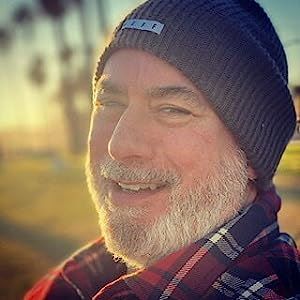
Photo Credit: Amazon Author Page
My Poetry Corner July 2023 features the poem “Broken Strings” from the poetry collection Awkward Grace: Poems (USA, 2019) by Mark Tulin, a poet, humorist, and short-story writer. The following excerpts of poems are all sourced from this collection.
Born in Philadelphia, Pennsylvania, he attended the Pennsylvania State University where he studied psychotherapy, specializing in family and sex therapy. In 2012, after practicing for over thirty years as a marriage and family therapist, he moved to Santa Barbara, Southern California. Today, he lives with his second wife, Alice, in Long Beach.
An only child, Tulin began writing poems as a teenager to cope with asthma and a dysfunctional family. His father, a fruit store owner, was charming, sociable, and rational. His mother was an independent-minded schizophrenic who “talked to herself and rarely filtered her words.” Because of his mother, he studied psychology and became a psychotherapist. “If I couldn’t fix my parents, I might be able to heal a family of strangers,” says Tulin in his author bio on Medium.
While living in Santa Barbara, Tulin developed an empathy for the city’s homeless people and fascination with their survival skills. Always seeing people’s flaws too clearly, / I have the psychotherapist / disease, he confesses in his poem “Therapist Disease.” Their lives inspired his second chapbook of poetry, Awkward Grace, in which he gives voice to each character in the third- or first-person. Despite their flaws, the poet treats each persona with sensibility and compassion.
“I hate it when they are talked to like children, harassed by the police or shop owners, and how people assume that all of them use drugs,” Tulin says during his interview with Spillwords Press in December 2019.
The poetic persona in “Our Familiar Spot” uses the first-person plural: We line up at church doors… We forage for food… We avoid men / who step on our pride, / threaten to encage us / in homeless shelters, / restrict our movement / to the fringes of the city. // But we always come back / to our familiar spot / and we never run away….
In the cool of the early morning fog, before tenants wake up to give him their disapproving stares, the dumpster forager in “Bountiful Treasures” hopes to find something precious… that would give him an identity. // It doesn’t have to be brand new. The following excerpt include verses one and three of the six-verse poem:
He smiles when he opens the dumpster lid.
He admires all of its bountiful treasures,
rich with hidden secrets,
tokens and trinkets from childhood.

[…]

He pulls out a pen,
a child’s toy, an old wooden flute.
He places them in his cart,
a vehicle, a conduit for hope.
Avoided by people who view her as an outlaw, / a Ma Barker, a bandit queen / about to grab a gun, / start a fistfight, / pull the fire alarm, the woman in “Coffee Shop Desperado,” far from her home in North Carolina, / knows she’s a desperado; / used to it by now. The following excerpt include the first two verses of the six-verse poem:
She sits in the coffee shop
talking to herself,
arguing about things
no one understands.

Past conflicts
that have never been resolved
but still linger in her head.
The featured six-verse poem, “Broken Strings,” speaks of the poet’s conflicting relationship with his schizophrenic mother. The poet persona regrets that he did not love her as she had loved him. The two broken rackets are metaphors not only of his mother’s mental illness, but also their broken relationship. Perhaps, in bearing witness to the lives of the marginalized homeless people, the poet gains a deeper insight into his mother’s own struggle to live a normal life under the disapproving gaze of society.
Mom kept saying that there was nothing wrong
with the two rackets that had broken strings
in her closet.

She wanted us to play on the court together
just like she did with dad,
but I was always too busy.

[…]

I wouldn’t have acted so ashamed of her
or gotten angry
at her crazy words and behavior
or made fun of her chocolate cake
that lay crumbled on the kitchen table.

[…]

I would have realized then,
as I do now,
there was never anything wrong
with the two rackets in the closet.
The imagery of the crumbled chocolate cake further suggests the mother’s inability to connect with her son, despite all her efforts to be a regular Mom.
To read the complete featured poem and learn more about the work of American Poet Mark Tulin, go to my Poetry Corner July 2023.
 Three Worlds One Vision
For obvious reasons I really appreciate this insightful work
LikeLiked by 3 people
Thank you very much, Derrick 🙂 Tulin’s work probably brought back memories of your former days as a social worker.
LikeLiked by 4 people
Indeed
LikeLiked by 2 people
Thank you Rosaliene, for this wonderful introduction to Mark Tulin. It is quite an eye-opener!
LikeLiked by 4 people
You’re welcome, Ashley 🙂 Homelessness has become a state of emergency here in California. No amount of money from local and state government seems to resolve the issue.
LikeLiked by 4 people
Poetry of the unseen, written by someone who chooses to see them as they are, not as how society stereotypes them, Profound.
LikeLiked by 1 person
Only those who have experienced pain can put it into words so poignantly. Thanks for showing us Mark’s work. Happy Sunday Rosaliene. Allan
LikeLiked by 3 people
My pleasure, Allan 🙂 It’s so true about the poignancy of his work.
LikeLiked by 3 people
Great introduction to Mark’s work and poetry!
LikeLiked by 3 people
Thanks very much, Luisa 🙂
LikeLiked by 3 people
You’re most welcome, Rosaliene! 🌹
LikeLiked by 2 people
A very nice synopsis of the author’s life and works. I follow Mark Tulin and was first introduced to his poem where he lamented having “the psychotherapist / disease” there.
LikeLiked by 3 people
Thanks very much, Pablo 🙂 I used to follow his blog but lost contact several years ago.
LikeLiked by 3 people
That really is poetry about people on the fringes, but it’s all the more powerful because of that.
LikeLiked by 3 people
Thanks very much, John 🙂 Tulin’s insights as a psychotherapist also add to the power of his portrayals.
LikeLiked by 3 people
An outstanding introduction to Mark Tulin and his powerful poetry, Rosaliene.
LikeLiked by 3 people
My pleasure, Dave 🙂
LikeLiked by 2 people
“She sits in the coffee shop
talking to herself,
arguing about things
no one understands.”
He makes it sound like it’s a bad thing. 🙂 I am glad we have dogs, if in doubt, I am only talking to the dogs. 🙂
LikeLiked by 3 people
I know what you mean, Bridget. In my case, I can’t blame the dogs 🙂
The key word in this verse is “arguing.” The woman in the coffee shop reminds me of the angry and boisterous homeless woman who often passes by on the street where I live. From the little I understand, she is arguing with an imaginary family member with whom she has had some falling out. As such anger can be dangerous, I keep my distance whenever we cross paths.
LikeLiked by 3 people
Loneliness can kill the mind. I am not sure if all the anger is dangerous, or perhaps just the realization that wrong choices have been made. But it’s always a good idea to stay away.
LikeLiked by 2 people
Few enough succeed at one career, but your subject succeeded at two. Thank you, Rosaliene.
LikeLiked by 3 people
My pleasure, Dr. Stein 🙂 I found Tulin’s journey from psychotherapist to poet very fascinating. At some point, he realized that he was “going through life sleepwalking with a career [in psychotherapy] that [he] had loss passion for.” After a long lapse of creative inactivity in his home state, he found a resurgence of his “creative juices” in sunny Santa Barbara, California.
LikeLiked by 2 people
He’s a good writer. Have you been reading his works for a long time?
LikeLiked by 3 people
Neil, I followed Tulin’s blog for a while, after buying his collection Awkward Grace, then lost contact. He has published four more books of poetry since then.
LikeLiked by 3 people
I like how he uses “we” to identify with unhoused people. Seems his life has been in search of connection, after the difficulty understanding his mother’s condition.
LikeLiked by 3 people
Rebecca, during his interview with Spillwords, Tulin says that he “must have been homeless in another life because I could empathize with their suffering.”
LikeLiked by 3 people
His deep empathy has the power to enact change, more people will identify with those who have no home.
LikeLiked by 2 people
Hopefully.
LikeLiked by 1 person
“Past conflicts that have never been
resolved but still linger in her
head”
The author must stop blaming himself for his mother’s condition, we must not bottle up burning issues but talk to someone.
LikeLiked by 3 people
Zet Ar, though the poet may be alluding to his troubled relationship with his mother, the poem “Coffee Shop Desperado” gives voice to a homeless woman with unresolved issues of her own.
LikeLiked by 3 people
Noted!
LikeLiked by 2 people
It’s cool that you feature these poets. Always interesting.
LikeLiked by 2 people
So glad you find my Poetry Corner of interest, Betsy 🙂
LikeLiked by 1 person
It’s nice that you enlighten us, Rosaliene. 🙂
LikeLiked by 1 person
Thanks very much, Betsy 🙂
LikeLiked by 1 person
Really powerful writing. Thank you for introducing me to this poet. I’m fascinated by what I read so far.
LikeLiked by 2 people
My pleasure, Bridgette 🙂 I’m delighted that you find his work powerful and fascinating.
LikeLiked by 1 person
A talented poet. Yes, well, psychology does seem dead. After they denounced Freud et. al., various New Age movements, they could find no data to prove any particular theory so they went to talk and drugs claiming proof for their data driven experiments with measurable poor results.
My mother didn’t express emotions except when reading books and having empathy for the imaginary characters. She said she didn’t notice The Great Depression of 1929 because her parents took care of everything and didn’t look worried. I was too big to squeeze into a book. I’ve written poems in many voices. Most of them have emotions. It is quite a challenge to write first person in someone else’s voice. Sometimes I use pseudonyms. Well, in any case I suppose it’s always a false self like a character in a book.
LikeLiked by 2 people
Doug, thanks for dropping by and sharing your thoughts 🙂 I’ve come from a British Caribbean culture that stigmatized psychiatric care as treatment for “mad people.” My siblings and I suffered the fallout from our parents’ traumas.
First person point-of-view is, indeed, challenging, whether used in fictional stories or poetry. But, I’ve found it more powerful than the third-person POV. We can learn from the masters.
LikeLiked by 2 people
Thank you, Rosaliene for spotlighting my poem in your wonderful blog. I appreciate your perspective, especially the insightful line..”Perhaps, in bearing witness to the lives of the marginalized homeless people, the poet gains a deeper insight into his mother’s own struggle to live a normal life under the disapproving gaze of society.”
My latest book is “Uncommon Love Poems,” and have been doing a lot of writing on Medium.com as well. https://medium.com/@mftulin
LikeLiked by 2 people
My pleasure, Mark 🙂 I’m so glad that you appreciate my perspective.
I wish you success with your latest book.
LikeLike
Mark Tulin gives us an enlightening and wise perspective. I can easily relate to “If I couldn’t fix my parents, I might be able to heal a family of strangers.” My mother’s mental illness likely influenced my decision to study psychology and become a therapist. “Broken Strings” reminds me of the silk flower in a clay pot my mother said was a miracle because it survived in spite of never had to be watered. I wish I had just gone along with “miracle” and not questioned her. I wish I had just joined the journey. I still have that flower as a reminder.
LikeLiked by 2 people
Thanks for sharing your own story, JoAnna ❤ Like Mark, you were too young to fully understand and cope with the challenges that your mother faced. We do the best we can. It's only since reuniting with my mother here in the USA that I've become aware of the trauma of her childhood and youth.
LikeLiked by 1 person
Thank you for understanding, Rosaliene. There’s always something new to learn or a new perspective to realize. I’m thankful for the awareness we’ve gained.
LikeLiked by 1 person
Awareness does make a great difference ❤
LikeLiked by 1 person
A rich read! Thank you for the introduction to Tulin’s work.
LikeLiked by 2 people
My pleasure, Michele. So glad that you enjoyed his work 🙂
LikeLiked by 2 people