
Tags
Anti-CRT, Anti-LGBTQ+, Anti-WOKE, Climate Chaos, Inclusion, Jem Bendell’s C-O-S-M-O-S Remedy, Openness
This is the second in my series of reflections on the “c-o-s-m-o-s remedy” proposed in opposition to the “ideology of e-s-c-a-p-e” by Jem Bendell in Deep Adaptation: Navigating the Realities of Climate Chaos (UK/USA 2021).
In contrast to the habit of Surety or Certainty in e-s-c-a-p-e ideology, which involves thinking ‘I will define you and everything in my experience so that I feel calmer,’ Bendell proposes that Openness wishes ‘I will keep returning to be curious about as much as I can, however unnerving’ (p.146).
What is the openness that Bendell refers to?
According to Psychology Today: “Openness to experience, or simply openness, is a basic personality trait denoting receptivity to new ideas and new experiences. It is one of the five core personality dimensions that drive behavior—known as the five-factor model of personality, or the Big 5. People with high levels of openness are more likely to seek out a variety of experiences, be comfortable with the unfamiliar, and pay attention to their inner feelings more than those who are less open to novelty. They tend to exhibit high levels of curiosity and often enjoy being surprised. People with low levels of openness prefer familiar routines, people, and ideas; they can be perceived as closed-minded.”
In other words, openness is a trait we humans all possess, just in varying degrees. Moreover, we may be more open in one aspect, but less open in another. I’m more open to tolerating and accepting the beliefs of others, but less open to seeking new experiences and trying out new things. Thanks must go to my father who taught us how to relate with all kinds of people. In Guyana’s multiracial/multiethnic society, he had friends who were black, Chinese, East Indian, and Portuguese. Rich and poor alike. The young white British soldiers who dated our aunt, my mother’s youngest sister who lived with us for several years, were also welcome to Father’s house-parties on Sundays with his drinking buddies.
I don’t recall any Amerindian friends. This is not surprising, since few people of the minority indigenous population lived in the capital. During my convent years, I had the opportunity to live with the three Amerindian members of the community.
The City of Los Angeles, where I have been living for the past twenty years, is even more diverse than my birthplace in Georgetown, Guyana. I feel at home here. The apartment complex where I live is also rich in diversity. Unlike my white neighbors, not all the members of my collective white American family are inclusive. They fear losing their privileges as whites and being replaced by the growing non-white population. The ingrained belief of white supremacy does not change over one generation. My openness means little to those who hate me.
Here in the United States, we are also witnessing increased hate and violence towards our LGBTQ+ communities. This year alone, states nationwide have passed more than 75 laws outlawing a wide range of gender-related issues. While I had known three closeted gay men in Guyana, I did not develop close friendships until migrating to Brazil. My first gay Brazilian friend showed me the way to fitting into my new world and helped me to find my first job. Our enduring friendship opened my heart and mind towards the LGBTQ+ members of my collective American family. Who am I to judge and condemn another human being because of their sexual orientation or gender identity?
I am alarmed at the mounting antagonism among far-right conservatives against changing societal norms and values: anti-Critical Race Theory (CRT), anti-immigrant, anti-intellectual freedom, anti-LGBTQ+, anti-reproductive rights, anti-sex education, anti-social reform, anti-voting rights, anti-WOKE, and whatever. These anti-movements detract from what matters most during Earth’s climate and ecological crises.
A little bit more openness towards the Other can go a long way in bridging the chasm between our divergent beliefs. After all, the destructive forces of Nature care nothing about our gender, ideology, political affiliation, religion, skin color, or whatever else we deem important to our self-identity. Daryl Davis, an African American has shown us what is possible.
Fox 11 Los Angeles, September 27, 2017
 Three Worlds One Vision
A profound post culminating in a potentially life-changing video
LikeLiked by 3 people
Thanks very much, Derrick.
LikeLiked by 2 people
Thank you, Rosaliene. I wish more people could have this wonderful positive outlook of humanity.🙏
LikeLiked by 2 people
Ashley, like Daryl Davis, we’ve got to find ways to bridge the divide between us.
LikeLiked by 1 person
What a video! Thank you, Rosaliene. 🌺🙏
LikeLiked by 2 people
You’re welcome, Sunnyside 🙂 It’s the first time I’ve learned about Daryl’s work.
LikeLiked by 1 person
“When two enemies are talking, they’re not fighting.” This was a great post, Rosaliene, and that is a wonderful video showing the potential for people to get along. What an amazing man, and what a difference he has made to the world. “They fear losing their privileges as whites and being replaced by the growing non-white population.” I can’t even wrap my head around that one 😕 Thank you so much for this 🙏💕
LikeLiked by 1 person
Thanks very much, Patti 🙂 Davis is, indeed, an amazing man. I don’t have such courage.
LikeLiked by 1 person
Nor do I, though every few decades, I surprise myself… nothing on this scale, though…
LikeLiked by 1 person
Same here, Patti 🙂
LikeLiked by 1 person
🙂💕👍👍👍
LikeLiked by 1 person
We can be so trapped in identity and patterns that we don’t see it. The idea of being more open to others, other ideas and not feeling threatened seems to occur less and less these days. A wonderful post Rosaliene.
LikeLiked by 1 person
Thanks very much, Kate. It’s getting worse here in the USA.
LikeLike
Thank you for sharing your wonderful thoughts!.. I think there are a element in today’s world societies who are closed minded, holding on to past myths and prejudices, and prefer to live in the past and they use today’s technology to deny any ideology that challenges their thinking.. which is the headlines today, “The saddest aspect of life right now is that science gathers knowledge faster than society gathers wisdom”.( Isaac Asimov)… 🙂
However, I do believe that with the same technology, the world can ( and are) work together and the day will come when all will be open to another, respecting who they are and wish to be.. believe it is going on today, just not making the headlines.. 🙂
Hope all is well in your part of the universe and until we meet again..
There are good ships and there a wood ships
The ships that sail the sea,
But the best ships are friendships
And may they always be!
(Irish Saying)
LikeLiked by 2 people
Dutch, I also believe that there’s a lot of goodwill among us, but, as you say, it’s “just not making the headlines.”
LikeLike
“The ingrained belief of white supremacy does not change over one generation.” Or Three I am afraid. I had a sociology professor who said we would never get past the race until we were all totally assimilated.
LikeLiked by 2 people
That’s an interesting thought from the sociology professor.
LikeLike
Another very profound article! Openness is a very important aspect in our time, in which the world is getting smaller and smaller. The more I see myself and my small, selected circle of friends as the center of what is right, the more difficult it is to open myself to new aspects of existence. I can learn openness. It doesn’t mean that I have to accept other ideas, but it helps to broaden my horizons, if only to sharpen my own point of view on certain aspects.
LikeLiked by 1 person
Friedrich, as I understand it, openness towards the Other enables us to find common ground between us. It doesn’t mean that we have to accept all of the Other’s ideas, beliefs, and values. One can no longer feel secure when new legislation, state or countrywide, affects/targets a member of your family or selected circle of friends.
LikeLiked by 1 person
You are absolutely right and I see it the same way! Unfortunately, Divide et Impera still works just as well as it did in the days of the ancient Romans. As long as we don’t get out of this way of thinking, not much will change in terms of exclusion, creating an enemy, we are better than the rest…..
LikeLiked by 1 person
A thoughtful post Rosaliene. I wish people would be more open. The world would be a better place if we could all be receptive to new ideas and cultures. Have a great Sunday. Allan
LikeLiked by 1 person
Thanks very much, Allan. We’ve got a long way to go to make this a reality.
LikeLiked by 1 person
In the long run, young people will be the only hope. A vast majority of them will need to reject the anti-movements.
LikeLiked by 1 person
Neil, the parents and other adults behind these movements claim that they are all about “protecting our children.”
LikeLiked by 1 person
Quite a video, Rosaliene. When we see the other’s face one-on-one, sometimes good things are possible if we listen and try to understand rather than win.
LikeLiked by 1 person
Glad you like the video, Dr. Stein. It’s amazing what Davis has achieved.
LikeLike
A powerful post, Rosaliene. It’s important to remember some positive things amid the very negative things — including the far right’s sick war on LGBTQ+ citizens.
LikeLiked by 1 person
Thanks very much, Dave. It’s heartbreaking.
LikeLiked by 1 person
Daryl Davis is doing a lot of good work with the klansmen. His work has been going on for years since I first heard of him during the Trump years.
LikeLiked by 1 person
His courage astounds me, Pablo. I’ve only now learned about him.
LikeLiked by 1 person
What a very powerful piece Rosaliene! I love it!
Years ago when I left the 2nd church where I had been brainwashed so badly that I didn’t feel that I deserved to walk on the earth or to breathe the air, I decided to just become open to what IS in the world, and not preedit my experiences.
I met my second husband who followed the Lakota Native American way, and came to learn about a loving side of God, and not the vengeful, angry God that too many churches follow. Becoming a part of the ceremonies changed my perspective on God, and I reconnected with who I was before coming into those churches. (No, I didn’t embrace immorality, addiction, or crime, as is said of people who “fall away”, but I became whole again, able to once more love and care for people in a non-judgmental way.)
Caring for one another does require openness, and you’re absolutely right, becoming open allows us to think about and be willing to act upon things that are good for our planet, that get excluded when involved with close-minded people.
This is powerful!
LikeLiked by 2 people
Thanks very much, Tamara! I’m still uncomfortable when sharing matters so close to my heart.
Thanks, too, for sharing your own experience. The god of the Old Testament is, indeed, a vengeful and angry god. I read recently that a school district in Utah has removed the Bible from elementary and middle schools for containing “vulgarity and violence.”
LikeLiked by 1 person
I read that too. I think it is more a reaction to all the book bans, and showing that if one makes rules to ban books, then all books should be subjected to the same rules. I was wondering when someone would do that!
LikeLiked by 1 person
I have read Daryl Davis’ book and also Adam Grant’s analysis of how he did what he did from a psychology perspective. As a TCK, I often ask “When are Americans going to become more open?!” Can’t answer that, but I wish I could. One thing that gave me hope with these fires is New York’s response to the smoke. My friends over there love how New York has all these emergency plans and I am sure they communicated with California on what to do for fires. My Mum joked that maybe NY officials saw my California Wildfire Travel Guide. I don’t think so, but whatever. Have you ever seen the movie Sully about The Miracle on The Hudson? It’s a beautiful portrayal of how New York responds to emergencies. And for once, Clint Eastwood makes a feel-good movie! I had to watch it a lot lately because of my accident, but I find it gives me hope at a time like this too
LikeLiked by 1 person
Claire, I was unaware that Davis also has a book out. I’ll check it out.
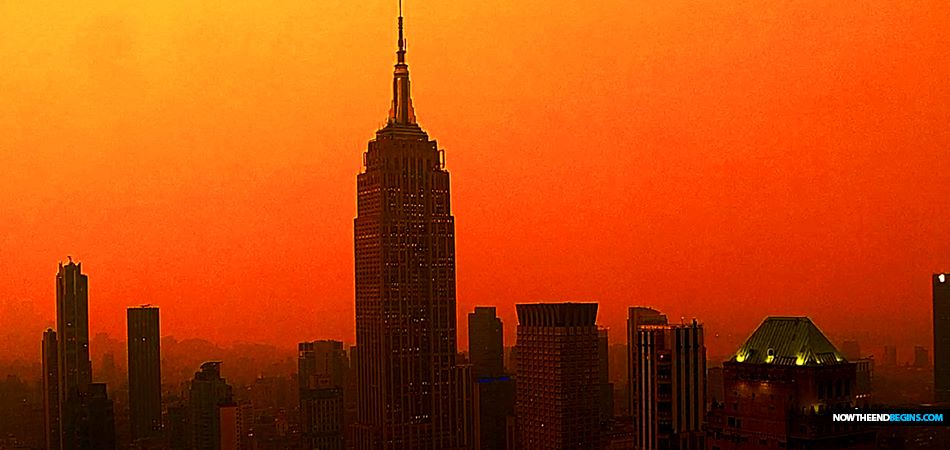
The toxic smoke from wildfires has now arrived in our northeastern cities. Imagine how much worse it will be, for Canada and the US, with rising summer temperatures.
I’ve recently re-watched the movie “Sully” and was impressed with New York City’s response time of 24 minutes, thereby saving the lives of all 155 passengers and crew. In times like these, goodwill trumps hate and exclusion.
LikeLiked by 1 person
Oh my gosh Rosaliene, where do I begin? Girl, you touched on some very powerful points and this video, which I have never seen before, speaks volumes! Hate, no matter who it’s directed towards, hurts and debilitates the hater, not the hated. Thank you for sharing your editorial truths my friend. Great commentary. Thank you! 🤗🙏🏼😊
LikeLiked by 1 person
Thanks very much, Kym! You’re most welcome 🙂 Tragically for us all, the hater is blind to hate’s debilitating self-wounds.
LikeLiked by 1 person
Yes girl, the more you hate, the blinder you get. If haters knew they were self-inflicting their spirits with a deadly poison, they would grow more in love, empathy and compassion. Thank you Rosaliene! 🥰🙏🏼😊
LikeLiked by 1 person
Oh, that video at the end… beautiful. If only there could be more kindness and friendship in this world. If people understood each other better, what a difference that would make toward stopping hatred.
LikeLiked by 1 person
So glad you like the video, Betsy 🙂 We may not all be as audacious and courageous as Daryl Davis, but every small outreach matters.
LikeLiked by 1 person
That was a powerful video, and Darryl Davis is a very courageous man. When we look for common ground, we always find it, often in abundance. Like you, “I’m more open to tolerating and accepting the beliefs of others, but less open to seeking new experiences and trying out new things.” We moved around a lot when I was a kid since my dad was in the military. I think living in so many different places led me to be more tolerant. Lately, I’ve been retreating from new OUTER experiences and new things, preferring to stay home more, but I suspect this is somewhat temporary. Sometimes we venture out and then retreat to recharge and find our footing before we seek new experiences and new things again. There are many different kinds of adventures large and small.
LikeLiked by 1 person
I lack the kind of courage that Daryl Davis demonstrates. Your exposure as a kid with a military father would, for sure, make a difference. Like you, I often have to retreat and recharge after venturing out to try something new. Thanks for sharing ❤
LikeLiked by 1 person
❤
LikeLiked by 1 person
Wow, what an incredible post paired with an equally amazing video! Loved reading this during the morning. ❤
LikeLiked by 1 person
Thanks very much, Layla ❤
LikeLiked by 1 person
An excellent post and thank you for sharing it with us. I have always been disappointed but seldom surprised by the way that so many Americans think that what is important about somebody are their “beliefs, gender, ideology, political affiliation, religion, and skin color”.
In WW2 their armed forces had enormous problems in England and in France, where all men were thought to be created equal and were all treated as such, compared to the segregation practised in the US army and air force.
Let’s hope that gradually the numbers of openhearted and egalitarian Americans will gradually increase in the future, and greater attention be paid to their views.
LikeLiked by 1 person
Thanks very much, John. Thanks, too, for sharing your observations about America’s armed forces during WW2. I learned about the African-Americans who served in our armed forces in WW2 when I saw the 2011 movie “The Wereth Eleven” about an all-black unit overrun by German forces.
When a vocal minority gains power over the narrative, it’s dangerous for the openhearted to remain silent.
LikeLiked by 1 person
How very true!
LikeLiked by 1 person
What a powerful video. “When two enemies are talking, they are not fighting,” he got that right.
LikeLiked by 1 person
Glad you like the video, Bridget 🙂 Davis sure did get that right.
LikeLike
Openness, like curiosity, is something we are all born with and that can be cultivated, thank goodness. I think that’s why I love cats so much. They are curious first and foremost. And that’s the only way mankind ever moves forward. Following their curiosity. Thanks for this post, Rose.
LikeLiked by 2 people
You’re welcome, Pam. I’m curious, too, but my mother always warned me that curiosity killed the cat 🙂
LikeLiked by 1 person
She was just worried you’d have too much fun, Rose.
LikeLiked by 2 people
You’re probably right, Pam 😀
LikeLiked by 1 person
Well, what can I say?
After 31 years of living in Los Angeles, now retired and moving back to my country of origin not because I wanted to leave LA, but facing several issues, like how expensive it’s to live in LA, only with your retirement check and a few savings, plus wanting to be back to my friends, and relatives in Mexico, specially my children who showed no interest of moving to LA when I asked them many years ago, and now they are adults and two with their own families, those were the factors that pushed me to leave, as soon as I retired.
Yes I miss LA but I am five hours away drive from Los Angeles, not that I go there often,actually I have been no more than four, or five times back there, in now seven years since.
Ironically most from my friends from LA they come and visit me here more often, and my money goes a lot further here, than there.
Plus I see my grown up children at least once a week, and see many from my old friends who live here and they are still alive, just yesterday I had a big lunch, here the equivalent of a big dinner over there, with college friends from my generation 71-76 we were at least fourteen of us, which it’s a big number considering a lot do not live in town anymore, and are spread who knows where, if still alive!
Unfortunately racism is alive and well in the USA, I used to pass as a white person in Los Angeles if I did not open my mouth, and talk, immediately they will ask me where I was from?
“You have an accent.”
The moment I will answer them a curtain will fall, and their interest to talk to me was gone!
I got tired of it, and come with a counter answer instead.
“Guess where?”
They will say something like: “You must be someone country in Eastern Europe by your accent.
And I will say: Well you got me!
And then they will continue talking and will drop trying to classify me and give me a label.
And since I worked in sales, it was necessary for me to be able to interact with all kind of people, specially white rich people.
Sad, but true the US is a racist country despite the many efforts to change since slavery.
Never being to Europe, but suspect it’s the same over there.
LikeLiked by 1 person
Burning Heart, thanks for sharing your experience as an immigrant in Los Angeles. I’ve grown accustomed to being asked where I’m from. The friendly and open-minded people I meet make up for the ‘Disagreeables.’
It makes lots of sense to move closer to our family and relatives when we retire. Better yet, where the cost of living is more affordable. I lost two wonderful neighbors who moved back to their home states in the Southeast.
Humanity’s racist social construct is not set in stone. Who knows what lies ahead in human evolution on a Hot Earth?
LikeLiked by 2 people
During my more than thirty years in Los Angeles I made many great, and woderful friends from many Nations, and also a large number of AngloAmerican friends with whom I am still in touch, but I will be honest, I did have encounters with racist people and three of them very unplesant, but I will not talk about it.
Once at the last place I worked had to ask a customer to leave, because figuring he was talking only to white people he went into a racist tirade against Hispanics using a word that I will not mention.
But I insist my life and experience in Los Angeles in general was wonderful, but I must admit that like everywhere else, there are things that happen that are not alright, and unplesant people may run into you.
But as you do, also I hope things will change for the better, they say time cures all ills.😉
LikeLiked by 2 people
We live and learn, as the saying goes ❤
LikeLiked by 2 people
I love this post, Rosaliene. When I was living in South Florida, I had many friends from the LGBTQ community because they were so open to life in general. And I appreciate your video clip. What a brave and bold black man! Thanks for sharing this very meaningful post. 🌞
LikeLiked by 2 people
So glad that you’ve found my post meaningful, Lisa 🙂
LikeLiked by 2 people
What an amazing man Daryl Davis is. What fortitude and grace to talk to Klansmen until they cease their hate and become friends.
LikeLiked by 2 people
He sure is amazing, Rebecca. Thanks for reading 🙂
LikeLiked by 1 person